$360 million: “Giving Pledge” signatory Nicola Forrest’s philanthropy bets big on children and women
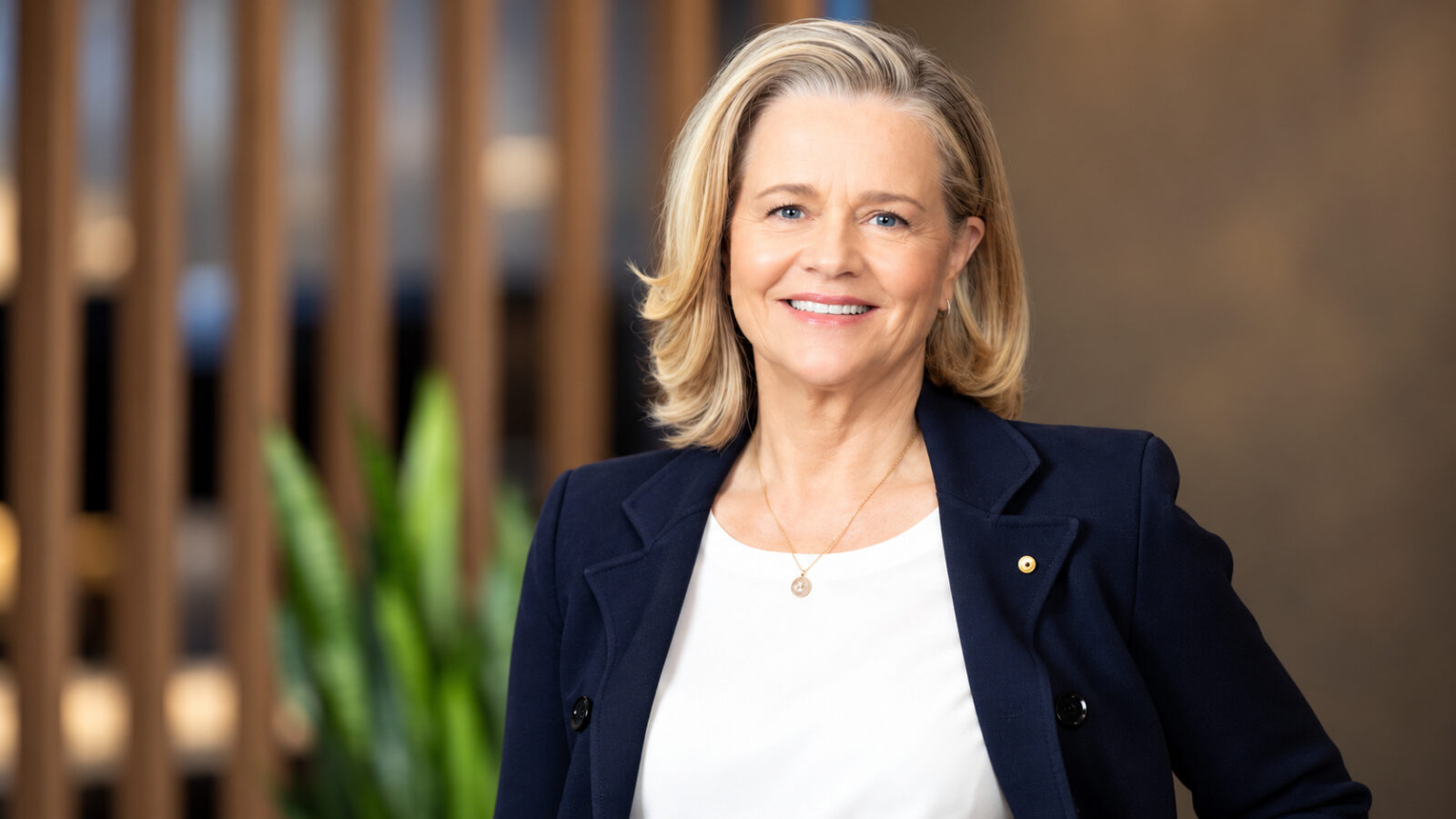
Nicola Forrest grew up on a sheep and cattle farm at Spicers Creek in the wheat country of central-western New South Wales and learned her letters in a one-room school with a single teacher.
Six decades later, one of Australia’s richest women is putting roughly $360 million behind the idea that a child’s postal code should never limit a life.
Forrest will move more than $348 million into Coaxial, the philanthropic vehicle she founded in 2023.
The gift combines about $87 million in cash with 25 million shares of Fortescue, the iron ore company she helped build, valued at roughly $275 million.
The shares will remain in the pool, so the gift’s value will rise and fall with the miner.
Coaxial has not yet issued its own announcement, and no second outlet has confirmed the figures.
Forrest frames the gift in plain, personal terms.
“One of the things that saddens me—I grew up in country NSW—is seeing the devastation across this country, particularly regionally, and the lack of hope that you see in young children,” she stated.
She ties that loss of hope to suicide, mental illness, domestic violence, and homelessness. “That is why we are focusing on children and women,” she said, “not that we think we can solve everything, but we need to start at the beginning.”
She also makes the economic case, calling a change in the trajectory of women’s and children’s lives one of the country’s “single biggest dividends.”
The first commitments show what that looks like on the ground.
Coaxial is giving about $21 million over six years to Cape York Partnership, which works with Aboriginal communities in far north Queensland, and nearly $5 million over three years to SNAICC, the national peak body for Aboriginal and Torres Strait Islander children and families.
A third partnership, worth up to $21 million, goes to the venture firm Antler and includes a $14 million investment in one of its funds.
Forrest and Coaxial chief executive Philippa Watson, a former head of the digital bank Ubank, hope women founders will be the main beneficiaries.
Antler’s numbers back the instinct: its all-women founding teams have returned 2.6 times their initial investment, compared with 2.1 times for the fund overall.
Forrest says Antler’s early backing of Skye Theodorou moved her; her insurance start-up, Upcover, has since created 50 jobs.
The approach is deliberate.
Coaxial plans to work through a small number of deep, long-term partnerships rather than spreading money thin. Its flagship, Project Oasis, aims to open up to 200 early learning centers in what Australians now call “childcare deserts,” the regional and lower-income communities where families cannot find care.
Coaxial has also been quietly reviving landmarks in Fremantle, the port city near Perth, buying the derelict Terminus Hotel for about $3 million and the Fremantle Trades Hall for about $5 million.
American readers will find more than a few familiar threads in the story.
That phrase “childcare desert” was popularized in Washington by the Center for American Progress, which found in 2017 that half of all Americans lived in one.
The mission behind the money also traces back to the United States. In 2013, Forrest and her then-husband, Fortescue chairman Andrew Forrest, became the first Australians to sign the Giving Pledge, the promise created by Warren Buffett and Bill and Melinda French Gates that asks the world’s wealthiest families to give away most of their fortunes.
Forrest has since said she intends to transfer most of her wealth within her lifetime, and Coaxial is the clearest expression of that promise she has made on her own.
Her philanthropic circle runs through the U.S. as well.
Since 2023, she has sat on the board of Co-Impact, the global collaborative for gender equality founded by Olivia Leland, a dual U.S.-French citizen who was the Giving Pledge’s founding director.
Co-Impact’s founding partners include Bill and Melinda Gates, Lifestyles Magazine/Meaningful Influence board member Jeff Skoll, and the Rockefeller Foundation.
This spring she was among the speakers at the Women Deliver conference, staged in Melbourne by the New York–based gender equality organization, the first time the global gathering had been hosted in the region.
Even the venture piece of the gift echoes American interests.
Antler, one of the world’s most active early-stage investors, runs founder residencies in New York, San Francisco, and Austin, and more than a third of its companies have at least one woman founder.
The gap Forrest wants to close is stark in the U.S., too: last year, companies founded solely by women raised just 1.1 percent of American venture dollars, according to PitchBook.
Her blend of a charitable foundation with a returns-seeking investment arm, Coaxial Ventures, will also look familiar to anyone who has followed the hybrid giving vehicles of Silicon Valley’s new philanthropists.
For all its scale, the gift is a modest slice of a fortune the Australian Financial Review’s 2026 Rich List puts at about $12 billion.
Forrest co-founded the Minderoo Foundation in 2001, and that institution carries on with its own endowment and its own agenda.
Coaxial is different.
She calls it her “own personal vehicle for giving,” a way to focus on the causes closest to her. Its name means “to connect on a common axis,” and in its first big act, that axis runs straight through the young children and women of the country towns she came from.