
$32 million for community hospital’s emergency care: healthcare organization CEO and former nurse Greg A. Adams leads historic commitment
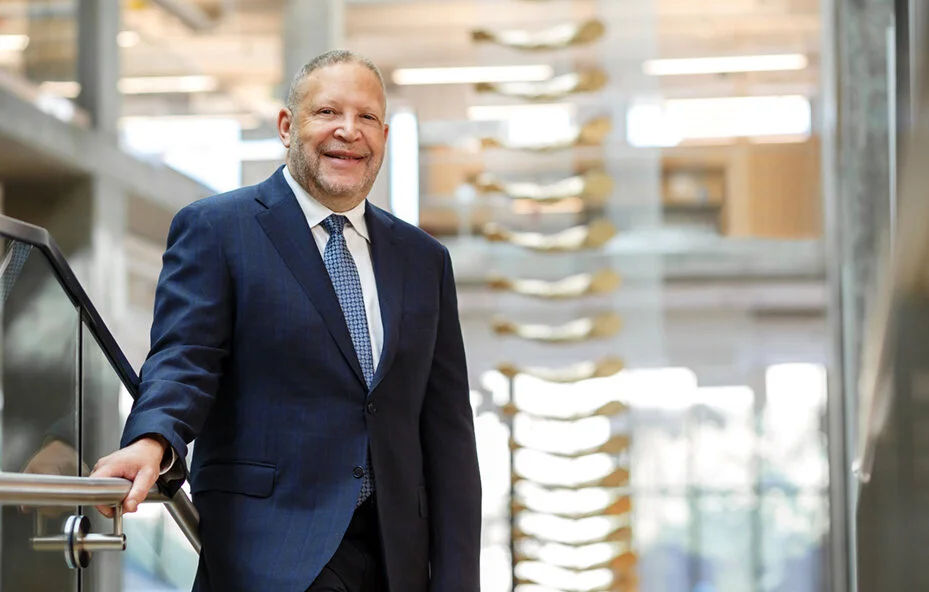
Kaiser Permanente is committing up to $32 million to Martin Luther King Jr. Community Hospital in South Los Angeles, and at the center of that decision sits a chief executive whose own path to the boardroom began, four decades ago, at the bedside of an emergency room in rural Georgia.
Greg A. Adams, chair and chief executive officer of Kaiser Permanente, started his career as a nurse in the emergency department of Crawford Long Hospital in Atlanta, an experience that first exposed him to the social determinants of health that would come to define his professional mission.
More than 40 years later, that same instinct for triage — recognizing where a system is failing the people who depend on it most — is now driving one of the largest philanthropic commitments in the history of MLK Community Hospital.
The gift, announced August 11, 2026, pairs a $25 million grant with the loan of a $7 million modular building, bringing Kaiser’s total support to as much as $32 million.
The money is earmarked for the expansion of the hospital’s Hope Emergency Center: a permanent enlargement of the emergency department, a temporary modular emergency-care facility to keep patients flowing through construction without interruption, and a set of longer-term improvements meant to carry the hospital’s emergency infrastructure well beyond the current crisis.
The need behind the number is stark.
MLK Community Hospital is a 131-bed, private, nonprofit facility that opened in 2015 on a promise to rebuild trust in a South Los Angeles community still scarred by the closure of its predecessor, Martin Luther King Jr./Drew Medical Center.
Its emergency department was designed for up to 29 treatment bays and roughly 25,000 visits a year; it is now absorbing more than five times that volume, with 125,000 emergency visits annually funneling through a space never built to hold them. Roughly 80 percent of the hospital’s patients are covered by Medi-Cal, and nearly 95 percent of emergency-department visits involve patients on Medi-Cal, Medicare, or no insurance at all — a payer mix that leaves the hospital chronically underfunded relative to its patient load, even as it maintains four- and five-star quality ratings from the Centers for Medicare & Medicaid Services.
Local reporting has described a facility so overwhelmed that patients have at times been triaged in conditions the emergency department was never designed to accommodate, a pressure that has been building for years.
For Adams, who has led the nonprofit health system since 2019 and has spent 40-plus years in health care, framing this commitment is personal as much as strategic.
“This is about more than expanding an emergency department,” he said in Kaiser’s announcement.
“It’s about strengthening the health care infrastructure that Los Angeles families depend on today and will continue to rely on for generations to come. Our mission is not only to care for our members — it’s to improve the health of the communities we serve. By investing in trusted community institutions like Martin Luther King Jr. Community Hospital, Kaiser Permanente is helping build a stronger, more resilient health care system that helps people get the high-quality care they need”.
It is language that echoes the trajectory of Adams’s own career: from a young nurse confronting the gap between what patients needed and what a system could provide, to the head of a $100-billion-plus nonprofit enterprise now serving 12.9 million members across nine states and the District of Columbia, in a position to close that gap for someone else’s community.
On the receiving end, Dr. Elaine Batchlor, chief executive officer of MLK Community Healthcare, called the gift the largest MLK has ever received.
“We are profoundly grateful to Kaiser Permanente for its extraordinary generosity,” she said. “This gift — the largest in MLK’s history — strengthens our ability to offer care in the safe, dignified setting our community deserves. As our partner and champion, Kaiser Permanente is expanding its history of commitment to the South LA community with support that is as timely as it is impactful”.
In a separate interview with KNX News, Batchlor described the influx of patients as a strain the emergency room’s original footprint was never built to bear, calling the Kaiser commitment “a game changer” and adding, “we were very concerned about the increasing volume of patients in a space that was clearly not designed to accommodate that volume, and now we are incredibly grateful and excited”.
John Yamamoto, Kaiser Permanente’s vice president of Community Health and Government Relations for Southern California, situated the grant within a much longer relationship between the two institutions.
“Kaiser Permanente has a long history of collaborating with our medical safety net partners to improve quality care, expand access, and reduce health disparities across our communities,” Yamamoto said. “We recognize the vital role Martin Luther King Jr. Community Hospital plays in advancing health equity and addressing the needs of South Los Angeles. Our 2 organizations have a long and shared commitment to the people of South Los Angeles, and we are pleased to help expand vital emergency care services to the community”.
The gift arrives against a backdrop that Kaiser’s own Community Health Needs Assessment flagged as one of the most urgent unmet needs across Southern California: access to primary, specialty, and emergency care, particularly in neighborhoods that rank among the lowest on California’s Healthy Places Index, where residents face disproportionate rates of chronic disease, preventable hospitalization, and persistent barriers to care rooted in disparities in housing, transportation, and economic opportunity.
Statewide, safety-net hospitals like MLK are absorbing rising patient volumes even as they contend with mounting financial, workforce, and operational strain — a dynamic that has already drawn state intervention, including a 2024 one-time $25 million appropriation from California’s budget to help MLK cover an emergency-department funding shortfall.
Kaiser frames the grant as part of a broader pattern of investment beyond its own hospital walls, extending support through partnerships with community hospitals, federally qualified health centers, public agencies, schools, and community organizations across the regions it serves.
But the through-line from Adams’s own start in an emergency room to a $32 million commitment aimed squarely at rebuilding one gives this particular gift a resonance that outlasts the press release: a health system led by someone who once worked the floor of an ER now betting tens of millions of dollars that South Los Angeles’s safety-net hospital can be rebuilt to meet the moment it is living through.