
$291 million gift to celebrate university’s 130th anniversary from auto tech tycoon Robin Zeng raises his total gifts to educational institutions near the $500 million mark
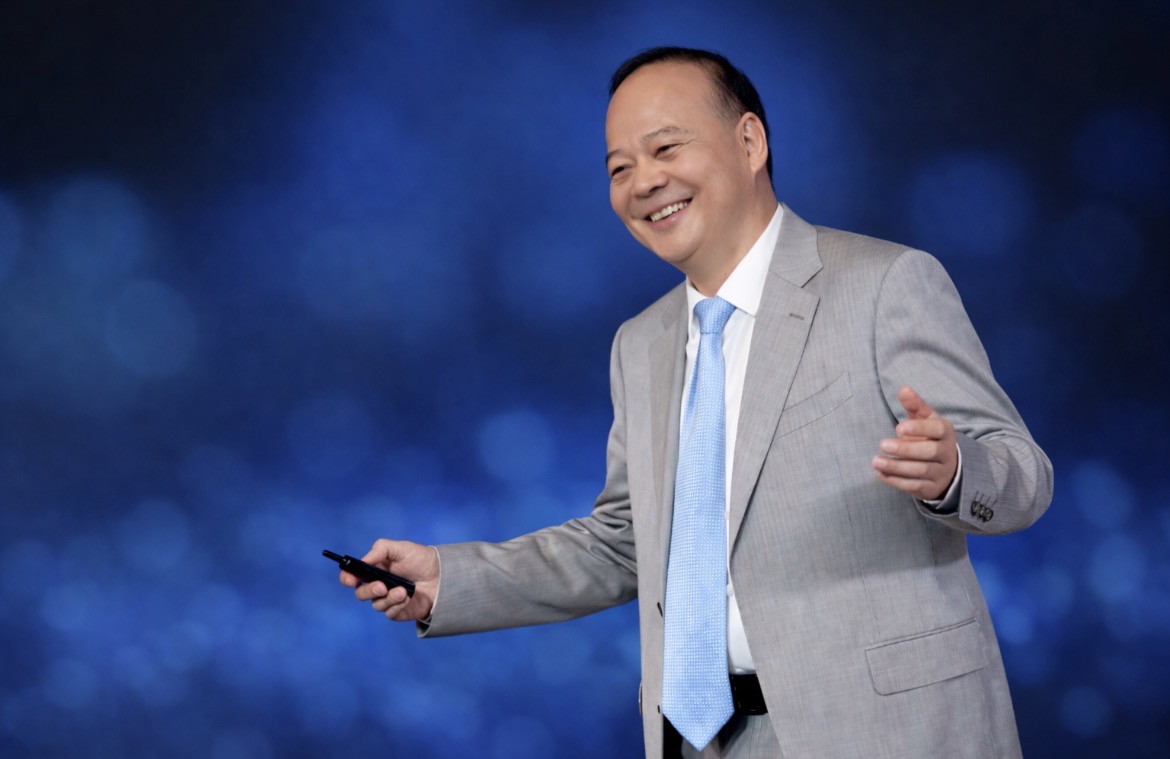
Shanghai Jiao Tong University has received the largest single donation in its 130‑year history, a landmark stock gift from the controlling shareholder of Chinese battery giant Contemporary Amperex Technology Co., Limited, better known as CATL. The donation comes just days before the university launches a series of events to mark its 130th anniversary and underscores the deepening ties between China’s most powerful technology industrialists and the country’s elite research universities.
The gift, announced in Shanghai, will be made not by CATL directly but through Xiamen Ruiting Investment Co., Ltd., the investment vehicle that holds the largest stake in CATL.
Xiamen Ruiting plans to transfer 5 million CATL shares to the Shanghai Jiao Tong University Education Development Foundation, to be used in support of the university’s long‑term educational development. At recent trading prices, the shares are valued at about $291 million dollars, setting a new record for philanthropy to the institution.
Behind the structure and corporate names is a single, pivotal figure: Zeng Yuqun, also known internationally as Robin Zeng. Born in Ningde, a coastal city in Fujian province, Zeng studied at Shanghai Jiao Tong University as an undergraduate before going on to found CATL, which has since become the world’s dominant manufacturer of lithium‑ion batteries for electric vehicles.
He is the founder, chairman and chief executive of CATL, and he is also the ultimate owner and actual controller of Xiamen Ruiting, the entity now making the donation on his behalf.
Regulatory filings and market research have long identified Xiamen Ruiting as Zeng’s personal investment and holding company, through which he controls a stake of just over one‑fifth of CATL’s equity and exercises effective control over the listed group. The 5 million shares earmarked for Shanghai Jiao Tong University represent only a small fraction of that position, but they carry enormous symbolic weight: they mark a deliberate transfer of personal wealth, in the form of core equity in one of China’s flagship industrial champions, into the endowment of a university that helped shape Zeng’s early career.
The donation is structured as a transfer of unrestricted circulating A‑shares, meaning the foundation will, in principle, be free to liquidate some or all of the position over time or to hold the stock as a long‑term asset.
For Shanghai Jiao Tong University, this opens up several strategic options: using realized proceeds to fund new research institutes, scholarships and faculty recruitment, or treating the stake as a strategic holding aligned with China’s broader push into electrification and advanced manufacturing.
For Zeng, the mechanism reinforces a pattern that isincreasingly common among China’s new‑economy tycoons—deploying personal holding companies and stock positions to endow educational and scientific institutions rather than relying solely on cash gifts.
This is not Zeng’s first major act of philanthropy toward his alma mater. In 2021, he made an earlier stock‑based gift of CATL shares to Shanghai Jiao Tong University, establishing what became known as the Zeng Yuqun Education Fund. That donation was dedicated to the development of the Global Institute of Future Technology, an ambitious platform intended to cultivate leaders in “critical core technologies” and to accelerate work in areas such as advanced energy storage, intelligent manufacturing and next‑generation materials. At the time, the market value of the shares was reported at the equivalent of more than 180 million US dollars.
Taken together, the 2021 gift and the newly announced 2026 transfer amount to a combined commitment in the neighborhood of $500 million US dollars.
Even allowing for fluctuations in share price and currency, the figures place Zeng firmly in the top tier of individual higher‑education donors globally, and they significantly elevate Shanghai Jiao Tong University’s financial capacity at a moment when Chinese universities are competing aggressively with their counterparts in the United States, Europe and elsewhere for talent and prestige.
Within the university community, Zeng’s support is seen not only in financial terms but also in governance and strategic alignment. Following his earlier gift, Shanghai Jiao Tong University named him to its board of trustees, giving him a formal advisory role in its long‑term development. The new stock transfer deepens that relationship and effectively makes the CATL founder one of the most consequential private benefactors in the institution’s history.
The timing of the announcement is also symbolically charged. Shanghai Jiao Tong University is preparing to celebrate its 130th anniversary, a milestone that invites reflection on its evolution from a late‑Qing engineering school into one of China’s top comprehensive research universities. Receiving a record‑setting donation from a graduate who has become a central figure in the global energy transition allows the institution to present itself as both rooted in Chinese educational tradition and plugged into the frontiers of technology and industry.
Zeng’s own trajectory underscores that narrative. From Ningde, a once‑sleepy city that has become synonymous with CATL’s rise, he built a company that now supplies batteries to many of the world’s leading automakers, including prominent US and Europe‑based brands.
While CATL is headquartered in China and Zeng himself is a Chinese national based in Fujian, the company’s technology, capital‑markets profile and customer base are global. For observers in the United States, this means that a significant share of the value being endowed to Shanghai Jiao Tong University has been created in part through CATL’s deep commercial ties with the global and American electric‑vehicle ecosystem.
Zeng has also stepped onto the international stage in his own right. In recent years, he has received sustainability and innovation awards from European‑based organizations and has been profiled in Western business media as one of the world’s wealthiest industrial founders and a key architect of the transition away from internal combustion engines.
These appearances often place him alongside US and European policymakers, climate envoys, and corporate leaders, embedding him in a transnational conversation about green technology and industrial policy even as his flagship philanthropy has so far remained concentrated in China.
For Shanghai Jiao Tong University, the new gift arrives amid intensified competition for philanthropic capital. Leading Chinese universities have increasingly looked to their most successful alumni—including founders in sectors such as internet platforms, semiconductors, and electric vehicles—to underwrite long‑term research agendas and internationalization efforts. Zeng’s record‑breaking donation not only loosens financial constraints but also sends a powerful signal to other high‑net‑worth graduates that large‑scale, stock‑based giving is both viable and welcomed.
The university has not yet disclosed detailed spending plans for the new tranche of funds, but the stated purpose—“supporting educational development”—is broad enough to encompass endowed chairs, major research platforms, and student support at scale.
If Shanghai Jiao Tong follows the precedent of the 2021 Zeng Yuqun Education Fund, part of the proceeds may be channeled into flagship institutes focused on frontier technologies where CATL and other industrial partners can collaborate with academic researchers.
More broadly, the transaction highlights a wider shift in China’s philanthropic landscape. As a generation of founders like Zeng see their personal fortunes crystallize through listings and global expansion, they are beginning to deploy those fortunes in ways that mirror, and at times rival, the large-scale university giving long associated with American tech and finance billionaires.
While China’s regulatory and political context remains distinct, and while many of the largest gifts still flow to domestic institutions, the underlying logic—using privately accumulated equity wealth to shape the direction of research universities—is increasingly familiar.
For now, Shanghai Jiao Tong University is the immediate beneficiary of that shift, emerging from its 130th‑anniversary celebrations with a vastly strengthened balance sheet and a high‑profile endorsement from one of the most influential figures in global clean‑energy manufacturing. And for Zeng Yuqun, the new commitment cements his role not only as CATL’s architect and controlling shareholder, but as a central philanthropic actor in China’s effort to pair industrial scale with scientific and educational ambition.