
$26 million gift from Susan and Michael Dell aims to carry young people from overlooked communities all the way from a preparatory classroom to a high-tech career
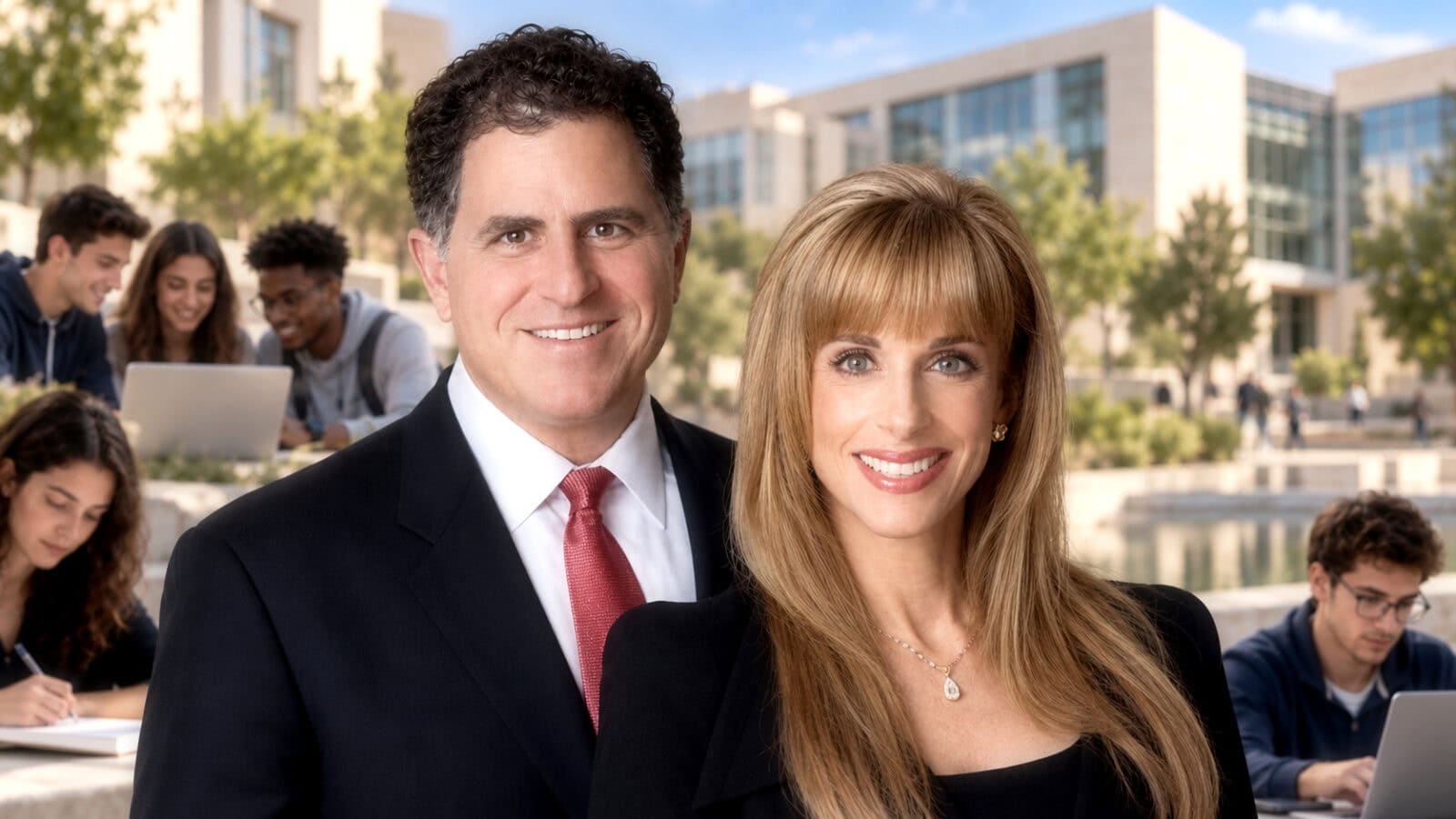
On an ordinary morning in Israel, while the rest of the philanthropic world was still arguing about billion-dollar American children’s accounts and AI hospitals in Texas, the Michael & Susan Dell Foundation quietly did something that will change 1,500 lives in a country that has always treated education as both a birthright and a battlefield.
Recently, the foundation and Israel’s Council for Higher Education announced a $56 million partnership—Dell putting up roughly $26 million—to carry young people from the country’s overlooked communities from a preparatory classroom to a high-tech paycheck.
Three hundred students a year.
Five years.
Fifteen hundred futures.
Full tuition for the preparation and the degree.
A stipend so a kid from Ofakim or an observant neighborhood in Jerusalem does not have to choose between rent and a lab fee.
A computer.
Mentors who will not disappear after orientation week.
A path into an industry that has made Israel a verb.
It is the kind of gift that does not photograph well at a gala and therefore rarely makes the American wires.
That is a shame, because it is one of the more civilized things a very rich couple has done with their money.
Michael Dell dropped out of the University of Texas after one year with a thousand dollars and a stubborn idea about selling computers.
His grandfather, whose name he carries as a middle name—Saul—never got the education he wanted and spent the rest of his life telling the family that schooling is expensive, but ignorance is more expensive still.
Susan Dell talks about “tikkun olam” (repairing the world) the way other people talk about compound interest: not as a slogan, but as a working instruction.
They built a foundation to serve children in poverty, first in Texas, then across America, then India and South Africa.
After October 7, they widened the map to Israel in earnest—relief for fifty thousand families, zero-interest loans for reservists’ households, physics classrooms, Haredi tech pathways, a school turnaround effort aimed at twenty-five thousand students.
The recent scholarship is the logical next sentence in that paragraph. Talent, they keep saying, is everywhere.
The on-ramp is not.
The program is called Tech Leaders, which is almost too neat, except that it is accurate. Israel’s high-tech miracle has always been narrower than the myth.
The kids who already speak the language of the unit, the startup, and the army intelligence track—they find the door.
The ones the Dell money is aimed at do not: graduates of ultra-Orthodox schools who have the mind for algorithms and none of the credentials; young Arabs who can do the math and cannot afford the bus; Ethiopian Israelis still climbing out of a bureaucratic fog; kids from the periphery who watch the coastal boom on a cracked phone.
The Council for Higher Education is putting up the other half of the money, which matters. This is not a visiting billionaire writing a check and flying home. It is a state partner agreeing that the pipeline is broken and deciding, for once, to fix the whole length of it instead of the last pretty mile.
The preparatory work will happen at the Technion, the Hebrew University, Ben-Gurion, and Bar-Ilan. Degrees at Haifa, Ariel, and Azrieli in Jerusalem, and Sami Shamoon schools in Ashdod, with the roster still being finished the way serious programs are finished—slowly, with registrars in the room.
Tali Barash-Bouskila, who runs the foundation’s Israel office, put it without poetry and therefore with more of it: talent is everywhere, but the road into engineering and science is not paved.
So they will find the candidates early, walk them through the completions they still need, and stay until the first job offer is signed.
The global Dell Scholars machine has already put some twenty-five thousand students through degrees in four countries. Israel is now on that list in a way that is not ceremonial.
There is a temptation, in a moment when Michael Dell’s fortune has yo-yoed with the AI trade and his American children’s accounts have begun lighting up in all fifty states, to treat this as a footnote. It is not.
A twenty-six-million-dollar matched scholarship that refuses to stop at admission is how a country actually replenishes itself.
Fifteen hundred young Israelis will sit in rooms they were not supposed to enter. Some of them will build the next company.
Some of them will teach.
Some of them will simply earn a living that their parents could not imagine.
That is the whole point of the Dell instinct—less marble, more trajectory.
The announcement arrived without a naming ceremony.
No pavilion.
Just a number, a cohort, and a bet that the next engineer in Beersheba or the next coder from a Haredi study hall was already out there, waiting for someone to pay the fare.
Michael and Susan Dell paid it.
Israel matched it.
The rest is attendance.