
$26.25 million gift from Jay and Jill Craig to Colleges of Business and Social Science delivers immediate student impact while building flexible endowments that can evolve with higher education, the economy and changing student needs
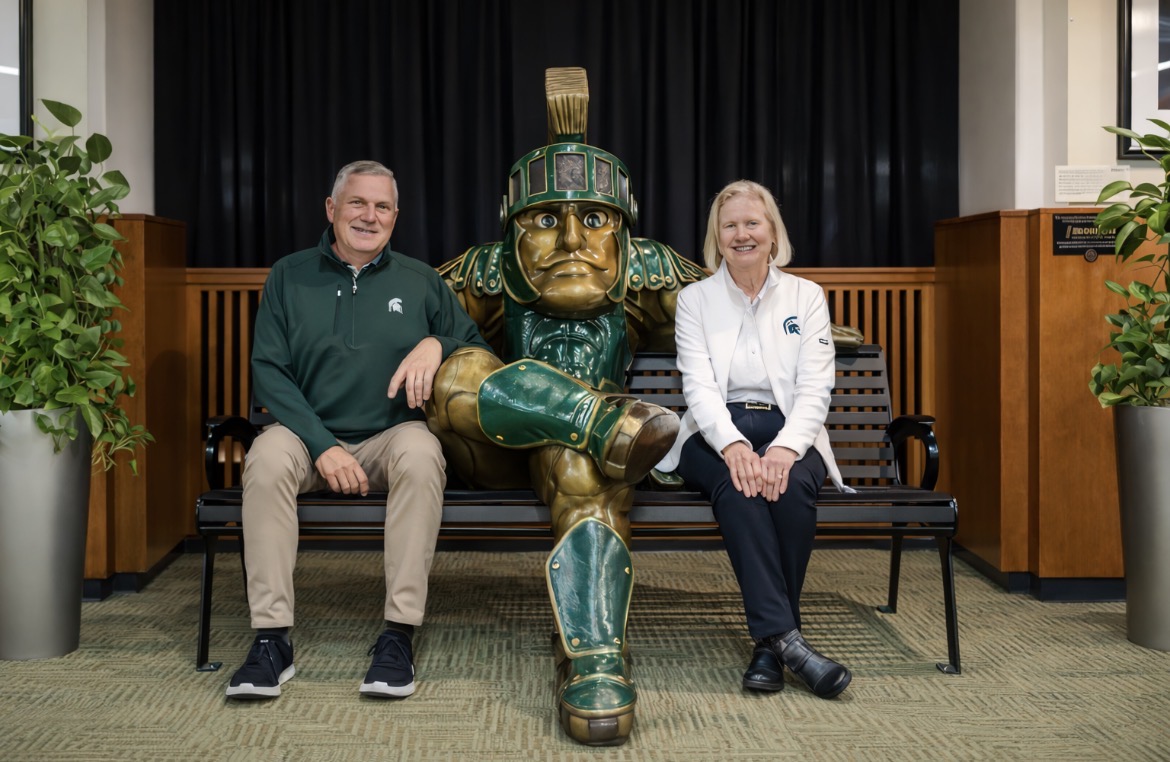
Jay and Jill Craig have emerged as two of the most consequential new philanthropists in Michigan State University’s recent history, with a 26.25-million-dollar commitment that is designed less as a single, one‑time gesture and more as a flexible engine for student success across two of the university’s most visible colleges.
Their gift to the Eli Broad College of Business and the College of Social Science is structured to meet immediate needs while also seeding permanent endowments that can adapt as higher education, the economy and student expectations continue to shift.
The couple’s story with Michigan State begins long before there were boardrooms, earnings calls or endowed funds with their names on them. Jay and Jill met on a blind double date as undergraduates in January 1980, two students navigating campus life with little sense that the institution shaping their early adulthood would one day become the focus of a major philanthropic partnership.
Like many first‑generation and middle‑class students of that era, they experienced MSU less as a backdrop to elite privilege and more as a pathway into careers and opportunities that had to be built step by step.
In later comments, they have been explicit that those formative years—and the doors they opened—sit at the center of their decision to make a transformative commitment now that they are in a position to do so.
Professionally, Jay Craig is part of the generation of Michigan State business graduates who rose into the top tier of American industry, carrying the Spartan brand into global corporate circles.
He built his career at Meritor Inc., the Michigan‑based commercial vehicle components manufacturer, ultimately serving as its chairman and chief executive officer and leading the company through a period of restructuring and strategic repositioning before its acquisition by Cummins.
Public corporate profiles list his educational foundation as a business degree from Michigan State University and an advanced degree from Duke University, a trajectory that underscores how a public land‑grant institution helped prepare him for leadership in a sector that is both capital‑intensive and deeply tied to the industrial Midwest.
His board service, including a directorship at Baxter International, reflects a broader move into corporate governance and health‑sector leadership common among retired industrial CEOs.
Jill Craig’s professional biography is less prominent in public filings, but her voice is prominent in MSU’s description of the gift and in the couple’s own framing of their philanthropy.
She has spoken about the unevenness of opportunity, emphasizing that not every student arrives on campus with the same level of support, financial cushion or social capital.
That lens—on barrier removal and door‑opening—shapes the way the Craigs have structured this gift: less about a single building or a tightly defined program, more about equipping the people closest to students with flexible funding to respond to real needs in real time.
In that sense, Jill appears as a co‑architect of a philanthropic strategy aimed at equity, access, and adaptability rather than a passive partner in a CEO‑driven donation.
The architecture of the 26.25 million dollar commitment reflects lessons the Craigs have drawn from both the corporate world and the changing landscape of higher education.
A portion of the gift is designated for immediate use at the Broad College of Business, where it will underwrite expanded hands‑on learning opportunities, enhanced student support services, and high‑impact academic programming for current undergraduates and graduate students.
That includes experiential learning initiatives—internships, project‑based courses, consulting engagements with real‑world companies—that have become vital differentiators for business schools competing for top students and recruiters.
It also includes the kind of wraparound advising, tutoring, career coaching, and professional development that can make the difference between a promising student simply graduating and that same student stepping confidently into a demanding job market.
The balance of the Craigs’ gift is aimed squarely at the long term, through the creation of two endowed student success funds that will exist in perpetuity.
The Jay and Jill Craig Broad College Student Success Fund and the Jay and Jill Craig College of Social Science Student Success Fund will generate flexible annual payouts that deans and academic leaders can deploy against “emerging priorities” across both colleges.
That might mean scaling up a new experiential learning program that proves effective, launching interdisciplinary initiatives at the intersection of business, social science, and technology, or responding quickly to economic shocks and policy changes that disproportionately affect students from certain backgrounds.
Crucially, these funds are not so tightly earmarked that they risk becoming obsolete; instead, they are designed to move as the world moves, a priority the Craigs have emphasized.
“Things will continue to change in higher education and in the world our students are entering,” Jay Craig said in announcing the gift, stressing that he and Jill wanted their philanthropy to give leaders close to students the room to respond to what is emerging rather than locking resources into yesterday’s priorities.
That philosophy, rooted in steering a public company through technological and market disruption, aligns with a broader trend among sophisticated donors who now favor flexible impact over tightly prescribed projects.
Jill’s own statement complements that view: she has pointed to MSU’s diversity and accessibility, and to the importance of philanthropy in removing obstacles for students who may be academically strong but financially precarious or unfamiliar with the invisible rules of professional life.
Inside the university, the Craigs’ decision to cast their net across both the business school and the College of Social Science is being read as both symbolic and strategic. At one level, it simply reflects the couple’s educational ties: Jay is a Broad College alumnus, while Jill’s academic background and interests touch the social sciences.
At another level, it positions their gift at the intersection of commerce and society—acknowledging that the next generation of leaders will need fluency not just in balance sheets and financial models, but in human behavior, public policy, inequality, and global change.
By tying their name to student success in both domains, the Craigs are effectively betting that MSU’s future impact will depend on graduates who can move comfortably between the business world and the social and civic arenas it influences.
Michigan State’s leadership has greeted the gift as a catalytic moment not only for the two colleges but for the institution’s broader “Uncommon Will, Far Better World” campaign, a 4-billion-dollar comprehensive effort focused on student success, research excellence, and statewide impact.
President Kevin M. Guskiewicz has described the commitment as “forward‑looking,” noting that it will equip the Broad College and the College of Social Science with the resources to adapt and innovate in preparing students for careers that may not yet exist.
Vice President for University Advancement Kim Tobin has framed it as a partnership grounded in a shared belief in the power of education to change lives, emphasizing the leverage that flexible student success funds give the university in a volatile environment.
For Michigan State’s alumni and donor communities, the Craigs’ move also sends a cultural signal. They are part of a cohort of business‑world leaders who could have centered their philanthropy on a marquee building, a stadium or a narrowly defined research institute.
Instead, they have chosen to back student‑facing infrastructure that is less visible from the outside but potentially more transformational for individual lives: advising, experiential learning, targeted support, and the capacity to pilot new approaches to teaching and career preparation.
In doing so, they align with an emerging pattern in higher‑education philanthropy in which major donors increasingly ask not only what can bear their name, but what will most directly alter the trajectory of students who, like their younger selves, arrive on campus with ambition and uncertainty in equal measure.
The timing of the Craigs’ announcement is also notable. Michigan State has spent the last several years both celebrating record‑setting commitments—across athletics, engineering, and other areas—and confronting the realities of a state and national higher‑education market under pressure from demographic shifts, public skepticism, and rising costs.
A gift explicitly framed as an investment in student success and adaptability speaks to that context: it is as much a vote of confidence in MSU’s ability to navigate a turbulent era as it is a thank-you for past opportunities.
Social‑media posts from the university president’s office, the alumni association, and the colleges themselves have amplified that message, highlighting both the dollar figure and the underlying philosophy of flexibility and opportunity.
For Jay and Jill Craig, this gift is likely not the last chapter in their philanthropic story, but it is a defining one. It crystallizes a narrative that ties their personal relationship and loyalty to a public university into a single, highly visible act of giving. It also places them squarely among a growing group of MSU alumni who are using private wealth to underwrite public‑mission institutions, with a particular emphasis on making those institutions more responsive to the students and communities they serve.
As the endowed funds begin to spin off support and as current‑use dollars translate into new programs and experiences, the Craigs’ names will become a quiet but persistent presence in the lives of thousands of students—some of whom, decades from now, may look back and recognize that a pair of alumni from the early 1980s helped open the door they walked through.