
$24.5 million bet on the Ocean and the people who protect it by Jeff Bezos
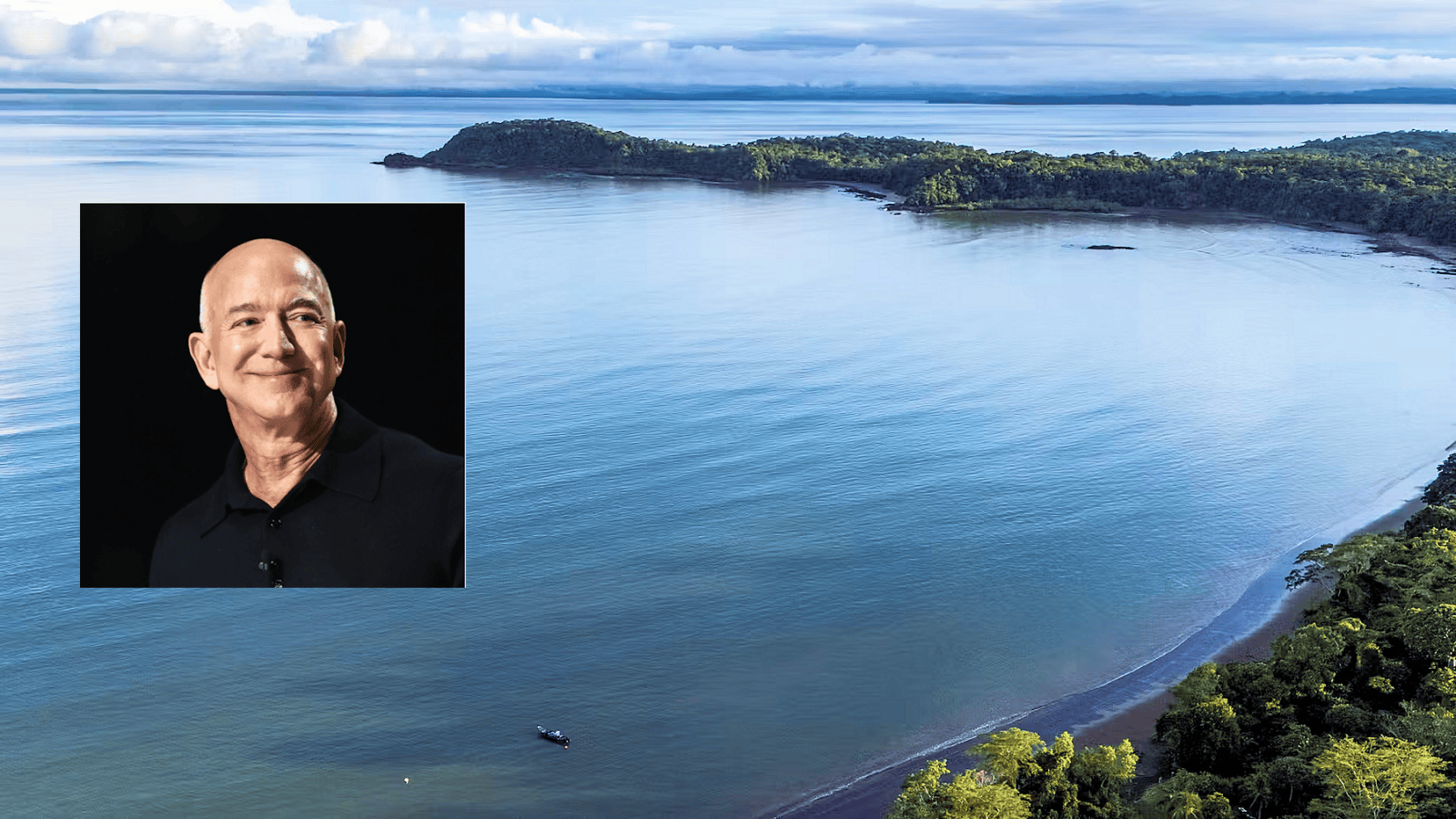
By the time most people glimpse the Eastern Tropical Pacific, it is already too late.
These waters—stretching from Costa Rica to Ecuador—are vast, remote, and alive with some of the planet’s most extraordinary marine life: hammerhead sharks gathering by the thousands, endangered sea turtles navigating ancient routes, and migratory whales moving through underwater corridors older than human memory.
For Jeff Bezos, this is precisely where philanthropy matters most.
This week, the Bezos Earth Fund announced $24.5 million in new grants to strengthen marine protection across the region—an investment that nearly doubles the Fund’s total commitment there to more than $60 million.
But the story is not simply about money. It is about building permanence in a part of the world where conservation succeeds or fails based on the daily decisions of park rangers, coastal communities, and local leaders working far from headlines.
Since 2021, Costa Rica, Panama, Colombia, and Ecuador have quietly accomplished something remarkable. Together, they have designated more than 154,000 square miles of new marine protected areas—nearly tripling ocean protection in the region.
Panama, Costa Rica, and Colombia now safeguard more than 30 percent of their national waters, while Ecuador has expanded protections across critical offshore and coastal zones.
Even more ambitious, the four nations are working to connect these areas into a single, cross-border marine corridor—one of the most expansive coordinated conservation efforts on Earth.
“What makes this region special isn’t just its biodiversity,” said Tom Taylor, president and CEO of the Bezos Earth Fund.
“It’s the people. When communities are equipped with the right tools, they protect these waters—and the ocean responds.”
Taylor, who oversees Bezos’ $10 billion commitment to climate and nature, has helped shape a philanthropic strategy that prioritizes execution over symbolism. Drawing lines on a map is not enough. Protection must be enforced, financed, and sustained—year after year.
That is where this latest round of funding is focused.
Across the Eastern Tropical Pacific, marine rangers patrol enormous territories with limited data, often navigating dangerous conditions in small vessels, far from shore.
The new grants will improve on-the-water safety, provide real-time satellite intelligence, and help teams plan patrols more strategically.
Just as necessary, they will expand community-led protection of coastal nursery habitats—mangroves, estuaries, and sheltered bays where many marine species begin life before migrating across borders.
Panama’s Minister of Environment, Juan Carlos Navarro, sees the effort as a model for what is possible when nations and philanthropies align.
“Our work goes beyond borders,” he said. “Together with Costa Rica, Colombia, and Ecuador, we are advancing the Eastern Tropical Pacific Marine Corridor as the world’s first cross-border Marine Biosphere Reserve of its kind.”
Science plays an equally central role. The grants will expand long-term monitoring of sharks, turtles, whales, and tuna, building on thousands of underwater camera deployments and cutting-edge environmental DNA research.
These insights are not academic; they inform where protections are placed, how enforcement is prioritized, and how recovery is measured over time.
The funding will flow to organizations deeply embedded in the work:
Re: wild, supporting the creation and long-term financing of coastal reserves.
MigraMar tracks migratory species across national boundaries.
Global Fishing Watch is equipping patrol teams with satellite-based planning tools.
WildAid provides rangers with training and equipment to operate safely and effectively.
For Bezos, whose philanthropy has increasingly emphasized durability and scale, the Eastern Tropical Pacific represents a living test case: Can ambitious conservation targets be matched with the practical systems required to uphold them?
If the answer lies in these waters, it may also lie in a broader philosophy—one that sees impact not as a single grand gesture, but as a sustained partnership with those closest to the work.
As Taylor put it, “This is about giving nature the chance to thrive—and giving the people protecting it the support they deserve.”
Photo: Jeff Bezos.