
$200 million gift from philanthropists Mark and Mary Stevens launches a university wide artificial intelligence initiative that will touch everything from cancer research to cinematic arts
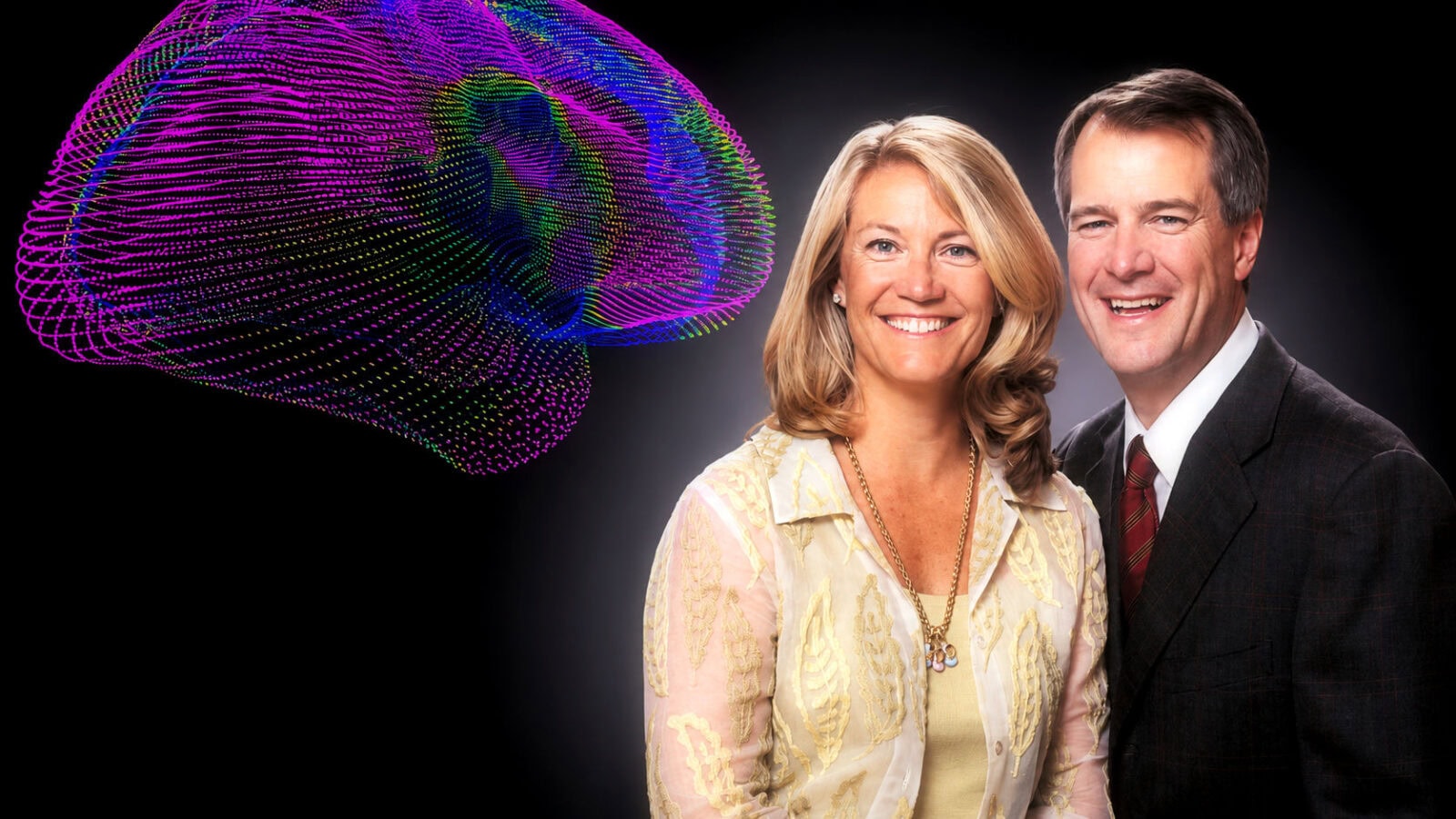
Mark Stevens does not fit the caricature of the reclusive Silicon Valley financier hoarding a chip fortune.
Recently, the 66-year-old venture capitalist and his wife, Mary, announced they were giving $200 million to the University of Southern California — one of the largest single gifts in the school’s 146-year history — to launch a university wide artificial intelligence initiative that will touch everything from cancer research to cinematic arts.
In recognition, USC’s School of Advanced Computing, the interdisciplinary AI hub housed within the Viterbi School of Engineering, is being renamed the USC Mark and Mary Stevens School of Computing and Artificial Intelligence.
For a man with a net worth Bloomberg pegs at $12.5 billion — built almost entirely on a bet nobody else wanted to make in 1993 — it is a fitting full-circle moment.
That was the year Stevens, then a young partner at Sequoia Capital, championed the firm’s investment in an unproven graphics-chip startup called Nvidia.
He joined its board that same year and, apart from a brief hiatus between 2006 and 2008, has remained there ever since, watching the company he helped fund in its infancy become the world’s most valuable corporation, with a market capitalization north of $5 trillion.
As of mid-2024, Stevens was reportedly the second-largest insider shareholder in Nvidia, with a stake once valued near $5 billion.
Stevens’s path to that boardroom was distinctly engineering-brained before it was financial. Raised with a technical bent, he earned a bachelor’s degree in electrical engineering and another in economics from USC in 1981, followed by a master’s in computer engineering from the same school in 1984, before cutting his teeth at Intel and as a member of the technical staff at Hughes Aircraft.
He then went east for a Harvard MBA, graduating in 1989 — the same year he joined Sequoia Capital, the legendary Menlo Park venture firm that would define his career.
He made partner in 1993, the same fateful year as the Nvidia bet, and spent more than two decades as one of just five voting partners jointly responsible for some of Sequoia’s most storied wins, including early positions in Google, Yahoo and YouTube alongside Nvidia.
He left Sequoia in 2012 to found his own family office, S-Cubed Capital, based in Menlo Park, where he remains managing partner today — retaining, notably, the honorary title of special limited partner at his old firm.
He also holds a stake in the NBA’s Golden State Warriors, a detail that surfaces in nearly every profile of him as evidence that his portfolio extends well beyond semiconductors.
Wealth of this scale invites an obvious question, and Stevens answered it himself, in writing, back in 2013, when he and Mary signed the Giving Pledge — the commitment organized by Warren Buffett, Bill Gates and Melinda French Gates urging billionaires to give away the majority of their fortunes.
In his pledge letter, Stevens laid out the calculus with disarming candor: “Mary and I realized that we had more than enough wealth that we would ever need and began to think about what to do about it,” he wrote, describing four options he and his wife weighed — give it to their three children, “let the government take it from you and redistribute it,” “spend with reckless abandon,” or “donate virtually all of it to causes and organizations that we feel could make a difference in the world.”
They chose the fourth, writing that they were “thrilled to devote a significant portion of our future time and energy to option four” and that, more than a decade into their giving, they consider themselves still in the “early innings” of their philanthropy.
USC has long been the primary beneficiary of that philosophy, and for good reason: Stevens has sat on the university’s Board of Trustees since 2001, currently chairing its investment committee.
The couple’s giving there traces back at least to 2004, when a $22 million gift seeded what became the USC Stevens Center for Innovation, followed by additional naming gifts to the Stevens Academic Center for student-athletes.
As Lifestyles Magazine/Meaningful Influence reported earlier, in 2015, they gave $50 million to endow the USC Mark and Mary Stevens Neuroimaging and Informatics Institute, which applies imaging technology to Alzheimer’s disease, schizophrenia and traumatic brain injury — research the new AI initiative is specifically designed to scale up.
Altogether, USC has said the couple’s cumulative giving to their alma mater now exceeds $290 million, not counting the newest $200 million pledge.
This latest gift arrives at what USC’s newly installed president, Beong-Soo Kim — appointed just months earlier, in February — called “a critical inflection point for our society”.
The money is earmarked for a sweeping, campuswide recruitment drive for AI talent that reaches well beyond computer science: Kim has said the university is seeking scholars who can apply AI to medicine, cybersecurity, national security, business, entertainment, and the arts, funding work that will extend into the Institute for Creative Technologies, a U.S. Army–affiliated research center that uses AI in military training simulations, as well as a new bachelor’s degree in artificial intelligence and an “AI for Business” program launching this fall.
Even the USC School of Cinematic Arts is being folded into the mandate, with Kim framing the goal not as replacing human creativity but as ensuring the university remains “the most thoughtful university in terms of how to use AI in an ethical and responsible way”.
Stevens, for his part, frames the gift with the urgency of a man who has spent three decades watching technological inflection points reward the fast movers and punish the cautious. “We know the next great universities will be those that invest in computing. This is a key moment,” he said in USC’s announcement.
He has been blunter still in interviews, warning that “a lot of American universities are in danger of getting left behind if they don’t invest and raise money to further the AI revolution,” while also acknowledging the technology’s darker potential: “AI in the wrong hands … can be very destructive,” he said, adding that universities have a responsibility to “understand the guardrails and the safeguards that need to be adhered to as AI proliferates”.
Asked to characterize where the technology stands today, he offered a line that has since been widely quoted: “With AI, we’re only in the first inning is what I tell people. And the world, 10 years from now, will be unrecognizable to us”.
Remarkably, USC was not the only recipient of Stevens family largesse this spring.
Just weeks after the AI gift, Mark and Mary Stevens committed a further $175 million to help launch the first new medical school in the Bay Area in more than a century, a partnership between Santa Clara University and Sutter Health — a project that, notably, sits geographically much closer to their Menlo Park home than the AI initiative does.
Together, the two gifts total $375 million in a matter of weeks, folded into a philanthropic portfolio that also touches Stanford University, the Palo Alto Medical Foundation, the U.S. Olympic and Paralympic Foundation, and — in one charmingly incongruous footnote reported by Observer — a last-minute rescue donation to Oasis, a beloved San Francisco drag cabaret venue that had been facing closure.
The USC gift also lands the Stevenses squarely inside a broader arms race among American universities scrambling to claim a foothold in AI research before the field’s center of gravity settles permanently in the corporate world.
Some reporting situates the donation alongside a wave of comparably enormous nine-figure gifts: Michael and Susan Dell’s $750 million to the University of Texas at Austin for an AI-oriented medical center, Workday cofounder David Duffield’s record $371.5 million to Cornell’s engineering school for AI and quantum research, and Blackstone chief Stephen Schwarzman’s $350 million gift that launched MIT’s Schwarzman College of Computing back in 2018.
Add in the University of Wisconsin-Madison’s $100 million haul for a new College of Computing and Artificial Intelligence, and the pattern becomes unmistakable: the same fortunes minted by the AI boom are now being funneled directly back into the academic institutions racing to train the next generation of researchers who will shape it.
For Stevens, though, the gift reads less like competitive strategy and more like a closing of the loop — an engineering student who left USC in the early 1980s, made a career-defining bet on a chipmaker nobody believed in, and is now spending a meaningful share of the fortune that bet generated to make sure his alma mater doesn’t get left behind in the next technological wave he helped create.