
$20 million gift to Intermountain Health reflects Walter Panzirer’s personal mission to close rural health gap
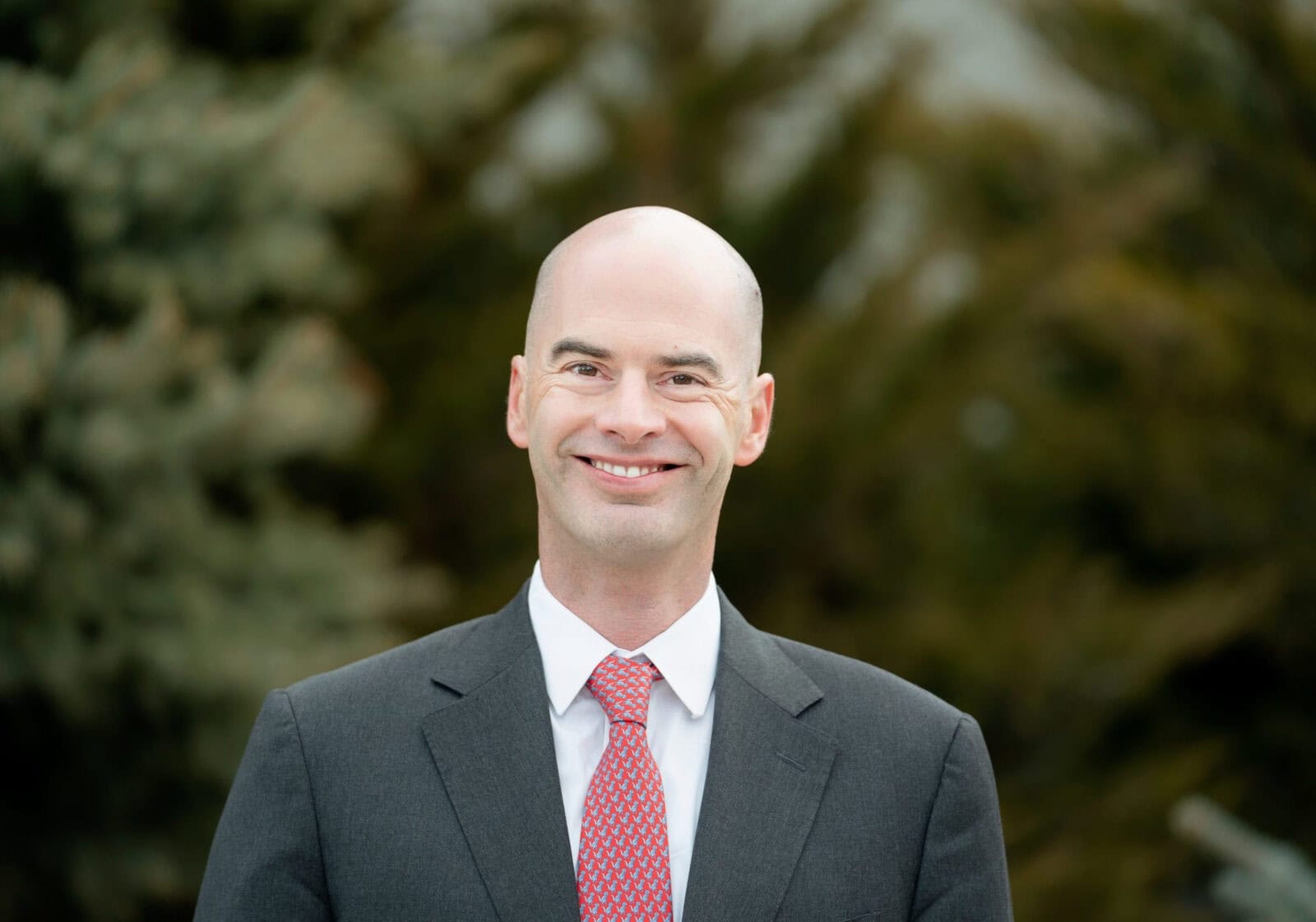
When Walter Panzirer took the stage in Las Vegas to announce a $20 million commitment from the Leona M. and Harry B. Helmsley Charitable Trust to Intermountain Health, he was not speaking as a distant benefactor reading from a press release.
He spoke as a former paramedic, firefighter, and police officer who spent two decades responding to the exact kind of crises the gift is designed to prevent.
The commitment, described as one of the largest philanthropic investments of its kind in Nevada’s history, will fund the expansion of pediatric behavioral health specialty services across the state, giving children struggling with anger, anxiety, and depression access to advanced, evidence-based care close to home rather than being sent hundreds of miles away during a crisis.
Panzirer is the grandson of Leona Helmsley, and his path to the Trust’s boardroom was as improbable as it is now central to its mission.
Raised in California and later rooted in South Dakota, he built his early career on the front lines of emergency medicine, working as a paramedic and later as a firefighter and police officer in both states.
Those years exposed him firsthand to the stark disparities in the quality of care available to families depending simply on where they lived. He has since been inducted into the American Telehealth Association’s College of Fellows and the South Dakota Hall of Fame, and he sits on numerous nonprofit and educational boards.
His connection to the Trust is woven into a deeper family story that gives his current work its emotional gravity.
Panzirer’s father, Jay Robert Panzirer, was Leona Helmsley’s only child, from her first marriage to attorney Leo Panzirer.
Jay died suddenly of a heart attack brought on by cardiac arrhythmia in 1982, at age 42, collapsing during a business meeting in Orlando and leaving behind a wife and four young children, Walter among them.
Twenty-five years later, when Leona Helmsley died in 2007, her will provided for only two of Jay’s four children, Walter and his older brother David, each receiving a $5 million outright bequest plus a $5 million trust, with an unusual condition attached: to keep the inheritance, each grandson had to visit their father’s gravesite at least once a year, a visit logged in a register at the family mausoleum.
Alongside that emotionally complicated inheritance came something neither brother expected: both were named Trustees of the newly formed Helmsley Charitable Trust, an appointment Walter has said came “to his great surprise.”
What followed has become one of modern philanthropy’s more striking sibling stories. David, whose own children were later diagnosed with type 1 diabetes, built the Trust’s Type 1 Diabetes Program, now directing roughly $50 million a year toward research and care, around that personal reality.
Walter, drawing on years spent racing to cardiac arrests, strokes, and mental health crises as a first responder, built the Trust’s Rural Healthcare Program around his own front-line reality: that a family’s distance from modern emergency care can determine whether they live or die.
There is a quiet resonance in the fact that a grandson shaped as a teenager by his own father’s sudden, fatal cardiac event has spent his career as a trustee equipping rural ambulances, law enforcement vehicles, and state parks with defibrillators and modern cardiac technology so that other families are not left waiting for help that arrives too late.
That ethos runs through his remarks on the Intermountain Health gift. “Many of our children and adolescents navigate behavioral issues, including anger, anxiety, and depression,” Panzirer said.
“By providing youth access to equitable and developmentally appropriate services closer to home, Intermountain will strengthen early intervention and reduce reliance on emergency and inpatient care.”
The sustained, multiyear investment will help build a comprehensive pediatric behavioral healthcare model with a centralized continuum of care, expanding access to specialized practitioners and delivering treatment that spans the full spectrum of pediatric mental health needs, built around the belief that access to high-quality care should not depend on a family’s ZIP code, a principle that echoes Panzirer’s own frontline observations.
The gift also anchors Intermountain’s emerging Nevada Campaign for Kids, a historic fundraising effort co-chaired by Bill and Wendy Hornbuckle that supports the health system’s broader ambition to build a full continuum of pediatric specialty care in the region, including plans for an 826,600-square-foot standalone children’s hospital.
David Flood, Intermountain Health’s Chief Development Officer and President of the Intermountain Foundation, called the Helmsley commitment a catalyst for “a historic moment in time for children’s health in Nevada,” adding that “every young person deserves the opportunity to live their healthiest life.” Mitch Cloward, Intermountain’s Region President, framed it as proof of what is possible “when mission-driven organizations work together on behalf of children and families.”
Intermountain Health, a nonprofit system based in Salt Lake City, operates 34 hospitals and roughly 400 clinics across six western states, with about 4,600 employed physicians and advanced practice providers, and a health plan, Select Health, serving more than a million members. Backed by more than a century of pediatric care expertise, it is now extending into Nevada.
This is not the Helmsley Trust’s first investment in Nevada’s medical infrastructure. The Trust previously funded grants that expanded access to ECMO technology, the temporary heart and lung support system used for critically ill patients across the state, part of a longer pattern of quietly building out emergency and specialty capacity in communities that might otherwise go without it.
The Intermountain gift is, in many ways, a single data point inside a much larger philanthropic engine. Panzirer has helped steer the Trust’s Rural Healthcare Program to more than $900 million in grants awarded across nine states, including Hawaii, Iowa, Minnesota, Montana, Nebraska, Nevada, North Dakota, South Dakota, and Wyoming, plus the U.S. Pacific territories of American Samoa and the Commonwealth of the Northern Mariana Islands (Helmsley Charitable Trust).
That program has funded a strikingly tangible list of improvements: advanced x-ray and CT equipment for dozens of critical access hospitals with decades-old machines, a $13 million Helmsley Behavioral Health Center expanded adolescent mental health access in South Dakota, $8.8 million toward telerobotics research aimed at enabling remote surgery across vast distances, more than $27 million to fund ultrasound imaging devices and sonography training across North Dakota, and thousands of automated external defibrillators placed with law enforcement agencies and state parks so that cardiac arrest victims in remote areas have a fighting chance before an ambulance arrives.
Rural healthcare is only one pillar of the Trust’s broader portfolio, which also funds Crohn’s disease research, Type 1 diabetes prevention and treatment, healthcare and disaster preparedness in Israel, and food security and health interventions across Sub-Saharan Africa. Since it began active grantmaking in 2008 following Leona Helmsley’s death, the Trust has approved well over $2.4 billion in grants and now holds more than $7 billion in assets, giving it substantial capacity to keep expanding this work in the years ahead.
What distinguishes the Intermountain Health commitment is that throughline back to Panzirer himself.
He is not merely approving grants from behind a desk; he is a former first responder and a son who lost his father to a sudden cardiac event decades before he ever imagined leading a multibillion-dollar trust, and who has personally witnessed what happens when a rural family, or an anxious teenager, cannot get specialized care fast enough.
His stewardship has turned that lived urgency into one of the more consequential rural and behavioral health philanthropic strategies operating in the country today, and the $20 million gift to Nevada’s children is the latest, deeply personal chapter in that story.