
$20 million gift: Jim and Augustine Smith’s record gift to medical school scholarships keeps homegrown doctors serving their own communities
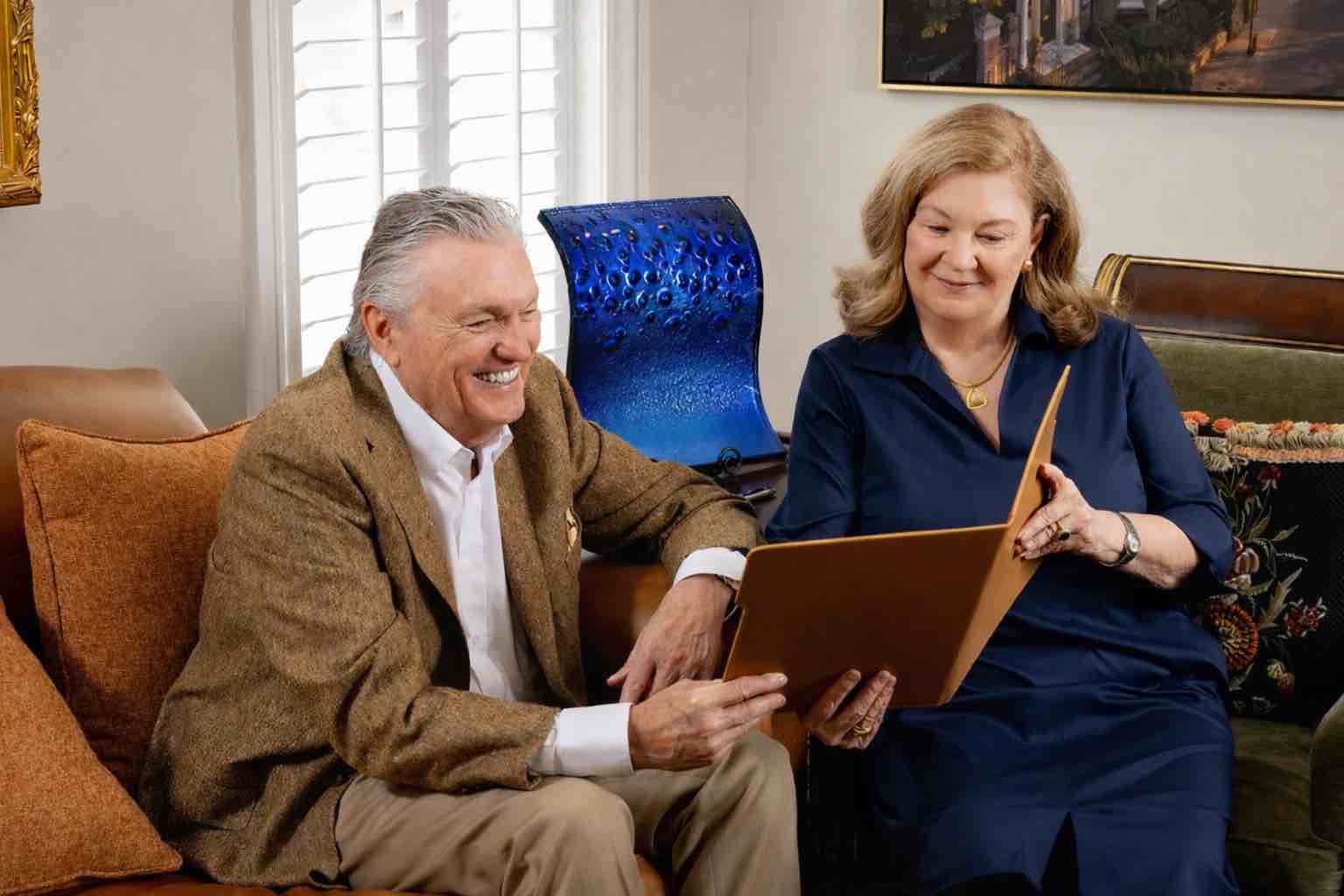
Jim and Augustine Smith, two Virginia Tech alumni who rose from modest beginnings in Roanoke to build a senior‑living and real estate empire, have committed $20 million to endow in‑state medical school scholarships at the Virginia Tech Carilion School of Medicine — the largest single scholarship gift in the university’s history.
Their goal is deceptively simple yet profoundly ambitious: to remove financial barriers for talented Virginians who want to practice medicine and, in doing so, to strengthen the physician pipeline serving communities across Roanoke, Southwest Virginia, and the commonwealth for decades to come.
For the Smiths, this is not a transactional act of charity but the culmination of a lifelong relationship with Virginia Tech, with Roanoke, and with the idea that access to education can transform both individual lives and regional health outcomes.
Jim Smith, a sociology graduate of the Class of 1974, and Augustine, an accounting graduate of the Class of 1971, have been investing in that idea for years — first with a $1 million unrestricted endowment that helped launch the young medical school, and now with a record‑setting scholarship fund designed explicitly to keep talented, service‑minded physicians in Virginia.
“Investing in the education of our most talented young people, I view as money well spent,” Jim has said, a sentiment that neatly captures the couple’s conviction that philanthropy should be both deeply personal and rigorously practical.
Their story begins far from the boardrooms and investment committees that would later define much of their professional life.
Both grew up in working‑class families in Roanoke, meeting as students at Stonewall Jackson Junior High School, where Jim would later recall taking Augustine to an eighth‑grade sweetheart dance.
They were, as he describes them, “strivers”: adolescents intent on education as their path forward, each taking on leadership roles and pushing toward goals that exceeded the expectations of their circumstances.
Augustine went on to Virginia Tech on a four‑year scholarship from the International Ladies Garment Workers Union, an experience that left an indelible mark on the way she thinks about opportunity, responsibility, and giving back. “How could I not want to give back?” she has said. “I have first‑hand knowledge of what it means to have ambition but limited resources to achieve those goals.”
That early scholarship support is the quiet engine behind the Smiths’ philanthropic philosophy. Augustine’s Virginia Tech years — financed largely by that union scholarship and supplemented by other awards — gave her entry into the accounting profession at a time when women in the field were still pushing against entrenched barriers.
She began her career at Niles and Niles and later joined Peat Marwick Mitchell & Co., a predecessor of KPMG, eventually advancing to management.
When she audited a bank acquisition in Rocky Mount, Virginia, she saw not just a set of balance sheets but a gap in professional services: the region had no local CPA firm.
She founded one, growing it from a sole proprietorship into a partnership while also teaching accounting at Ferrum College and serving in the Chamber of Commerce and Business Women’s Association — a pattern of community engagement that foreshadows the regional focus of the couple’s scholarship giving.
Jim’s trajectory into health‑care‑related entrepreneurship emerged from a similar blend of service and opportunistic insight.
A Roanoke native who served in the Virginia National Guard and trained as a medic, he took his first steps into higher education at Virginia Western Community College, earning an associate’s degree in business management before transferring to Virginia Tech.
Early roles in job training and health positions for the Commonwealth of Virginia exposed him to the structural challenges in health care access and financing. He later assumed a leadership role at Blue Cross/Blue Shield as an intermediary for the U.S. Department of Defense, from which he observed the demographic and policy pressures building around aging, coverage, and long‑term care.
Recognizing a looming gap in senior housing, he founded Smith/Packett Med‑Com LLC, which would go on to develop more than 200 facilities across the continuum of independent living, assisted living, and memory care.
Over time, their business interests diversified, but the through‑line remained the same: health, aging, and the infrastructure that sustains both. Jim launched Harmony Senior Services, a senior living operations company, and Wessex Capital Investments, a private equity firm focused on senior housing and commercial real estate.
From their current home base in Charleston, South Carolina, where Wessex Capital is headquartered, the Smiths have continued to see Virginia not as a market they once left, but as a community whose future they still feel responsible for helping shape.
As Jim has explained, reflecting on his philanthropic motivations, declining government support for medical education, growing student loan burdens, and uneven health care coverage convinced him that private donors would have to shoulder more of the responsibility for ensuring robust care in regions like Southwest Virginia.
That sense of obligation crystallized around the Virginia Tech Carilion School of Medicine long before the current gift. When the idea of a public‑private medical school and research institute in Roanoke was first announced in 2007 by then‑Virginia Tech President Charles W. Steger and Carilion Clinic President and CEO Edward G. Murphy, the Smiths were early, vocal champions.
Jim served as the first chair of the medical school’s advisory board and sat on the Virginia Tech Board of Visitors during the formative period when the school and its companion, the Fralin Biomedical Research Institute, were taking shape.
That same year, the couple provided a $1 million endowment to help address the new school’s most pressing needs, a gift that, for a time, stood as the largest in the school’s history and seeded the James R. Smith Family Charitable Foundation Scholarship.
The students who received that earlier support offer a window into the impact the Smiths intend to expand through their new commitment. Fourth‑year student Maedot Haymete, a recipient of the Smith Family Scholarship, has spoken about how scholarship aid reshaped not only her finances but her entire medical school experience.
Born and raised in Ethiopia, inspired by a documentary on Dr. Catherine Hamlin’s work on fistula, and after years of working and saving to qualify and apply to medical school, Haymete chose the Virginia Tech Carilion School of Medicine over more than a dozen offers because scholarship support made that choice viable.
She has said that financial aid “helps level the playing field with more established medical schools and attracts the best and brightest students,” allowing her to concentrate on learning and patient care rather than debt.
Another scholarship recipient, Amy Chen, now in a child and adolescent psychiatry fellowship at Children’s National Hospital in Washington, D.C., frames the Smiths’ role in explicitly relational terms. She has described moments during medical school when doubts crept in — moments familiar to many trainees — and the knowledge that the Smiths believed in her, despite never having met her, became an anchor.
Their scholarship not only made her education financially feasible but also freed her to choose a specialty she loves rather than one dictated by loan obligations. That sense of being seen and backed by donors who understand the stakes is precisely what Jim and Augustine hope will ripple outward as their new endowment begins to support a new generation of physicians.
The mechanics of the $20 million gift are straightforward, but the design is intentional. The endowment is focused on in‑state scholarships, with priority for Virginians with financial need, reflecting both the Smiths’ own origins and their belief in the retention power of state‑based medical education.
Nationally, more than half of physicians remain in the state where they complete their residency, a statistic that Virginia Tech leaders point to as evidence that targeted investments in training can translate into long‑term workforce gains.
For Jim, reducing the debt load for in‑state students is a direct strategy to keep more doctors in places like Roanoke and Southwest Virginia, rather than seeing them pulled away by higher‑paying urban markets or pressured into specialties they do not truly want.
Yet beyond strategy and statistics, the gift is also an expression of personal memory and gratitude.
Augustine frequently returns to the image of her younger self — a determined student whose ambitions outpaced her means — when she talks about why scholarships, specifically, matter so much to her.
She has argued that some people fail to give simply because they cannot fully imagine the precariousness of others’ circumstances, the way a single scholarship can open not only a college door but an entire career.
“It is very satisfying to know you have provided resources to better a person’s life — and if it impacts the entire community, as it generally does, that is even better,” she says, calling scholarships for the medical school “such an endeavor” and emphasizing how “appreciative” she is for the chance to make that possible.
Within the Virginia Tech community, the Smiths are viewed not only as major benefactors but as partners in defining what a relatively young medical school can become.
Dean Lee Learman has called their gift a “visionary investment” that both honors and accelerates the school’s mission to educate and retain physicians in Virginia. University President Tim Sands has described them as “champions of our medical school from the beginning,” crediting their leadership and generosity with expanding access to medical education and strengthening the talent pipeline that will serve communities “in Virginia and beyond.” Jackie Wieland, an alumna who now chairs the medical school’s principal advisory board — a role Jim first held — has said that the Smiths “truly exemplify the Virginia Tech spirit of Ut Prosim (That I May Serve), as well as giving in medical education.”
The Smiths insist they are simply doing what their experience prepares them to do.
They have navigated financial crises, built companies tied to the health and dignity of older adults, and watched public funding for higher education and medical training erode even as the need for physicians has intensified.
From that vantage point, a $20 million scholarship endowment is both a capstone and a beginning: a capstone to years of advocacy, service, and earlier giving, and a beginning for the many students — most of them strangers — whose careers will be made possible by the Smith Family Scholars program.
What distinguishes this gift is not only its size but the clarity of its purpose and the intimacy of its geography.
It is rooted in Roanoke, shaped by the Smiths’ own scholarships and struggles, and oriented toward a future in which financial background does not determine who gets to wear a white coat in Virginia.
As more Smith Family Scholars step into clinics, hospitals, and rural practices over the coming years, they will carry with them a legacy that began with two Roanoke teenagers determined to turn opportunity into obligation — and, ultimately, into a transformative investment in the health of their home state.