
$20 million gift from Comcast pioneer Julian Brodsky and wife Lois opens a new front door to learning at museum of art
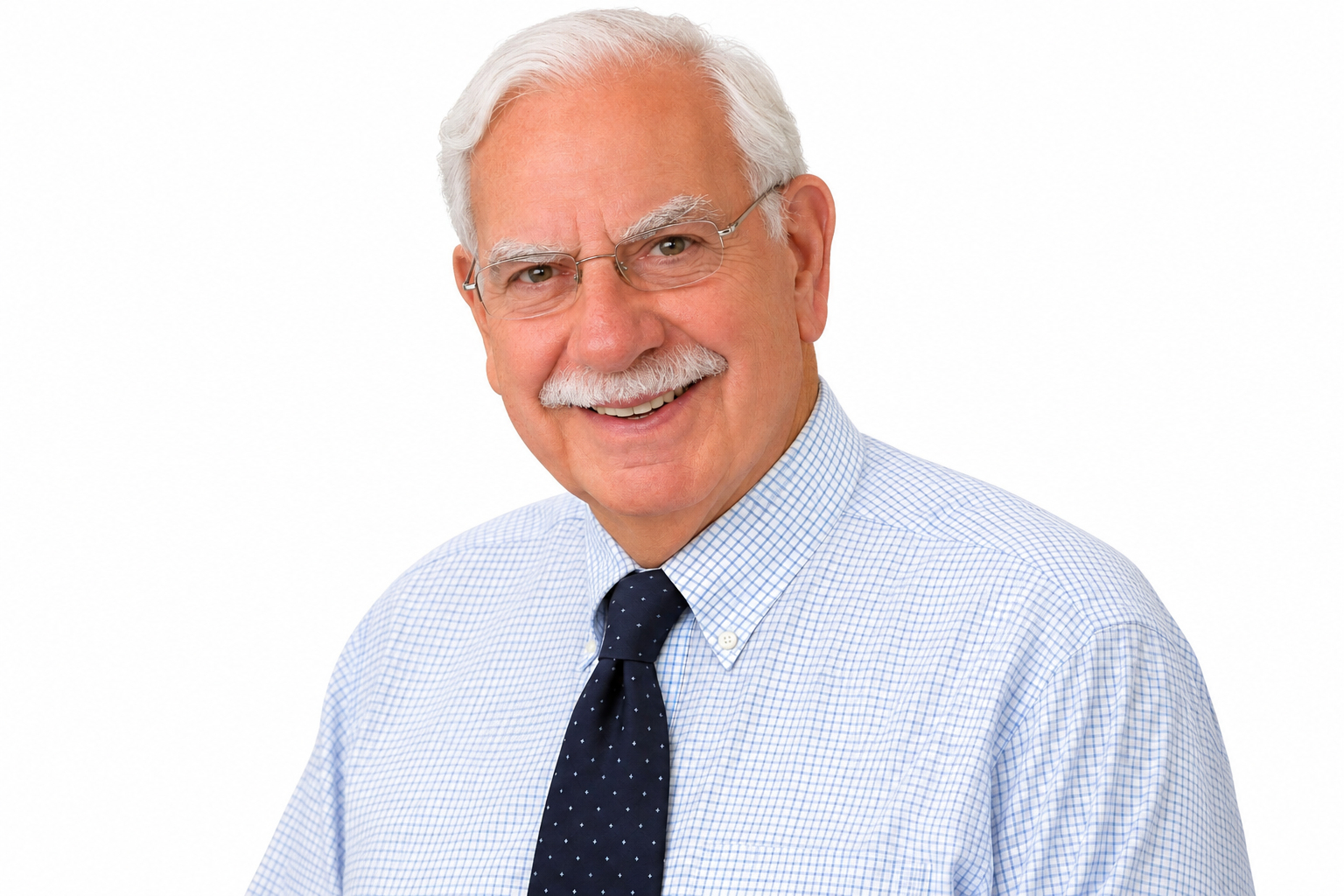
For more than three decades, Lois Brodsky stood before groups of visitors at the Philadelphia Museum of Art and helped them see.
She volunteered at the museum in 1982, became a weekday guide four years later, and led tours until 2019.
Before that, she had been a schoolteacher.
Now she and her husband, Comcast co-founder Julian A. Brodsky, are ensuring the next generation of young visitors has room to learn there, too.
The couple has pledged $20 million to create the Lois G. and Julian A. Brodsky Learning and Engagement Center, a new education space just inside the museum’s north entrance. It is one of the largest gifts in the museum’s history.
Plans are still early, but the concept calls for a family learning center, art studios for hands-on work, a visitor orientation area, and a multipurpose community hub.
Most of the money will go to construction, with a portion set aside in endowment to sustain the programs that fill the space.
The gift also includes a matching component meant to draw in other donors.
“It’s been an enormous part of our lives and our family’s lives,” Julian Brodsky, said of the museum.
In a statement, he added that the center “comes at a wonderful moment, bringing together so many of the initiatives we are passionate about and reflecting our deep love for the Philadelphia Museum of Art.
Throughout our lives, we have been ardently involved in educational initiatives, with a particular focus on children and families from underserved communities.”
The need is real.
The museum hosts about 36,000 schoolchildren a year, and the space devoted only to education today totals less than 6,000 square feet.
The Brodsky Center is expected to cover about 19,000 square feet, more than tripling that footprint. Rooms now shared part-time between classes and meetings will become full-time learning spaces, including a stretch of the vaulted walkway that reopened in the museum’s recent renovation.
Asked whether the number of students could grow, Brodsky answered plainly: “There’s no reason why it can’t be substantially higher.”
Daniel H. Weiss, the museum’s director and CEO, sees the center reaching well beyond school groups.
He imagines it in use “all day long and into the evening for adult learners, for various kinds of groups, for senior communities, and for advanced learners.”
The museum is even considering longer weekday hours, since being closed on Tuesdays and Wednesdays now limits what educators can offer.
Audrey Hudson, the museum’s deputy director for learning and engagement, called the center “an intentionally designed, purpose-built space that inspires limitless educational experiences grounded in the PMA’s collection.”
Weiss was careful to describe the project as a shared idea rather than a donor’s monument. It is, he said, “a vision shared between the Brodskys and the museum, not one of these projects being built because someone wanted to build it.”
He called the couple “a great Philadelphia story,” noting that across some 40 years they have served on committee after committee as the museum evolved, “Lois as a guide and volunteer, Julian as trustee.”
The center has been a long time coming.
The Brodskys first discussed it years ago, when the late Frank Gehry was sketching a grander and costlier version.
After Weiss arrived, the museum rethought the plan, and the Philadelphia firm MGA Partners, which redesigned the museum’s auditorium, is now the architect, with a design expected next year.
Brodsky admired Gehry’s brilliance but appreciated a more economical approach. “There was no pressure for me to reduce the cost structure, but Dan was determined to do it right,” he said. “It did not shrink.”
For Weiss, who has spent much of his first year on the museum’s finances and organization, the gift is a turning point.
“This is about inventing a new future for the institution,” he said. “It’s a good moment.”
To understand why the Brodskys would choose a learning center over a gallery or a grand facade, it helps to know where Julian Brodsky started. He grew up in Philadelphia, playing basketball every day and joked that he once held his own against an Overbrook schoolmate named Wilt Chamberlain until Chamberlain turned 14.
He studied at Wharton, where he worked on the campus literary magazine and called himself “probably the only socialist” in the business school.
After two years in the Army and a stint in accounting, he was handling the books for a businessman named Ralph Roberts when Roberts began weighing the purchase of a small cable system in Tupelo, Mississippi.
Brodsky walked into his office and announced, “There is no way you are doing this without me. I just resigned.”
He arrived on his first day with a card table and a folding chair from home because he had no desk. With Roberts and Daniel Aaron, he built that 1,200-subscriber system into Comcast, and for three decades he was the company’s chief financial officer and dealmaker.
His partners liked to say he kept his foot on the gas. He later launched the company’s venture capital arm and mentored Brian Roberts as he took over the business before retiring from the board in 2011.
Even with enormous success, the Brodskys lived for decades in the same comfortable Cherry Hill house they bought in 1972.
“We have wonderful neighbors, and the house is comfortable,” he once said, “so what more do we need?”
Today they live in Center City.
Their giving has the same unshowy, steady quality.
The Julian A. and Lois G. Brodsky Foundation, which the couple created in the mid-1990s, gives only to organizations it already knows, about a hundred of them each year, totaling roughly $2.4 million annually.
Most of the grants go to Philadelphia’s cultural and educational institutions, and the two remain its directors.
The art museum has been at the center of it all.
The Brodskys were major supporters of its 125th anniversary campaign, after which the gallery devoted to Constantin Brancusi was named the Lois Green Brodsky Gallery.
They endowed the museum’s lead curatorship in photography, now held by Peter Barberie, the Brodsky Curator of Photographs.
Their Installation and Exhibition Fund has underwritten shows across the museum, and they helped bring the galleries of 19th-century European painting back to life.
Julian joined the board in 1995 and is now a trustee emeritus who still serves as vice chair of the library and archives committee.
Lois sits on the committees for conservation, European art, and prints, drawings, and photographs.
Across the Parkway, they have been among the leading supporters of the Barnes Foundation, an institution its founder created as a school.
They contributed to its Second Century Campaign, and the Lois and Julian Brodsky Publications Fund and Exhibition Fund support the scholarly catalogues and exhibitions that carry the collection to new readers.
At the Philadelphia Chamber Music Society, where Julian has served on the board, the endowed Julian and Lois Brodsky Education Fund helps pay for free children’s concerts, school master classes, and free student tickets.
Their foundation also supports the Curtis Institute of Music, Settlement Music School, and the Library Company of Philadelphia, where Lois is a trustee emerita.
Education links almost everything they support. The couple helped sponsor the 60th anniversary of Community College of Philadelphia and belong to the group of donors who have given the college more than $100,000.
They have supported Temple University’s libraries and its public radio station, WRTI, as well as Teach For America and the Ed Snider Youth Hockey Foundation, which pairs sports with schoolwork for city kids.
Their giving also reflects their Jewish heritage and their concern for memory, including support for the U.S. Holocaust Memorial Museum and Yad Vashem.
That interest in memory runs through the family too.
When Julian’s brother, the physicist Marc H. Brodsky, stepped down as head of the American Institute of Physics, the Brodsky family provided lead gifts for a fund in his name that records the oral histories of scientists in industry.
Julian understood the stakes firsthand: after a fire destroyed Comcast’s early records, the company rebuilt its history by interviewing the people who had lived it.
He also endowed the annual Dan Aaron Lecture for Innovative Management, honoring his late partner by giving rising cable executives time with the industry’s leaders.
Seen together, the gifts tell a consistent story about two people who believe that culture is something you learn and share, not something you simply own.
The new center brings that belief to the place that has meant the most to them. Somewhere in the museum’s future, a child from a Philadelphia school will step through the north entrance into a studio built for her, pick up a brush, and begin to look closely at the world. Lois Brodsky spent a lifetime helping visitors do exactly that.
Now there will be room for many more.