
$18 million gift from Peter Jordan strengthens university’s chemistry research and teaching
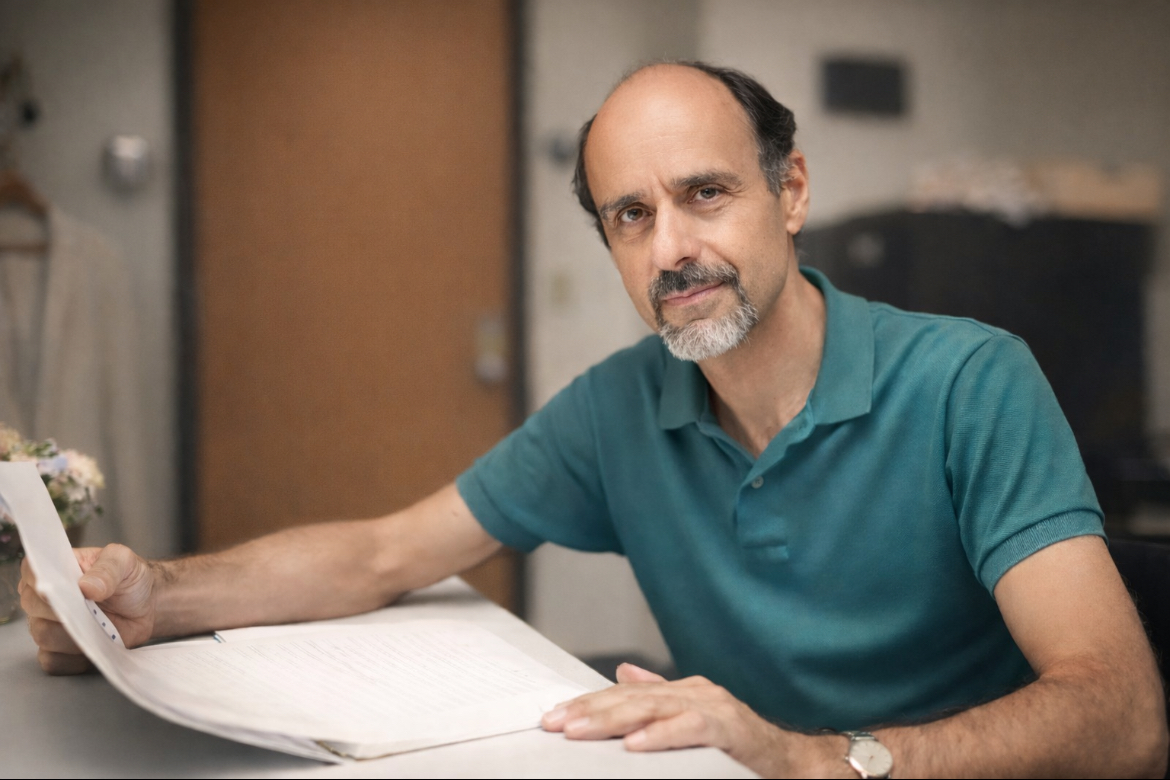
Retired Brandeis University chemistry professor Peter Jordan has spent a lifetime helping students understand the invisible forces that govern the physical world. Now, with his wife, longtime higher education administrator Barbara Palmer, he is ensuring that future generations of scientists will have the tools, mentors, and opportunities they need to push that world-shaping research even further. The couple’s $18 million gift to Brandeis is being hailed as “pivotal” for the university’s Chemistry Department, a powerful act of generosity that blends deep personal history with a forward-looking vision for science and education.
For Jordan, who taught at Brandeis for nearly 50 years before retiring in 2011, the gift represents an emotional culmination of a relationship with the university that has spanned almost his entire professional life. He joined Brandeis when it was still a relatively young institution with big ambitions in the sciences, and over the decades became one of the pillars of its chemistry program. A specialist in theoretical and biophysical chemistry, he helped establish the department as a place where rigorous theory, sophisticated computation, and real-world biomedical questions could coexist fruitfully. His research group probed the behavior of molecules and proteins at the most fundamental level, contributing to the understanding of how biological systems work and how they might be manipulated for human benefit. Along the way, he authored more than a hundred scientific papers and a chemistry textbook, building a reputation for intellectual depth coupled with a calm, methodical teaching style that generations of students came to rely on.
Those who passed through his courses often remember not just the content but the atmosphere he created in the classroom. Jordan was known for taking students seriously, whether they were aspiring chemists or curious non-majors who simply wanted to understand how the world works. One story he has shared with particular fondness involves a classics major who took his freshman chemistry course out of sheer interest and ended up being one of the strongest undergraduates he ever taught, a reminder of how a great teacher can spark unexpected academic journeys. That openness, patience, and delight in students’ growth helped define the Brandeis experience for countless undergraduates.
Palmer’s connection to the university followed a parallel, equally important track. While Jordan was in the lab and classroom, she was working behind the scenes in roles that are vital to any university’s stability and progress. Over the years, she served as associate dean, university registrar, and head of institutional research, positions that put her at the center of everything from course scheduling and graduation requirements to data-driven planning and accreditation. Her work helped Brandeis understand itself—its students, its programs, and its evolving needs—so that leaders could make informed decisions about where to invest and how to adapt. Colleagues have described her as a steady, incisive presence who brought both compassion and analytical rigor to complex institutional questions.
Together, Jordan and Palmer came to embody a certain Brandeis ideal: a blend of serious scholarship, administrative competence, and quiet commitment to community. Even after their official roles ended, they remained closely connected to the campus, returning for events, staying in touch with former students and colleagues, and following the university’s progress with a sense of personal pride. Their philanthropy reflects that enduring bond. In 2018, they endowed a summer undergraduate research fellowship in chemistry to give young scientists the chance to spend a summer deeply immersed in lab work—often the first time students experience research as a full-time, open-ended endeavor rather than a set of prescribed experiments. Participants in that program have gone on to graduate school, industry, and other scientific careers, carrying a bit of the Jordan-Palmer legacy into every new lab they join.
The new $18 million gift dramatically expands that legacy. Rather than spreading their support thinly, Jordan and Palmer chose to focus on areas they know can have outsized impact: faculty excellence and graduate training. Their gift will fund a new senior professorship in theoretical chemistry, a junior professorship in physical chemistry, and three graduate research fellowships in the Chemistry Department. These endowed positions are more than titles; they are long-term commitments that give Brandeis the ability to attract and retain top-tier scientific talent in an increasingly competitive global market. The senior professorship will allow the university to recruit or recognize a scholar whose work at the frontier of theory can shape entire subfields. The junior professorship will help launch the career of a rising star in physical chemistry, giving that person the security and resources needed to pursue bold ideas. The graduate fellowships will support promising young scientists during some of the most demanding, formative years of their careers.
Jordan understands as well as anyone how critical that kind of backing can be. Over his own career, he navigated the ebb and flow of research funding cycles, applying for grants, managing budgets, and trying to ensure that talented students in his lab had the resources they needed to focus on their work. He has spoken about the importance of having stable, flexible funds—support that is not tied to a short-term project or a narrow set of deliverables, but can instead be used to seize new opportunities, invest in experimental equipment, or explore a risky idea that might not yet be ready for a traditional grant proposal. By endowing professorships and fellowships, he and Palmer are giving future faculty and students that kind of freedom: the ability to follow the science where it leads, rather than where the funding cycle happens to point.
The personal story behind this generosity adds another layer of meaning. Jordan’s parents were Jewish refugees who fled Nazi Germany for California in the 1940s. In their new country, his father, an engineer by training, initially struggled to find work because of his background, eventually securing a position in the defense industry during a period when U.S. military and industrial needs were expanding rapidly. In his spare time, his father’s inventive mind turned to domestic challenges. He designed and patented one of the first reliable and widely used garbage disposals, a device that quietly improved daily life for countless households. That blend of perseverance, technical skill, and practical ingenuity left a lasting imprint on the family and on Jordan’s own path into science.
Looking back, Jordan has described his appointment as a professor at Brandeis—a research university founded by the American Jewish community in response to the exclusion Jewish students and academics faced at elite institutions—as something his father experienced as a “full circle” moment. The son of refugees, who had once faced closed doors, was now a faculty member at a university built on the principle that those doors should remain open. The new gift is explicitly dedicated in honor of Jordan’s parents, a tribute that links their flight from persecution and their rebuilding of a life in America with the flourishing of scientific inquiry and education at Brandeis. It is a story of historical trauma transformed into opportunity and hope for future generations.
University leaders have been quick to recognize just how consequential this act of generosity is. Brandeis President Arthur Levine, who has been working to position the university as a model of a modern, career-attuned liberal arts institution with strong scientific foundations, has praised the gift as both a vote of confidence and a strategic catalyst. He has emphasized that endowed chairs and fellowships in chemistry will enhance not only research output but also the student experience, as undergraduates gain access to faculty at the forefront of their fields and to labs where cutting-edge work is underway. The presence of renowned scholars and energetic graduate students can transform the atmosphere in a department, drawing in curious undergraduates, spurring interdisciplinary collaborations, and elevating the university’s profile among peer institutions and funding agencies.
Within the Chemistry Department itself, the mood is one of gratitude and excitement. Faculty members and current students alike understand that this level of support is rare, particularly at a university of Brandeis’s size. The new professorships will allow the department to plan not just for the next few years, but for decades ahead, building areas of strength that can weather changes in external funding and shifts in scientific fashion. The graduate fellowships will help the department recruit highly sought-after students, many of whom must weigh multiple offers and look closely at the kind of financial stability, mentorship, and research environment a program can provide. Knowing that there are fellowships tied directly to the department’s core mission sends a powerful signal that Brandeis is serious about investing in chemistry at the highest level.
For alumni and friends of the university, Jordan and Palmer’s gift offers a vivid example of how a long, successful academic life can culminate in a form of giving that feels both personal and profoundly impactful. It is personal because it is rooted in their own histories: his parents’ escape from Nazi Germany, his father’s inventive streak, their shared decades at Brandeis, and the many students and colleagues who shaped their lives. It is impactful because it will change the trajectory of a department, create new opportunities for young scientists, and help ensure that Brandeis continues to punch above its weight in the scientific world.
In conversations about the gift, Jordan has framed it less as a grand gesture and more as a natural extension of his gratitude—for his parents, for the United States, and for Brandeis. He often speaks of feeling “lucky” to have spent his career teaching and doing research in a field he loved, surrounded by colleagues and students who inspired him. Palmer, with her deep understanding of how institutions evolve and adapt, sees the gift as a way to provide the kind of structural support that allows an academic unit to thrive, even in uncertain times. Together, they have chosen to transform that gratitude into a tangible, lasting resource for the university and the discipline that defined their lives.
As Brandeis looks ahead, the impact of their generosity will unfold in ways both visible and subtle: in the appointment of distinguished chemists to endowed chairs, in the dissertations of graduate fellows whose research pushes knowledge forward, in the enthusiasm of undergraduates who discover their passion in a well-equipped lab, and in the quiet pride of a community that knows two of its own have invested so deeply in its future. For Peter Jordan and Barbara Palmer, that is the true measure of their $18 million gift—not just its size, but its power to open doors, nurture talent, and keep alive the values of curiosity, resilience, and opportunity that have shaped their lives and the university they love.