
$12 million latest gift from Orlando Bravo raises his recent philanthropy well over $150 million
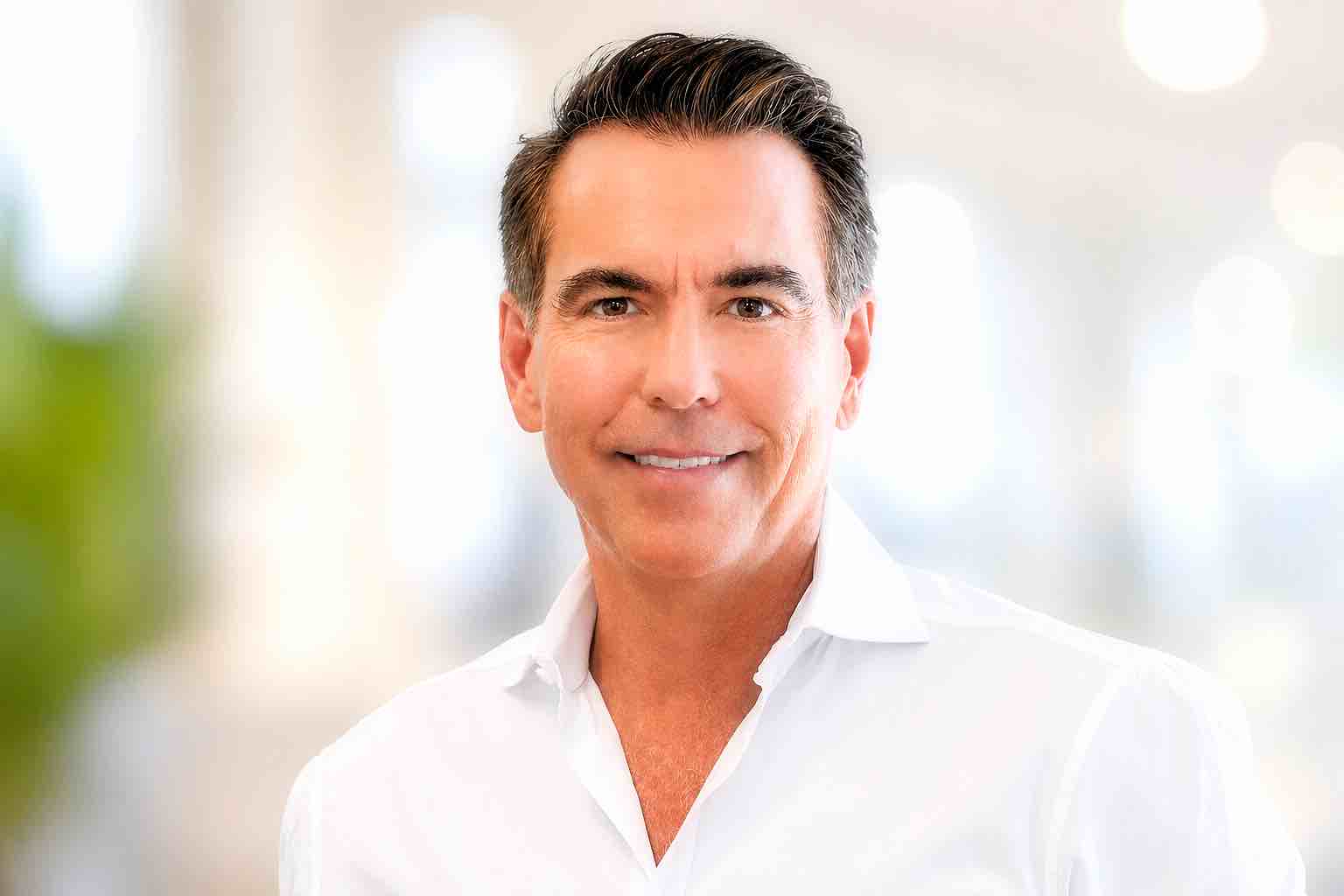
Orlando Bravo, the Puerto Rico–born private equity leader and co-founder of Thoma Bravo, has deepened his impact on Brown University with a new $12 million gift that reflects a broader philanthropic journey centered on opportunity, economics, and public policy.
The latest commitment from the Bravo Family Foundation will fund two Orlando Bravo University professors in economics and policy positions, jointly based in Brown’s Department of Economics and its newly launched Thomas J. Watson Jr. School of International and Public Affairs, with the explicit goal of attracting world-class scholars and supporting ambitious research on global trade, supply chains, international capital flows, and other policy-critical economic questions.
The professorships are endowed in perpetuity, meaning Bravo’s name and support will underwrite faculty research and student learning for generations, and Brown leaders describe the gift as among the largest the university has received specifically to bolster economic policy research.
This new gift does not come in isolation. It builds directly on a major $25 million commitment Bravo and his family foundation made to Brown in 2019, which created the Orlando Bravo Center for Economic Research and helped expand the university’s capacity in data-driven, policy-relevant economics.
That earlier gift supported high-impact research, faculty recruitment, and the creation of a convening hub where scholars gather to analyze issues such as growth, inequality, labor markets, and macroeconomic policy through an empirical lens.
Since its launch, the Bravo Center has funded research grants and assistantships, conference participation for students and faculty, visiting scholars, and mini-courses and lectures that expose Brown students to cutting-edge work. With the addition of the two endowed chairs, Bravo’s total giving to Brown now exceeds $45 million, spanning research centers, endowed positions, faculty development and student support.
Bravo’s loyalty to Brown is rooted in his own trajectory. Coming from a small town on Puerto Rico’s west coast, he has said that Brown was the first institution to give him a true opening, describing the university as “everything” for him at a formative time.
That sense of gratitude informs both the scale and the structure of his philanthropy: he doesn’t just support individual students, but builds durable academic infrastructure—centers, chairs, and funds—that can shape the university’s intellectual life over decades.
The new professorships he is endowing are meant not only to honor outstanding scholars but to free them to pursue ambitious research agendas and to mentor the next generation of economists and policy leaders.
For Brown, the chairs also serve as a powerful recruitment tool in the international talent marketplace, particularly as the Watson School positions itself as a leading training ground for future policymakers.
Beyond Providence, Bravo’s philanthropy has a strong anchor in Puerto Rico and in crisis response. In 2017, after Hurricane Maria devastated the island and he was inundated with calls for help, Bravo and his wife, Katy, created the Bravo Family Foundation.
He committed substantial capital to relief and rebuilding, then used that moment as a springboard to a longer-term agenda focused on community development, education, and entrepreneurship.
The foundation supports programs that help young people in Puerto Rico gain technical skills, mentorship, and access to networks that can turn ideas into viable companies.
Programs like entrepreneur cohorts, accelerator-style training, and targeted grants show Bravo’s commitment to building a base of capable, confident founders who can create jobs and opportunities at home rather than leaving for the mainland.
Over time, Bravo has increased his personal financial commitments to the foundation, positioning it as a significant vehicle for his giving. Its grantmaking has included support for youth programs, technology education, and startup ecosystems, always with an eye toward leveling the playing field for talented individuals who may lack traditional access to capital or elite networks.
In parallel, he and the foundation have responded to emergencies beyond Puerto Rico, including disaster relief contributions after events such as the Surfside condominium collapse in Florida and subsequent storms that battered the island.
These interventions are consistent with the theme that runs through his philanthropy: act quickly in crisis, then invest in long-term capacity.
Taken together, Bravo’s philanthropy describes a coherent arc. At Brown, he strengthens the intellectual and teaching capacity of an institution that profoundly changed his life, ensuring that students and scholars can probe the economic and policy challenges that define this era.
Through the Bravo Family Foundation, he channels substantial resources into Puerto Rico and other communities in need, coupling immediate relief with durable investments in people and ideas.
Across these arenas, his giving is less about one-time gestures and more about constructing platforms—professorships, research centers, entrepreneurship programs—that can keep generating opportunities long after the headlines about a single gift have faded.