
$100 million new effort headed by Anna Adeola Makanju will fund partnership aimed at closing the stubborn gap between medical discovery and actual care
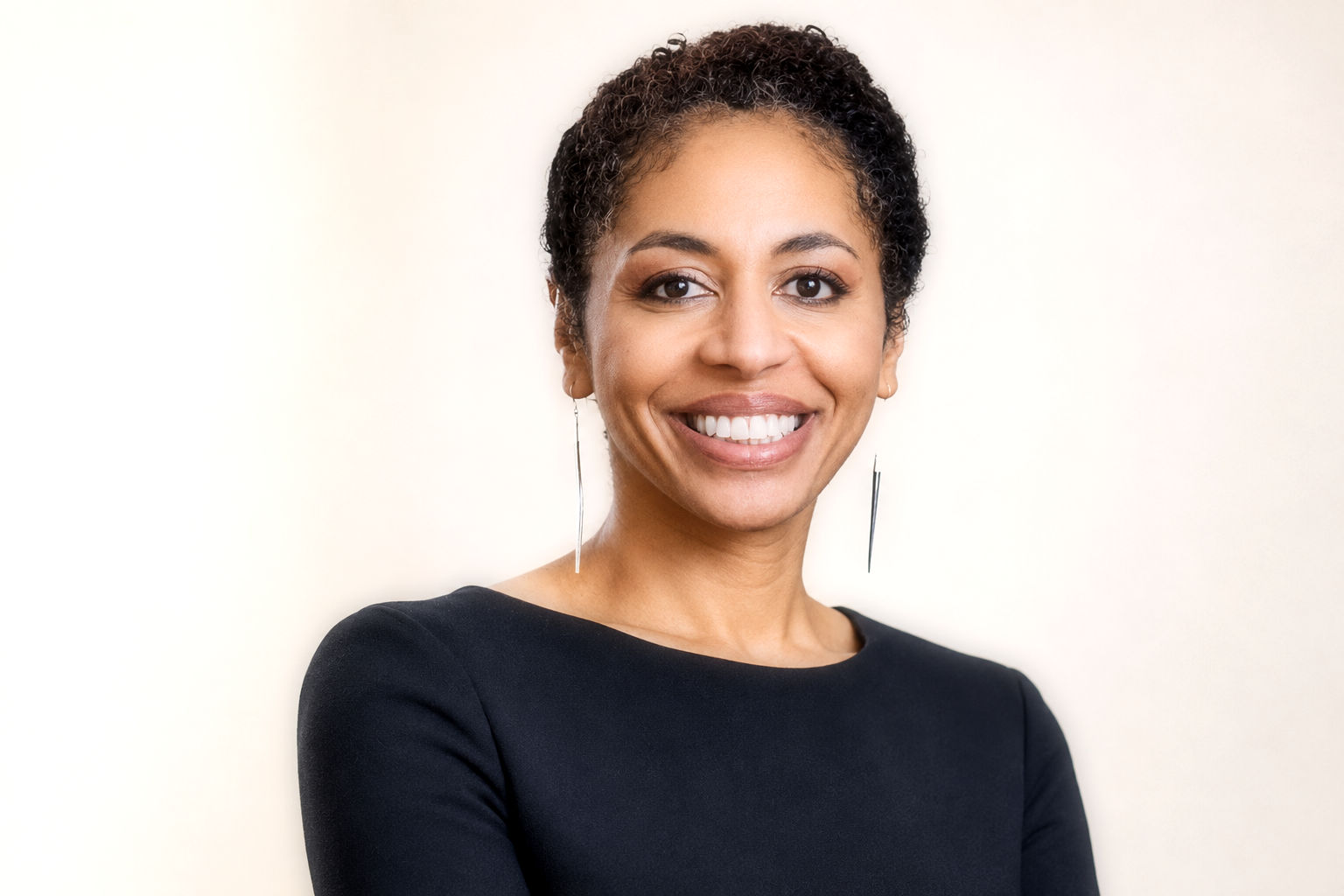
Anna Adeola Makanju has spent much of her life navigating borders and systems that often fail the people they are meant to serve.
Born in 1976 in what was then Leningrad to a Nigerian father studying medicine on a Soviet scholarship and a Ukrainian mother who worked as an engineer, she moved as a child through Germany, Arizona, Kuwait on the eve of the Gulf War, and eventually Texas.
By 16 she was already at university, studying linguistics and French.
Later came Stanford Law, clerkships at the International Criminal Court and the International Criminal Tribunal for the former Yugoslavia, and nearly a decade in government—first at the Pentagon, then as director for Russia on the National Security Council, and as a special policy adviser to the Vice President on Europe and Eurasia.
She worked on technology policy at Facebook and SpaceX before joining OpenAI, rising through public policy and global affairs roles until she became vice president of global impact.
In 2026 she moved into a new position at the OpenAI Foundation itself: Head of AI for Civil Society and Philanthropy.
Recently, that role produced its first major public act.
The OpenAI Foundation announced a $100 million commitment to a new public health effort and, with it, the formal launch of the department Makanju now leads.
The money will fund the Breakthroughs to Follow-Through Initiative, a partnership with the Common Health Coalition aimed at closing the stubborn gap between medical discovery and actual care.
The first target is hepatitis C. The goal is straightforward and ambitious: help participating states and localities at least double their cure rates over the next two years.
Hepatitis C is one of those modern medical ironies. Direct-acting antiviral drugs cure more than 95 percent of patients who complete an 8- to 12-week course, usually with few side effects. Yet only about one in three Americans diagnosed with the infection receive treatment within a year.
Recent estimates put the number of people currently living with the virus in the United States at roughly 1.7 million.
Prescriptions for the curative drugs peaked years ago and have since declined even as new infections continue. Left untreated, the virus can lead to cirrhosis, liver cancer, and death.
The problem is no longer primarily scientific; it is logistical, administrative, and human. Patients fall out of care. Records are fragmented.
Overstretched public health workers and clinicians lack the tools to find those who need follow-up and keep them on track.
The new initiative will put AI tools in the hands of local teams to address exactly those frictions. The technology can help identify people who have been diagnosed but never started treatment or who dropped out midway, synthesize scattered medical records, track progress through the care continuum, and free limited staff time for the conversations and relationships that actually get patients to a cure.
Participating jurisdictions will decide which tools fit their needs. Initial grants will support collaborations and nonprofit organizations in Alabama, Illinois, Louisiana, and Massachusetts.
Four more jurisdictions are expected to be named within six months. Over time the same approach is intended to expand to HIV prevention, certain curable cancers, and other conditions where proven treatments already exist but delivery lags.
Makanju framed the effort in language that reflects both her policy background and the Foundation’s stated purpose.
“Effective treatments already exist for hepatitis C and other diseases, yet too many people still aren’t receiving them,” she said.
The organizations closest to the problems, she added, understand what communities need but often lack the resources or technical capacity to harness the newest AI advances.
The Foundation wants those organizations to retain agency—to choose what tools to use or not to use—rather than have solutions imposed from outside.
The Common Health Coalition brings its own particular history to the partnership. Founded in 2023 by major health-care organizations including the American Medical Association, the American Hospital Association, AHIP, the Alliance of Community Health Plans, and Kaiser Permanente, the Coalition works to dissolve the long-standing silos between clinical care and public health.
Its chair, Dave A. Chokshi, is a practicing physician at Bellevue Hospital who previously served as New York City’s health commissioner during the height of the COVID-19 pandemic, overseeing the vaccination of more than six million New Yorkers. Chokshi has described the new initiative as an attempt to pair discovery with delivery and to build a more modern infrastructure capable of reaching the patients most in need.
“Dramatic progress on health is entirely within our reach,” he said, “but it requires pairing discovery with delivery.”
The $100 million pledge arrives against the larger backdrop of the OpenAI Foundation itself.
After OpenAI’s 2025 recapitalization, the nonprofit that controls the company received a substantial equity stake, at one point valued around $130 billion, turning it into one of the best-resourced philanthropic organizations in the world.
Board chair Bret Taylor has described the Foundation’s mission as enabling AI to solve humanity’s hardest problems while helping society become more resilient to the disruptions the technology will bring. In March the Foundation said it expected to invest at least $1 billion over the following year across life sciences and curing diseases, jobs and economic impact, AI resilience, and community programs—an early tranche of a longer $25 billion commitment focused on health breakthroughs and technical resilience.
Makanju’s new department is the piece dedicated to putting advanced AI in the hands of nonprofits, community organizations, and civil-society groups so they can scale what already works.
For Makanju, the work sits at the intersection of everything that came before.
The immigrant child who crossed continents, the national-security official who watched institutions strain under crisis, the policy professional who spent years translating complex technology for governments, and the OpenAI executive who helped shape the company’s global engagement now sit in a role explicitly charged with ensuring that the most powerful AI tools reach the organizations closest to the hardest problems.
Hepatitis C is only the first test case.
The larger bet is that the same combination of capital, technical capacity, and local leadership can turn proven medical advances into actual cures for far more people—and that civil society, properly equipped, can be a decisive partner in making that happen.
Whether the model scales beyond the initial states and the initial disease will depend on execution, on the willingness of local health departments and community groups to adopt the tools, and on the ability of the Foundation and the Coalition to keep the focus on delivery rather than novelty.
For now, the announcement marks a concrete step: $100 million, a new department, a named disease with existing cures, and a clear assignment to close the distance between what medicine can do and what patients actually receive.