
$100 million invested in the heartland: Glen Taylor’s entrepreneurial model for giving back
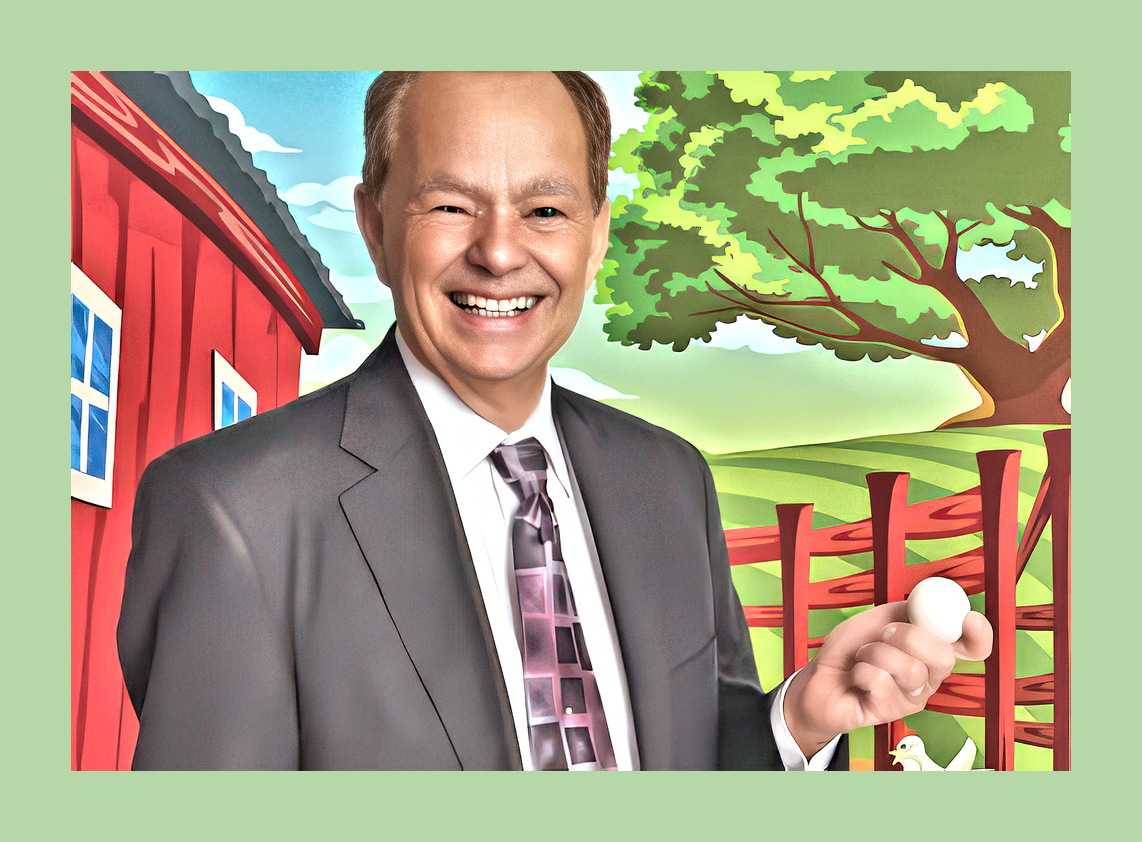
In a significant act of philanthropy rooted in his rural upbringing, Minnesota billionaire Glen Taylor has announced a new $100 million donation of farmland and securities to the Taylor Family Farms Foundation, further expanding his commitment to bolstering communities in southern Minnesota and northwestern Iowa.
The gift, revealed on January 6, 2026, builds directly on a similar $172 million transfer of farmland he made to the foundation in late 2023, creating a sustainable model of giving that generates ongoing income through agricultural rents rather than one-time payouts.
Taylor, the founder of Taylor Corporation—a North Mankato-based printing and marketing giant—and Minnesota’s wealthiest resident with a net worth estimated at around $3 billion, has long emphasized his ties to the land.
Born and raised on a small farm near Comfrey during challenging economic times, Taylor has frequently spoken about how those experiences shaped his worldview.
“I have received many blessings in my life and they can all be traced back to my upbringing on a farm here in southern Minnesota,” he said in a statement accompanying the latest announcement.
“With this latest gift, I can give back for years to come and make a positive impact on the lives of others in a region that I love so much.”
The Taylor Family Farms Foundation, established in December 2023, operates on an innovative principle: the donated land is not sold but instead leased to farmers, with rental income dedicated entirely to charitable causes. This approach ensures perpetual funding, as the assets remain productive indefinitely.
The new $100 million contribution is expected to increase the foundation’s annual distributable income by approximately 60%, according to Kristin Duncanson, chair of the foundation’s board of directors and a Mapleton farmer herself. “Perpetuity is a word we use,” Duncanson noted. “So it’s a long, long-term commitment.”
Proceeds from the foundation are channeled through partnerships with three established nonprofit organizations: the Mankato Area Foundation, the Southern Minnesota Initiative Foundation, and the Saint Paul & Minnesota Foundation.
These partners identify and fund projects that address pressing needs in rural areas, while the Taylor Family Farms Foundation also issues direct grants in targeted categories.
Early distributions have supported a wide array of initiatives, from emergency medical services and food insecurity programs to childcare expansions and outdoor recreation facilities.
For instance, grants have aided Mankato’s ECHO Food Shelf, daycare centers in small towns like Mapleton and Waseca, rural fire departments, and park improvements across the region.
One notable example includes a $50,000 award to Wonder World Preschool in Slayton, the sole licensed childcare provider in Murray County, helping it navigate financial challenges to remain operational.
This model of philanthropy stands out for its entrepreneurial spirit, as described by Jeremy Wells, senior vice president at the Saint Paul & Minnesota Foundation and a board member of Taylor’s initiative.
Unlike traditional large donations of cash or stock that might be spent down over time, Taylor’s land-based approach leverages agriculture—the backbone of the region’s economy—to create enduring revenue. “It’s really an entrepreneurship approach to giving,” Wells observed.
“It could set a model for a lot of people.” The structure also allows flexibility, as the foundation is organized as a supporting entity rather than a private foundation, freeing it from mandatory annual payout requirements and enabling it to adapt to evolving community needs over generations.
Taylor’s giving reflects a broader pattern in his life. After building Taylor Corporation into one of America’s largest private companies, he expanded into sports ownership, holding majority stakes in the Minnesota Timberwolves and Lynx until completing a transfer of control in 2025.
Yet his philanthropic focus has consistently circled back to rural vitality, childhood education, environmental sustainability, and family well-being—areas he credits to his own formative years.
“The children and families of rural communities will always hold a special place in my heart because I have shared their experiences,” Taylor stated. “I can think of no better way to create opportunities for them than by working in partnership with these amazing nonprofit organizations.”
Nancy Zallek, president and CEO of the Mankato Area Foundation, who has collaborated with Taylor on charitable efforts for years, praised his hands-off yet trusting style.
She likened it to his business philosophy: assembling passionate experts and empowering them to execute. The latest gift, she said, underscores his confidence in the foundation’s early impact and its potential to transform overlooked rural areas.
As rural communities across the Upper Midwest grapple with population decline, aging infrastructure, and limited access to services, Taylor’s contributions offer a lifeline designed to endure. With the combined assets now exceeding $270 million in value, the foundation is poised to distribute millions annually for decades, fostering resilience in the very landscapes that shaped one of Minnesota’s most successful entrepreneurs.
For those interested in the ongoing work, more details are available through the foundation’s partners or its website, where the emphasis remains clear: building stronger, more vibrant rural futures, one harvest at a time.