
$100 million from Dean Weidner will build new patient tower
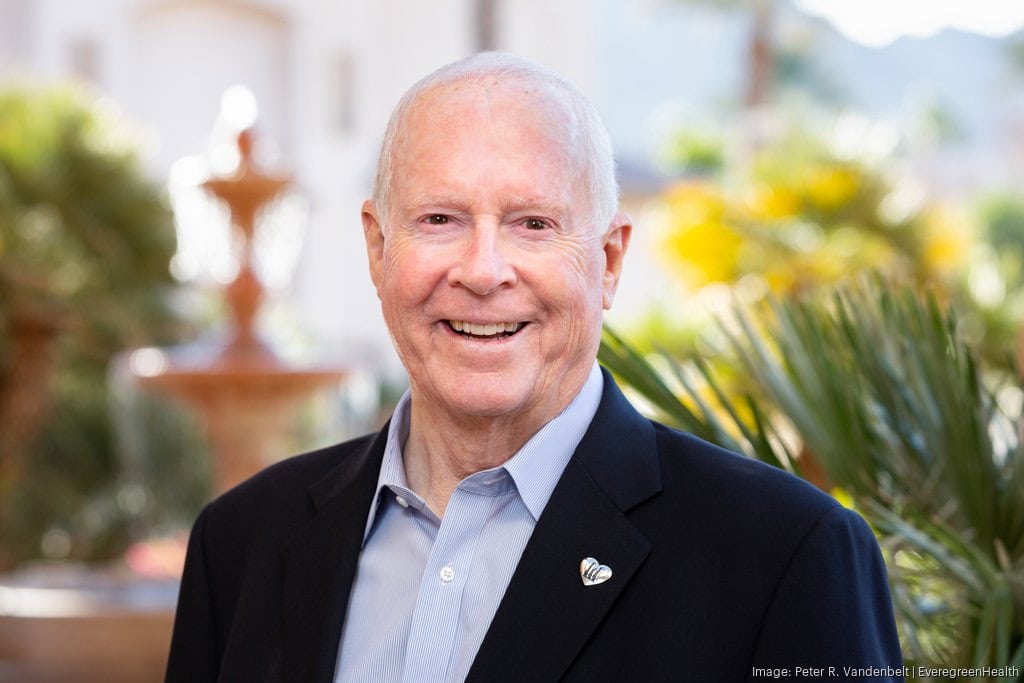
Dean Weidner liked to say that a home is more than four walls. For many people, he believed, it is where daily life happens, where they feel steady and where they belong. He spent almost 50 years acting on that idea, one apartment building at a time.
Recently, his last and largest act of generosity went to a place where people go to heal. EvergreenHealth, the community-owned hospital system on Washington’s Eastside, announced that the late real estate developer left $100 million to help build a new eight-story patient tower on its Kirkland campus. The gift is the largest in the hospital’s history.
The gift comes six months after Weidner died in March at 83. Over the years, he had become one of the most generous and least showy benefactors in the region. He almost never talked about his giving. He cared more about whether it worked. Former employees remember him the same way. He asked about their children and remembered their names. He paid to fix a leaking building properly instead of patching it. He started a program that set aside a dollar per apartment for small “love notes” that reminded residents someone cared about them.
He was already close to EvergreenHealth. In 2024, he and his wife, Ana, opened the Weidner Vaccination Clinic inside the hospital’s pharmacy. Anyone can walk in, and it lets vulnerable patients get vaccines before they go home. The couple had worked side by side with the hospital’s infectious disease director since the first frightening weeks of the COVID-19 pandemic, helping with infection control when it mattered most. It was a small, practical gift, the kind Weidner liked best. Now the name that sits over a pharmacy clinic will be linked to an entire building.
The hospital needs the room.
EvergreenHealth opened in 1972 with 76 beds for a community of 22,000. Today it has about 354 beds and two emergency departments, and the area it serves has grown fifteenfold. On many days, its Kirkland campus is fuller than it should be. Planners expect the Eastside will need dozens, possibly hundreds, of new beds in the coming years.
Early plans for the tower include inpatient units for critical care, pediatrics, and behavioral health, plus flexible floors that can change as the community does. Local voters approved new funding for the hospital’s growth last year.
The Weidner gift adds a strong private partner to that public commitment.
Weidner’s own life began far from any skyline. He was born in Chicago in 1942 and grew up in Colorado Springs. He delivered newspapers at 12, mowed lawns for his own small business, and climbed Pikes Peak as a teenager. His first real lesson in property came from fixing leaky faucets and patching walls at his mother’s apartment buildings.
There he learned that caring for a building and caring for the people inside it were the same job. After the University of Colorado and an MBA from Fresno State, he spent his early career in the airline industry.
He traveled the world with Trans World Airlines, then became Alaska Airlines’ first vice president of marketing. That job brought him to Seattle, and he never really left. Paris stayed his favorite city, but friends said Alaska won his heart.
In 1977, he bought a 32-unit building on Seattle’s First Hill. Two years later, he left aviation to run his company full-time. Weidner Apartment Homes grew into one of the largest apartment owners in North America, with nearly 75,000 homes and close to 2,000 employees. Through all that growth, he kept thinking like the young man with the toolbox. The buildings were homes, and the people in them mattered.
His giving followed the same instinct. Friendships with Alaska’s Rasmuson family taught him to give with focus and heart. Over the years, he supported Alaska Native cultural institutions, shelters, and housing for people with nowhere else to go.
He helped create real estate programs at six public universities so young people could find careers in the work he loved. In Colorado Springs, the city that raised him, he backed public art, open space, and a stadium neighborhood that is turning a forgotten corner of downtown into a place people want to live.
The advice he gave most often was simple: “Do not work for money. Work to achieve your dream or core values. If your heart is in your dreams, success will follow.”
Ana, his wife of more than 27 years, shared that quiet approach to giving. Born in Lima, Peru, she built a translation business in San Francisco and gave much of her life to rescuing animals, whom she lovingly called “souls.” Neither of them cared much about recognition. Both cared deeply about whether a gift made someone’s life better.
EvergreenHealth has not yet released a construction schedule or said what the tower will be called. It is easy to picture what the building will mean: a parent sitting next to a child in a pediatric room close to home, a patient in critical care with the space and staff to recover, and a family finding behavioral health care nearby instead of hours away.
Dean Weidner spent his life building places where people could feel at home.
His final gift will build a place where people can get well.