$10 million to decode Cancer’s “language”: Peggy and Carl Sewell’s gift launches new AI-Powered cellular intelligence center
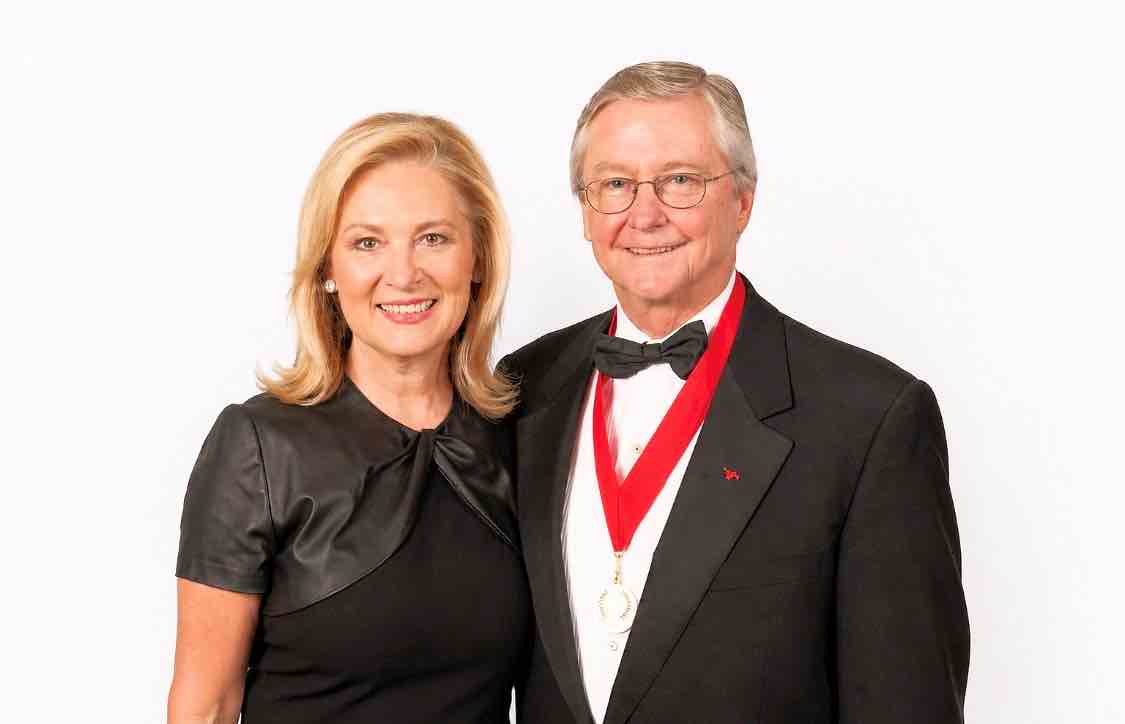
Peggy and Carl Sewell’s 10 million dollar commitment to MD Anderson’s new Center for Cellular Language Intelligence is the latest expression of a philanthropic philosophy that has been taking structured shape for more than four decades: back high‑performing institutions, aim at inflection points in science and education, and then stay long enough at the table to make sure big ideas actually get built.
Based in Dallas, the Sewells are best known publicly for building Sewell Automotive Companies into a national benchmark for customer service, but in philanthropic circles they are regarded as institutionalists—donors who choose a relatively small number of organizations and then layer capital, leadership and convening power over many years. At UT MD Anderson, that pattern is unmistakable.
Peggy joined the cancer center’s Board of Visitors in 1983, and her service has been so sustained that she was named a Life Member in 2024, a designation reserved for the handful of volunteers whose tenure and influence have helped shape the institution’s fundraising culture. Over the years, the couple has supported biomedical imaging, research innovation and capital projects at the Houston campus, often stepping into visible leadership roles for signature campaigns and events.
The new Center for Cellular Language Intelligence fits squarely into the kind of opportunity the Sewells like to underwrite: a frontier area where converging technologies—spatial biology, functional genomics, big data and artificial intelligence—have finally made it possible to interrogate cancer at the level of individual cells and the “conversations” they conduct with surrounding tissues.
MD Anderson officials describe cancer as a dynamic ecosystem in which tumor, immune and support cells continuously signal, adapt and reorganize; the “language” of cancer, in this framing, is the pattern of these exchanges across space and time.
The center will use advanced spatial technologies, AI‑enabled analytics and clinical insight to decode that language, with the goal of surfacing new therapeutic targets, predictive biomarkers and prevention strategies that are grounded in how tumors actually behave in living tissue rather than in isolated genetic snapshots.
The Sewells’ 10 million dollar gift is catalytic capital aimed at building a whole platform rather than a single project. Their funds will support strategic recruitment of scientists, acquisition and integration of high‑end instrumentation, and cross‑disciplinary infrastructure to give the new center a durable operating backbone.
The idea, in MD Anderson’s telling, is to establish an institutional hub that can plug into existing power centers such as the James P. Allison Institute and the Institute for Data Science in Oncology, while also serving as a bridge between discovery labs and the clinical trial engine.
In practice, that means aligning basic scientists and computational biologists with oncologists and trialists from the outset, so that promising signatures and targets emerging from cell‑level analyses can move more rapidly into first‑in‑human testing.
At the helm is Linghua Wang, M.D., Ph.D., a genomic medicine professor whose laboratory has built a reputation for single‑cell and spatial biology, computational oncology and deep analysis of the tumor microenvironment.
Wang’s group has already produced influential work on tumor–immune interactions, therapy response and resistance, and biomarker development, relying heavily on AI‑driven analytical frameworks to interpret high‑dimensional datasets.
The new center will formalize and scale that approach, positioning Wang as a convener of cross‑campus collaborations and giving her team the resources to push beyond descriptive atlases toward causal insights—what cellular programs actually drive progression or remission, and which signaling hubs can realistically be drugged.
For MD Anderson president Peter WT Pisters, M.D., this is precisely the kind of “breakthroughs” platform the institution hoped to mobilize when it publicly launched Only Possible Here, its $ 2.5 billion campaign to end cancer, which has already secured more than $ 2 billion.
The Sewell gift drops squarely into that campaign’s sweet spot: big enough to define a new programmatic pillar, but structured to attract additional philanthropy and institutional investment around a clearly articulated scientific vision.
Leaders at MD Anderson emphasize that the center is designed as an integrated framework, not a freestanding silo—its investigators are expected to co‑develop questions with disease‑specific programs, plug discoveries into translational initiatives, and use clinical research feedback to refine models of cellular behavior. That design mirrors the way the Sewells have historically interacted with the cancer center, not just as check writers but as strategic partners.
Peggy’s fingerprints are on some of MD Anderson’s most visible philanthropic platforms, including A Conversation With a Living Legend, the long‑running event series she helped propel to more than 61 million dollars in cumulative support since its 1990 launch.
As a volunteer fundraiser, Peggy has been described by MD Anderson colleagues as “one of the key driving forces” behind that signature forum, which blends celebrity interviews with a disciplined pitch for cancer research and care.
She has also been central to building and sustaining the Making Cancer History seminar series and summer programs in Aspen, Colorado—gatherings that double as educational offerings for donors and as soft‑power convenings that expand MD Anderson’s reach into national networks of wealth and influence.
Those programs, in turn, have attracted philanthropic support for everything from imaging platforms to specialized research initiatives and facilities, reinforcing the center’s capacity to recruit top‑tier scientific talent.
The Sewell Family Distinguished University Chair, established in honor of MD Anderson’s chief scientific officer, shows how the couple’s giving combines infrastructure support with investments in leadership positions to steward science at scale.
That same pattern of multi‑layered engagement appears across the Sewells’ broader philanthropic portfolio. In Dallas, they have been prominent supporters of Southern Methodist University (SMU), where a $400,000 challenge gift from Carl and Peggy in 2018 unlocked more than $834,000 in commitments for merit‑based scholarships and programming for academically gifted students in the Dedman College of Humanities and Sciences. SMU, which has honored Peggy as a Distinguished Alumna, credits her with exemplifying the kind of volunteer leadership that anchors capital campaigns and long‑range planning.
The couple’s names also surface as major backers of independent schools; at The Hockaday School, for example, the Heritage Society recognizes donors whose cumulative contributions exceed $ 100,000, and Peggy and Carl are listed among those who have crossed that threshold.
Health care and medical research beyond MD Anderson have also become increasingly visible priorities. In early 2025, members of the next generation, led by Josie and Carl Sewell III, orchestrated a multi‑generational 2 million gift to establish an endowed chair in pediatric cardiac anesthesia at Dell Children’s Medical Center in Austin.
The family framed that gift as a way to underwrite both clinical excellence and research in a highly specialized field, ensuring that complex cardiac cases receive the most advanced anesthetic care. The move illustrates how the Sewells have begun to distribute decision‑making across generations, using endowed positions and structured funds to hard‑wire their philanthropic footprint into institutional budgets for decades to come.
Culturally, their names appear among partner lists for institutions such as the African American Museum in Dallas, reflecting a commitment to civic life and to the city’s cultural infrastructure.
Sewell Automotive Companies frequently surfaces as a corporate underwriter for high‑profile charity events, including recent support as valet sponsor for St. Jude’s Celebration at Sundown in North Texas.
The Sewell Strong Foundation, launched by members of the extended family, focuses on education, counseling, mental health, athletics, and career opportunities, complementing a giving portfolio that includes both large institutional investments and neighborhood-level investments in youth and wellbeing.
Within that broader context, the 10-million-dollar MD Anderson gift reads less as a one‑off splash and more as a carefully chosen next step in a long relationship with cancer science.
For Peggy, whose four‑decade tenure on the Board of Visitors has coincided with profound shifts in oncology—from crude chemotherapies to targeted agents and immunotherapy—the opportunity to back a center that will harness AI and spatial biology to decode “cellular language” is both personal and emblematic.
“What’s happening there is going to change the world,” Carl said in announcing the gift, framing MD Anderson as an institution whose work justifies large‑scale, long‑term private investment.
MD Anderson’s leadership clearly agrees. Interim chief scientific officer Albert Koong, M.D., Ph.D., has tied the Center for Cellular Language Intelligence directly to the next wave of clinical trials, arguing that by understanding how cancer cells and their neighbors organize and adapt, clinicians will be better positioned to predict which patients will benefit from which therapies—and when interventions might succeed in preventing disease altogether.
For Wang and her team, the Sewell funding provides the runway to move beyond proofs of concept toward a truly integrated discovery‑to‑clinic pipeline, with the promise of new targets, smarter trial designs, and, ultimately, more individualized cancer care.
For philanthropy watchers, the Sewells’ move is also a case study in how seasoned donors are increasingly comfortable betting on data‑heavy, AI‑enabled science when it is embedded in institutions with strong governance and track records.
The Center for Cellular Language Intelligence will not deliver an overnight cure, and its work will be technically complex and iterative. But by anchoring the launch phase, Peggy and Carl Sewell have effectively signaled to other donors—and to MD Anderson itself—that decoding the language of cancer at the single‑cell level is not just a compelling scientific problem, but a philanthropic priority worthy of eight‑figure investment and sustained public attention.