
$10 million gift from Richard C. Adkerson opens a new chapter for the Ulysses S. Grant Presidential Library
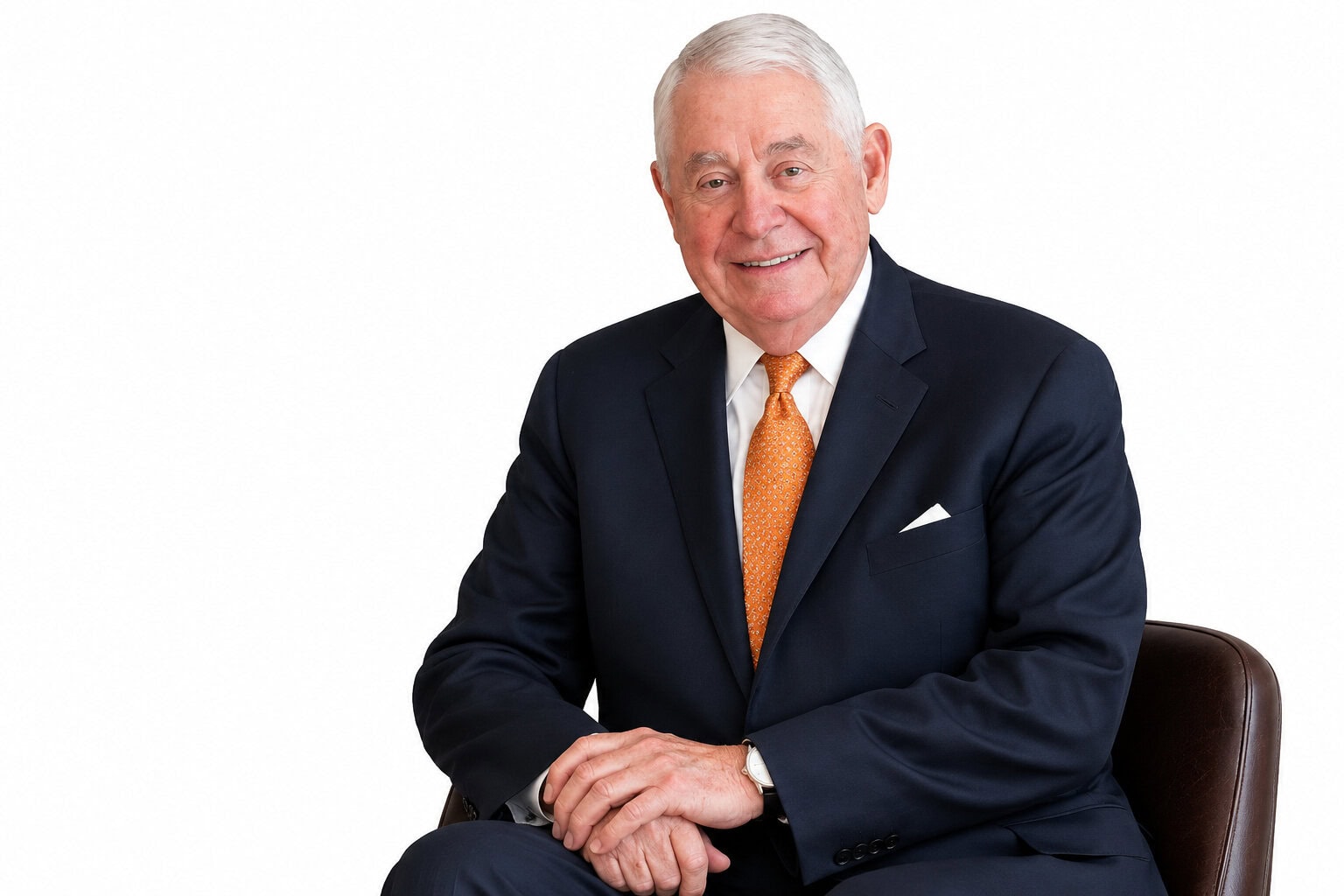
Richard C. Adkerson grew up in Mississippi at a time when the state’s divisions were impossible to miss.
Decades later, after a career that made him one of the most respected figures in global mining, he is helping give his home state a new place to tell one of its most complicated stories.
With his family’s foundation, Adkerson has given $10 million to the Ulysses S. Grant Presidential Library Fund at Mississippi State University.
The gift will help build a new home for the library and will fund and name a gallery devoted to Grant’s life and his military and presidential careers.
“I was raised in Mississippi and witnessed firsthand social injustices,” Adkerson said.
“Mississippi State’s being home of the Ulysses S. Grant Presidential Library evidences the progress our nation has made.”
He called it an honor to support the project and added, “I could not be more proud of my alma mater.”
That pride goes back more than 50 years.
Adkerson earned his accounting degree at Mississippi State with highest honors in 1969 and his MBA a year later.
He then built a career that ran from a fellowship at the Securities and Exchange Commission to leading Arthur Andersen’s worldwide oil and gas practice to the top of Freeport-McMoRan.
He led Freeport as chief executive for more than two decades and now serves as chairman of its board.
Along the way, his name became part of the Starkville campus.
In 2007, the university named the Richard C. Adkerson School of Accountancy in his honor after he endowed it.
He chaired the university’s State of the Future capital campaign, served several terms as president of the MSU Foundation board, and, with his family foundation, has supported scholarships, online graduate programs, and Bulldog athletics facilities.
This gift reaches past the business school to something Adkerson has cared about for a long time: public history.
He is chairman emeritus of the board of trustees of the National WWII Museum in New Orleans and serves on the Grant Library’s National Advisory Council.
“Richard has long been a supporter of public history and has helped to fund a number of history and civic-relations projects,” said Anne Marshall, a professor of history at Mississippi State and executive director of both the Grant Presidential Library and the Ulysses S. Grant Association.
“We are so grateful that he is melding his devotion to MSU and dedication to the American story by supporting our efforts to expand the Ulysses S. Grant Presidential Library.”
The Adkerson gallery, Marshall said, will present Grant’s life and careers “using state-of-the-art technology and design.”
The story it tells is a big one. Grant made his name in Mississippi, where his capture of Vicksburg turned the Civil War.
He went on to accept the Confederate surrender at Appomattox and served two terms as the nation’s 18th president, from 1869 to 1877. Mississippi State holds the largest single collection of Grant papers in the world.
The archive includes correspondence, photographs, scrapbooks, and memorabilia, much of it in Grant’s own hand, along with more than 4,000 published works on his generalship and presidency.
The collection’s arrival in Starkville is a story in itself.
The Ulysses S. Grant Association brought its holdings to campus in 2009, and the collection was designated a presidential library in 2012, making Mississippi State one of only six universities in the country that house one.
In 2017 the state legislature paid for a $10 million, 21,000-square-foot addition on the fourth floor of Mitchell Memorial Library.
The irony was not lost on anyone.
At the opening, then-Governor Phil Bryant said no one could have imagined a day when Mississippi would pay $10 million to bring U.S. Grant to the state.
Nearly ten years later, a private gift of the same size, from a son of Mississippi, is helping the library move out from under that roof and into a building of its own.
Mississippi State President Mark E. Keenum, whom Adkerson credited for leading the library’s development, called the gift a “transformative investment” that will help the collection “educate, inspire and deepen our understanding of America’s story for generations to come.”
He added, “The Mississippi State family is deeply grateful for Richard’s longstanding support and the many meaningful ways he continues to make a difference across our university.”
The new library is planned for a site near Highway 12 and Russell Street in the university’s developing Crossroads District, where the public can reach it more easily than a fourth-floor wing in the middle of campus.
University leaders expect it to become a major cultural attraction, drawing 60,000 to 70,000 visitors a year.
That is many times the roughly 4,000 people a year the museum drew in recent years.
The library’s goal is to become a national center for scholarship, education, and public engagement. Its supporters believe the visitors it draws, from schoolchildren to Civil War scholars to families on the road through the South, will find something larger than one president’s biography: a measure of how far the country has traveled, told in the state where the war’s outcome was so often decided.
For Adkerson, the gift seems to settle a personal score.
The boy who saw injustice up close is helping build, on the campus that launched him, a place where anyone who walks through the door can see Grant’s story told plainly.