
$10 million gift from Aaron Zeigler: alum doubles down on Spartan football
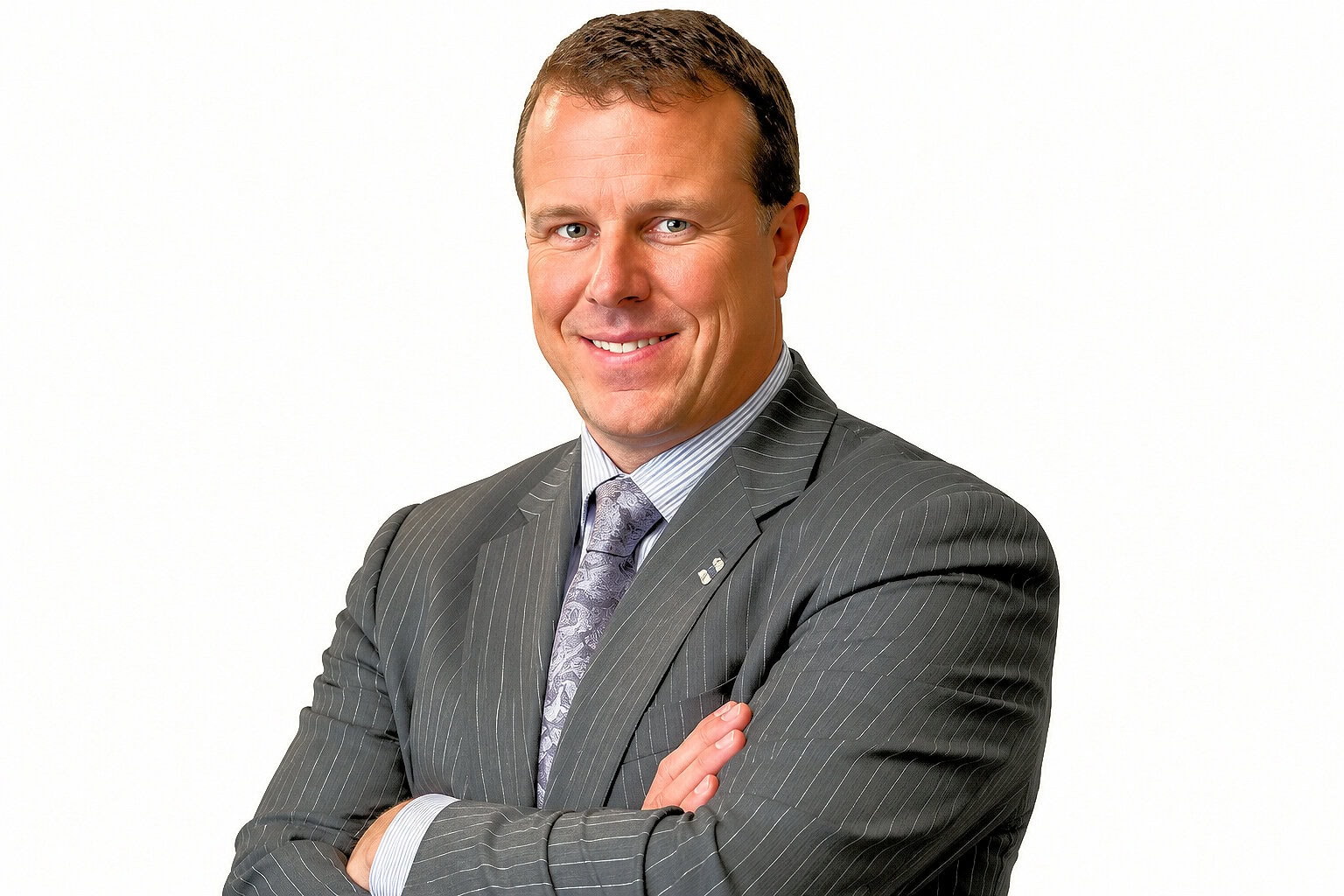
Aaron Zeigler can tell you the moment he started giving to Michigan State.
About fourteen years ago, he sat in a room and listened to Tom Izzo talk about where Spartan basketball could go.
“His vision was amazing,” Zeigler said later, and he wrote his first check soon after.
That first gift grew into a relationship that this week produced a $10 million commitment, one of the largest he has publicly made to FOR SPARTA, Michigan State’s $1 billion campaign to rebuild its athletic facilities.
The money will go to Spartan football, including improvements at Spartan Stadium.
For Zeigler, the stadium has personal meaning.
“Spartan Stadium represents so many great memories for me and my family,” he said in announcing the gift.
“I am blessed to be able to give back to my alma mater and help to build a stronger future for MSU student-athletes.”
Zeigler graduated from MSU’s Eli Broad College of Business in 1995.
He has said the school taught him what he needed to succeed, and he went on to build Kalamazoo-based Zeigler Automotive Group into one of the largest privately owned dealership groups in the country.
His family’s business started with a single shop in Lowell, Michigan, in 1975.
By 2022 it had grown to 35 locations and 83 franchises, along with Zeigler Motorsports, which is described as the world’s largest motorsports dealership, plus a restaurant and several racetracks.
He built it the way he talks about Michigan State: competitive, ambitious, and openly impatient with being second best.
MSU President Kevin Guskiewicz saw that same drive in the gift.
“Aaron Zeigler brings a competitive spirit and a relentless drive for excellence to everything he does,” he said, “and that same passion is reflected in his commitment to Michigan State.”
The $10 million commitment is the largest publicly disclosed gift Zeigler has made to his alma mater, but it is not his first major gift. In 2022, he and his wife, Bonnie, made a leadership gift to the athletics department.
It supported excellence funds for football and men’s basketball, the athletic director’s resource fund for Izzo’s program, and a significant multi-year pledge toward the new Tom Izzo Football Building.
The university did not disclose the amount. It did place the couple in the Victory Circle, the highest tier of the Athlos Society, the athletics department’s top donor group.
Over the years the family’s support has also reached men’s golf. Michigan State has not published a cumulative total, so the most precise account is this: more than a decade of steady giving, at least one earlier leadership-level pledge, and now a $10 million commitment on top of it.
His involvement goes beyond money.
Zeigler sits on the board of Spartan Ventures, the new private nonprofit created to support Michigan State athletics.
It runs a fundraising foundation and a separate arm for media rights and sponsorships. Athletic director Dan Bartholomae, who arrived in East Lansing this year from Western Michigan, said Zeigler was one of the first people to welcome him.
“As someone who lent his support and guidance to me from the moment I arrived in the state, I am particularly grateful for his friendship,” Bartholomae said.
He also noted that Zeigler’s “philanthropy reaches far beyond his alma mater.”
That is true, and you can see it most clearly in Kalamazoo.
For 44 years, the Drive for Life Foundation Gala, which the Zeigler group helps present, has raised money for the American Cancer Society and local charities.
It started in 1982 with $1 tickets and raised less than $20,000 that first year. Last month it raised $1.5 million in a single night, with MSU football coach Pat Fitzgerald as the featured speaker.
Zeigler gave the credit away.
“The success of this year’s Gala belongs to the entire community,” he said.
“For 44 years, this event has demonstrated the generosity of West Michigan.” Several years ago, the company reported it had given more than $5 million to the American Cancer Society alone and worked with more than 70 charities.
It has since added $10,000 college scholarships for local students, a $50,000 gift to Folds of Honor, which supports military families, and tornado relief for neighbors in Portage.
Some of his giving is more personal.
Years ago, Zeigler saw a local news story about a Grand Valley State student who had been badly injured in high school and whose family was relying on an unreliable van.
He gave them a converted wheelchair-accessible minivan. He said he simply saw the story and felt he could help.
Kim Tobin, MSU’s vice president for advancement, connected the new gift to family.
“From the entrepreneurial spirit and work ethic instilled by his father to the Spartan pride he’s passed along to his own children,” she said,
“Aaron understands the power of building a legacy that reaches beyond any one generation.”
The gift arrives at a big moment for Michigan State athletics.
FOR SPARTA is the largest capital initiative in the department’s history. It is part of the university’s $4 billion The Uncommon Will, Far Better World campaign, with a full replacement of Spartan Stadium’s east side as its centerpiece.
Zeigler’s commitment follows a $10 million pledge from Joe and Julie Serra to the same campaign earlier this month.
It also comes less than a year after Greg and Dawn Williams’ historic $401 million commitment to the university and its athletics.
MSU Athletics and the FOR SPARTA campaign quickly shared the news across their channels, and the campaign’s homepage now opens with three words: “Thank You, Aaron Zeigler.”
Jacob Kirkham, interim president of the Spartan Athletic Foundation, said Zeigler’s time has mattered as much as his money.
“Aaron is an amazing partner who has not only given financially but has also provided his time and expertise when it comes to finding ways to make the Spartans better.”
Zeigler has said he gives because he believes in the people leading the work.
“Our athletic director and coaches have an amazing vision for the future,” he said back in 2022, “and we want to help them achieve their goals.”
What started with listening to a coach describe the future has turned into a $10 million investment in building it.