
$10 million from Barbara and Donald Zucker challenges university hospital to stand behind its smallest patients
Some of the patients in the neonatal intensive care unit at Good Samaritan University Hospital in West Islip are small enough to fit in an adult’s fist.
About 500 of them come through the unit each year, born too early or too sick to go home, and they arrive with parents who are living through what may be the most frightening days of their lives.
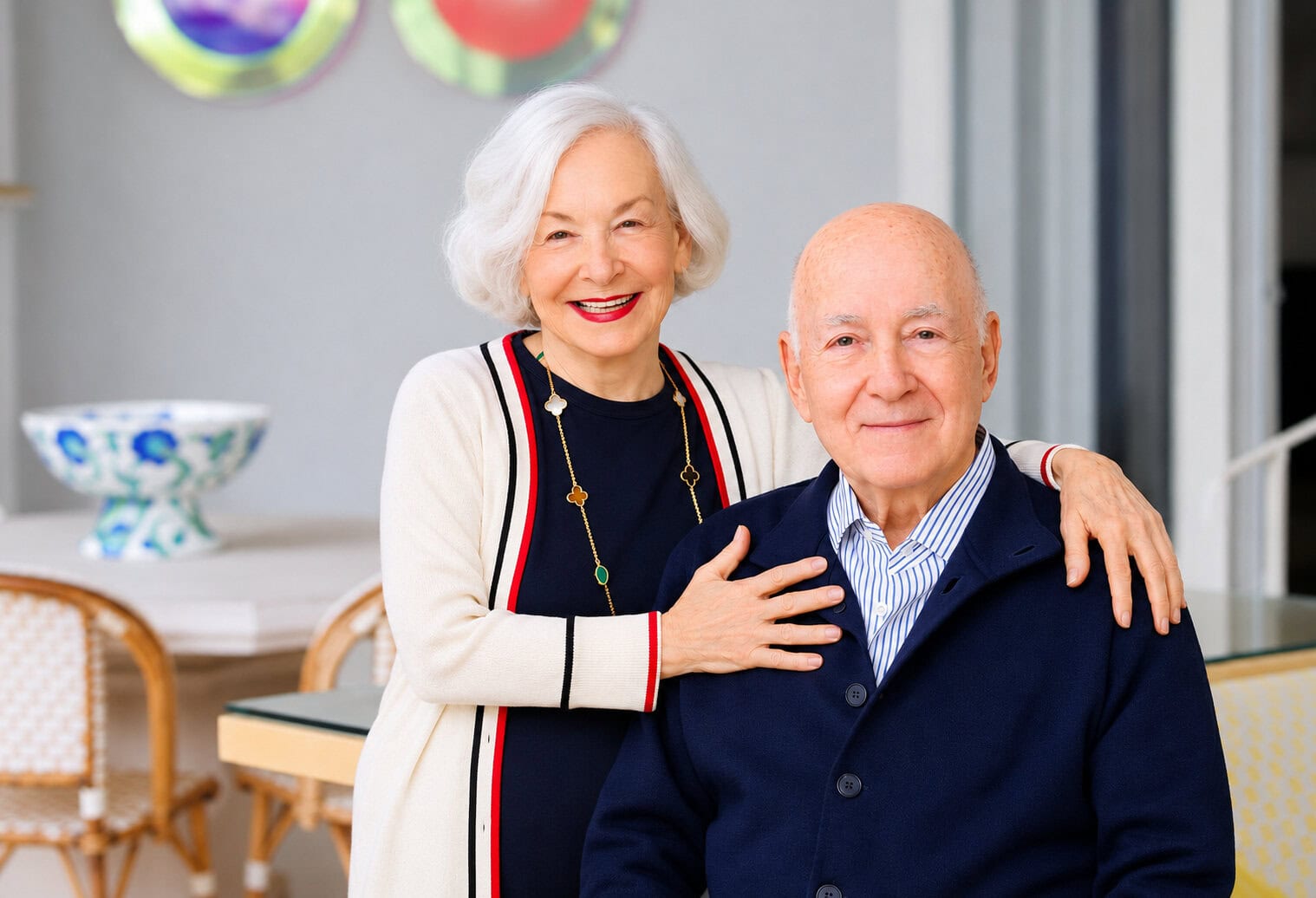
Recently, those families gained a powerful ally in Barbara Hrbek Zucker and Donald Zucker, whose family foundation has committed $10 million to expand and modernize the unit.
It is the largest philanthropic gift in the hospital’s history.
The gift comes with a challenge attached.
The Donald and Barbara Zucker Family Foundation will match every qualifying gift the community makes over the next four years, dollar for dollar, up to $10 million, which could bring the total to $20 million.
Catholic Health, which operates Good Samaritan, hopes to secure the first $2.5 million in community commitments before the end of the year.
The hospital’s president, Dr. Justin Lundbye, has said the full set of planned improvements could cost between $20 million and $30 million, so the match is meant to do more than add money. It is meant to bring more people in.
For Barbara Zucker, the reason is personal.
“Our family experienced the need for world-class NICU care firsthand,” she said in announcing the gift.
“When our youngest granddaughter was born, she needed specialized care to help her get a strong start.
Thanks to her NICU team, she is now a thriving little girl, and we feel so fortunate that she got the right care.”
Her granddaughter was treated at a different hospital.
The Zuckers took one thing from that experience: a simple wish that other families could find the same level of care close to home.
On Suffolk County’s South Shore, Good Samaritan is where that care is found. Its Level III NICU, the only one in that part of the county, treats babies born very early and very small, many of whom need breathing support and close monitoring around the clock.
The hospital delivered more than 2,500 babies last year.
The Zucker gift will pay for advanced medical equipment and technology, private patient rooms, and dedicated spaces where families can receive counseling, rest, and support during stays that can last weeks or months.
That attention to parents runs through the project.
“The care provided in a NICU extends far beyond sophisticated technology,” Lundbye said.
“Our physicians, nurses, and clinical teams care for babies at an incredibly vulnerable moment in their lives, but they also walk alongside parents and families.”
Gary Havican, Catholic Health’s interim president and chief executive, called the commitment “all about supporting some of our smallest, most vulnerable patients and their loved ones.”
To understand why a couple best known for giving across Northwell Health and New York City’s cultural institutions would make the largest gift in the history of a Catholic community hospital in West Islip, it helps to understand the Zuckers themselves, and to notice how often their giving has been built to invite others in.
Donald Zucker was born in 1931 and grew up in South Brooklyn.
His father was the sales manager for a large men’s clothing manufacturer and spent months on the road at a time, so his mother largely raised him.
He went to Abraham Lincoln High School in Brighton Beach, and decades later he returned to build the school a new library, only to find it still running on the Dewey Decimal System.
He served in the Army at the end of the Korean War, where he taught soldiers and administered high school equivalency exams, including to officers who had earned their commissions on the battlefield but never finished school. After graduating from New York University, he worked on Wall Street, imagining himself, as he once put it, as the second coming of Bernard Baruch.
Instead, he drifted into real estate.
He started his own mortgage brokerage.
A few years later, an accountant told him he needed a tax shelter, and he built a 20-story apartment building at 12th Street and Fourth Avenue.
That was the beginning of a development career that produced nearly 30 Manhattan buildings and thousands of apartments, including the 35-story Rivergate tower.
Along the way, he advised Mayor Ed Koch on construction, chaired the city’s School Construction Authority under Mayor Rudy Giuliani, and taught real estate development at NYU.
Asked about retirement, he gave the answer of a man who still went to the office every day: “Retirement is death. I never went to work one day in my life, because I love what I do.”
Barbara’s story with him began long before their philanthropy did.
She was a secretary, and he was a salesman at the same mortgage firm.
When he opened his own brokerage, he hired her as soon as he could afford to.
She left to get married, and for 16 years their lives went in separate directions.
She was selling real estate in Sparta, New Jersey, when he helped her get a listing.
She returned to work with him, and they soon learned that both their marriages had quietly ended.
They have been together ever since, in a blended family of seven children that now spans several generations.
Today Barbara runs the family foundation and is involved in the business.
Her husband has said she once had a desk in his office but moved down the street for a little more privacy.
Over more than four decades, the two have built a philanthropic record that runs from Queens to Coney Island to Long Island’s North Shore, and much of it has gone to places that do not always attract donors.
In 1999, they became champions of Hillside Hospital, a psychiatric hospital in Glen Oaks, Queens, which was renamed Zucker Hillside Hospital in recognition of their support.
Their gifts helped build a $33.3 million ambulatory care pavilion that opened in 2004 and a $120 million inpatient pavilion that opened in 2012, bringing patients out of aging buildings scattered across the campus.
Michael Dowling, then Northwell’s president and chief executive, has said that more than any other donors in the system’s history, the Zuckers supported causes where Northwell had struggled to raise money, especially behavioral health.
In 2004, they helped create the Litwin-Zucker Center for the Study of Alzheimer’s Disease and Memory Disorders with their friend and fellow developer Leonard Litwin.
Zucker later described how it started: he asked Litwin to donate $5 million to Alzheimer’s research, and Litwin agreed, on the condition that Zucker match it.
He did.
The center, part of Northwell’s Feinstein Institutes for Medical Research, has since run long-term studies on the disease, from its genetics to its treatment.
Barbara went on to chair the Feinstein board from 2012 to 2017.
Their largest commitment came in 2017, when the Zuckers gave $61 million to support the next generation of health professionals.
Of that, $50 million created a permanent endowment for need-based scholarships at the medical school founded by Hofstra University and Northwell, which was renamed the Donald and Barbara Zucker School of Medicine at Hofstra/Northwell.
Another $10 million created and endowed the Barbara Hrbek Zucker Emerging Scientists Program at the Feinstein Institutes to help train postdoctoral fellows and early-career researchers, and $1 million went to scholarships for nursing and physician assistant students, many of whom were going to school while supporting families.
“Barbara and I feel it is incumbent on us to help young people achieve their dreams to be a physician,” Donald said at the time.
“We, who have been so fortunate together, love doing this.”
The couple has also explained the scholarships in their own words: they want future doctors to choose what they love in medicine, not whatever will pay back a loan.
Those gifts made the Zuckers Northwell’s leading lifetime donors.
Two years later, they endowed a professorship in health outcomes to support research into more personalized care for chronic disease, and their support has also reached Lenox Hill Hospital in Manhattan and the Elmezzi Graduate School of Molecular Medicine.
Barbara’s own interests reach well beyond medicine, into conservation, animal welfare, education, and the arts.
As a longtime trustee of the Wildlife Conservation Society, she made the New York Aquarium in Coney Island a cause of her own.
In 2012, the couple gave $7.5 million toward a new shark exhibit, the largest single gift in the aquarium’s history at the time.
Three years later, as the aquarium was rebuilding after Hurricane Sandy, they offered a challenge grant to match up to $2.5 million in new gifts from others.
The exhibit that opened in 2018, Donald Zucker and Barbara Hrbek Zucker Ocean Wonders: Sharks!, carries their names and lets visitors come face to face with sharks native to New York waters.
The family foundation has also funded pay-what-you-wish Friday evenings at the Whitney Museum of American Art, and Barbara has served on the board of the Animal Rescue Fund in East Hampton.
The Angel Guardian Home in Brooklyn named her Woman of the Year, and the Dominican Sisters of Amityville awarded her the Veritas Award, recognitions that suggest this week’s gift to a Catholic hospital is less a departure than a continuation.
Seen against that history, the Good Samaritan gift is both familiar and new.
It is familiar in its focus on care that changes lives, on patients who cannot speak for themselves, and on families who need support as much as treatment.
It is familiar, too, in its structure.
From the Alzheimer’s center to the aquarium, the Zuckers have often used their giving as an invitation, a promise to match others so that a cause becomes the community’s as well as their own.
What is new is the setting: a community hospital on Suffolk’s South Shore, and a unit that cares for Long Island’s newest residents in their first hours and days.
Donald Zucker and Barbara have spent much of their philanthropic life building things meant to last beyond them: scholarships that will support doctors who have not yet been born, research programs designed to train scientists for decades, a hospital named for them that will treat patients long into the future.
This time, they hope to build for the youngest patients of all, and for the parents watching over them.
Whether it reaches its full potential now depends, by design, on the neighbors who choose to join them.