
$10.5 million from David L. and Rhonda R. Cohen sends local orchestra back into the global art scene
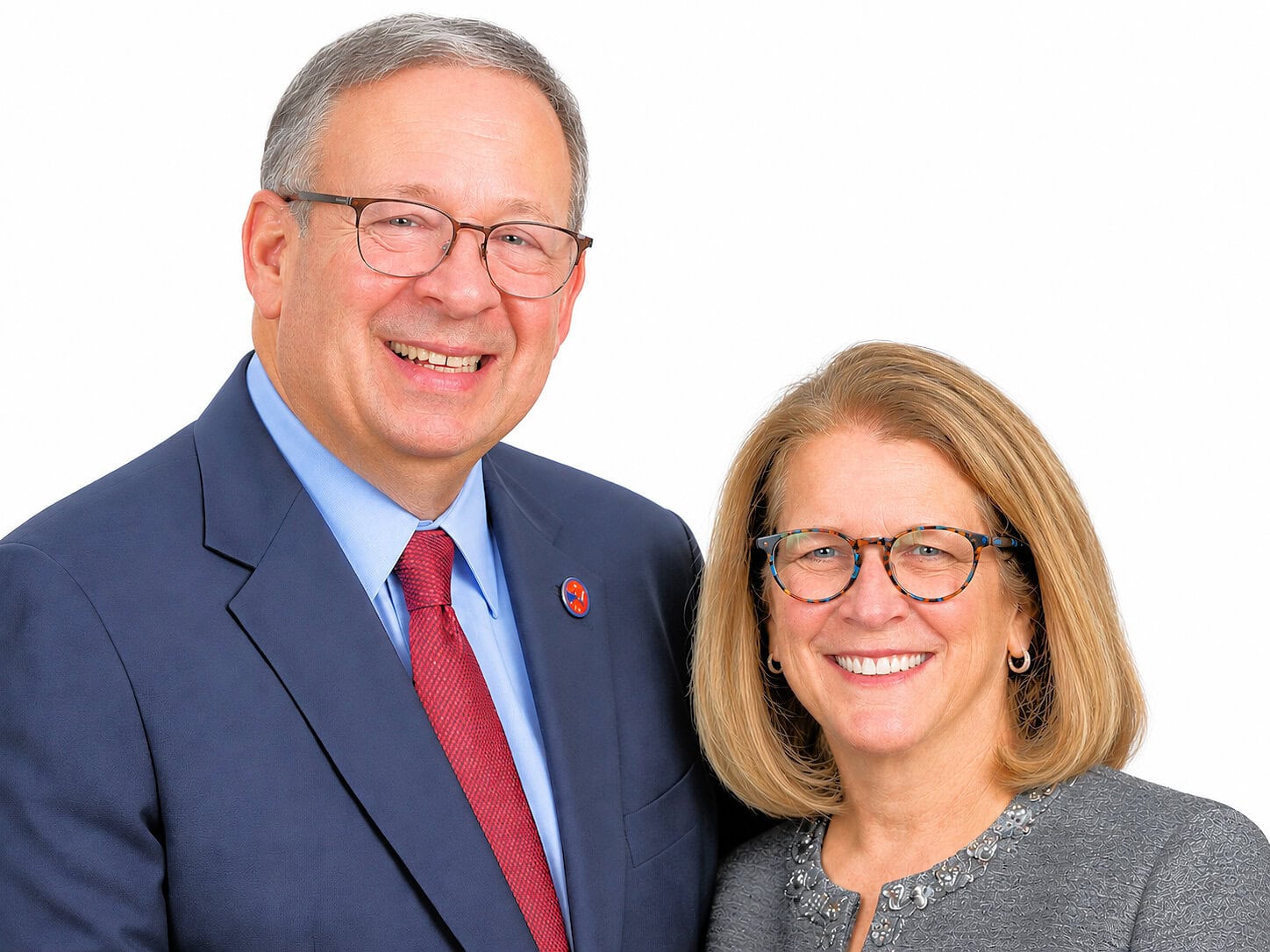
For four years, David L. Cohen kept hearing the same question from diplomats.
As U.S. ambassador to Canada, living in Ottawa alongside envoys from about 150 other nations, he expected conversations about trade, security, and democratic ideals.
Those came.
But when talk turned to his hometown, the subject that drew the most interest, again and again, was not Philadelphia’s history or its business climate.
It was its orchestra and its art museum.
“I didn’t fully appreciate just how respected it was around the world,” he said, “and I don’t know that Philadelphians fully appreciate that, either.”
Now he and his wife, Rhonda R. Cohen, are taking action.
The couple has committed $10.5 million to The Philadelphia Orchestra and Ensemble Arts, their largest gift to a Philadelphia institution.
The money creates two new funds. The Fund for Cultural Diplomacy will support the orchestra’s tours, residencies, performances, recordings, and educational exchanges at home and abroad.
Guided by music and artistic director Yannick Nézet-Séguin, the Artistic Innovation and Discovery Fund will bring works by overlooked, underrepresented, and emerging composers to the stage and celebrate the contributions of Jewish artists.
In recognition, the organization’s top post now carries the couple’s name: Ryan Fleur serves as the Ambassador David L. Cohen and Rhonda R. Cohen President and CEO.
The timing is deliberate.
The announcement came days before the orchestra departed for South Korea and China, its 14th visit to China, more than any other American orchestra, and more than half a century after it became the first American orchestra to perform in the People’s Republic.
“There’s a lot of tension in the US-China relationship, but the one thing we seem to be able to agree on is music,” Cohen said.
“Music is a convener, bringing people together and bringing countries together.” In a joint statement, the couple put it more personally: “During our years of diplomatic service, we saw firsthand how music can build trust where other efforts fall short.”
The couple will spend part of the gift immediately on the work, including this tour and a European tour planned for next year, and place part in an endowment so the orchestra’s role as a cultural ambassador outlasts any single season.
Cohen also intends it as a signal.
The commitment, finalized this summer, came just as the organization closed a $344 million campaign and began planning the next.
“Most of the gift is meant to be a lead gift in the next campaign, to set an example,” he said, adding that he will personally make fundraising calls on the orchestra’s behalf.
For anyone who has followed the Cohens across four decades of Philadelphia life, the gift is both a new direction and a familiar pattern.
Their philanthropy has long centered on a single conviction, which David Cohen has described as the Jewish idea of Tikkun Olam, repairing the world.
“That’s been a theme that’s tied together a lot of my life,” he has said, “and it runs through our philanthropy.”
For most of their giving life, they’ve repaired it mainly through education.
That commitment began close to home, at the two schools that shaped them.
Both are Swarthmore graduates, Rhonda in 1976 and David a year later, and both went on to the University of Pennsylvania’s law school.
At Swarthmore, the David L. ’77 and Rhonda R. ’76 Cohen Scholarship has awarded students since 2004 based on academic merit and financial need, and Rhonda served for years on the college’s Board of Managers, helping choose its president.
At Penn, where David chaired the Board of Trustees for more than a decade and helped lead a campaign that made undergraduate financial aid one of its highest priorities, the couple are recognized among the university’s Men and Women of Pennsylvania, an honor reserved for donors who give at least $2 million to student aid within five years.
Their reasons are not abstract.
Rhonda Cohen has said her commitment deepened when the couple’s older son, Ben, struggled with learning differences and found his footing at Delaware Valley Friends School, a school for students who learn differently, where she has served on the board for much of the last two decades.
“We saw, in a very personal way, the positive impact that a quality education can have on your child,” she said.
For other children, she added, the obstacle isn’t learning; it’s money.
“It’s really about removing obstacles, and money is too often a big one.”
That idea now runs through the family itself.
The Cohens’ private foundation, the Huron Foundation, which they established and which Rhonda now leads alongside both sons, created the Cohen Family Scholarship endowed fund at Germantown Friends School, where their younger son, Joshua, attended from his earliest years through graduation.
The fund was shaped with both sons’ input, and its purpose is simple: to make sure a Friends education is open to children regardless of what their families can pay.
The foundation’s reach extends well beyond its home city, including national support for UnidosUS, the Latino civil rights and advocacy organization.
Rhonda’s leadership has followed the same path through institutions that serve Philadelphia’s working families.
A retired Ballard Spahr partner, she served 18 years as a trustee of Community College of Philadelphia, including as board chair, and the couple sponsored the college’s 60th anniversary.
She is also president of the Christopher Ludwick Foundation, one of the city’s oldest charities, founded from the bequest of the Revolutionary War’s “Baker General” to pay for the schooling of Philadelphia’s poor children, a mission it still pursues more than two centuries later.
And she chairs the board of the Glenmede Trust Company, the first woman to hold the role.
The arts have always been part of the story, too, even if they rarely made headlines.
David Cohen was a founding board member of the Kimmel Center, now part of Ensemble Arts, and later chaired the Philadelphia Theatre Company, where the couple have been leading annual supporters and season sponsors and have underwritten productions including “The Glass Menagerie.”
In that sense, the orchestra gift is less a turn toward culture than a decision to give culture the weight it has long given to schools.
Cohen arrived at that decision carefully.
When he returned home from Ottawa, he took six months and more than a hundred meetings before agreeing to anything.
“I very quickly circled around arts and culture as the space where I thought I could make a real difference,” he said, describing a sector with “prominence and wonderful organizations” that he felt was still “a little under-appreciated” by government, business, and audiences alike.
He joined the orchestra’s board early this year, moved onto its executive committee by spring, and, with Rhonda, shaped the gift through months of conversation with Fleur and Nézet-Séguin about education, diplomacy, and reaching audiences that orchestras have not always welcomed.
“It’s very much to support Yannick’s vision,” Fleur said.
In the end, that vision is where the couple’s two great causes meet.
A scholarship opens a classroom door to a child who might never have walked through it.
A new fund for overlooked composers opens the concert hall to voices long left outside it, and a touring fund carries those voices to Seoul, Beijing, and beyond.
For David and Rhonda Cohen, it is the same work, extended from the city they love to the world that, as they learned in Ottawa, was already listening.