
$86.1 million donation: Stephen Hoge directs a quarter of his Moderna stake to charity
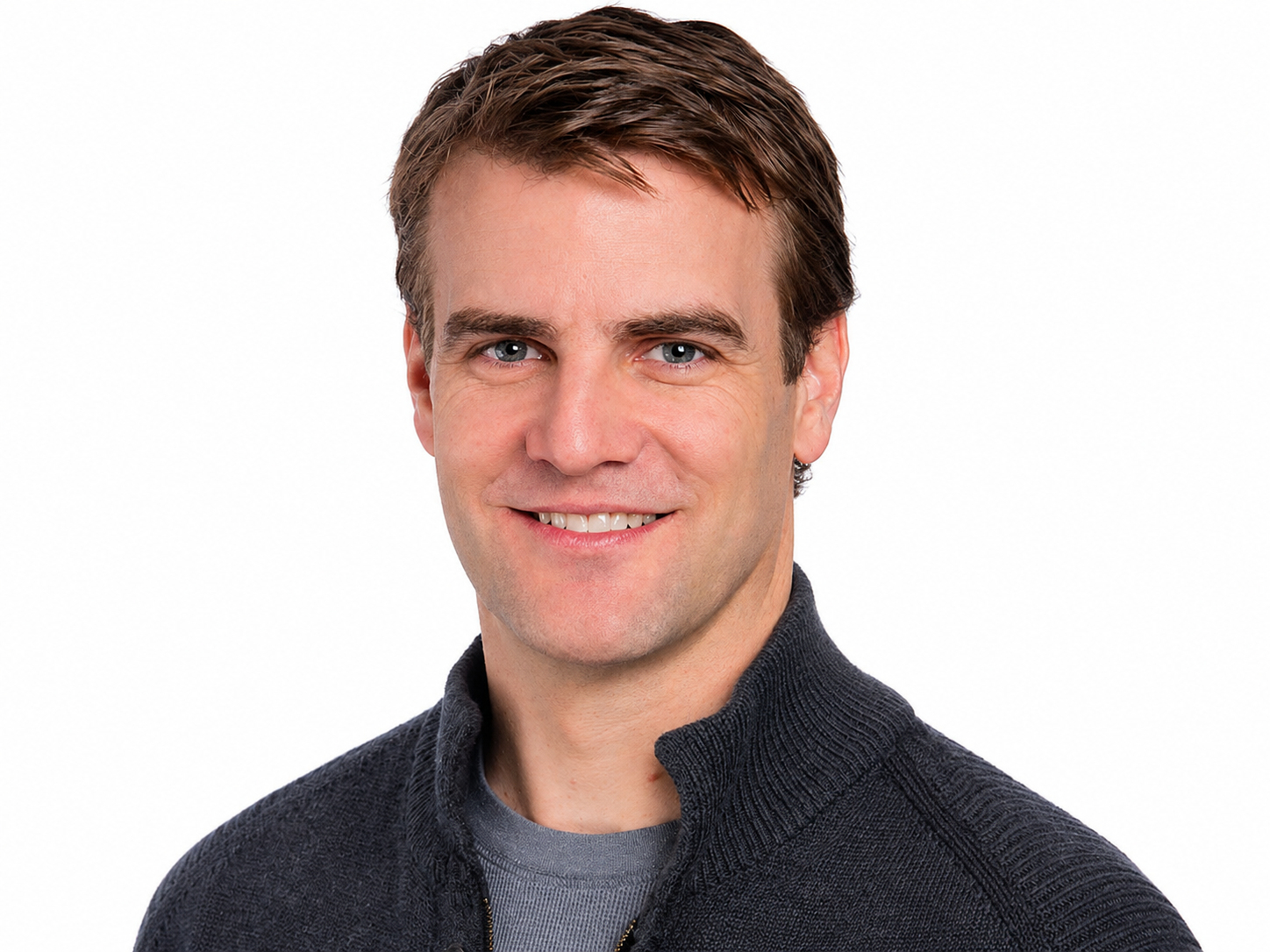
Stephen Hoge has never been very interested in the things we already know.
As a neuroscience student at Amherst College, he came to see science as something other than a list of settled facts.
“It helped me understand that science is actually about how you approach the unknown,” he later said.
“If you are doing it right, you are always staring into the unknown.”
That habit of looking ahead, toward questions with no answers yet, shaped his career.
Most recently, it also shaped one of the most generous personal gifts of the year.
Hoge, the president of Moderna, has given $86.1 million to charity.
He gave it in shares of the company he spent 14 years helping to build.
There was no press release, no gala, and no name carved over a doorway.
He hasn’t said who will receive the money or what it will support, and it may be some time before he does.
What is clear is the size of the gesture.
He gave away roughly a quarter of everything he owned in the company that defines his working life.
It is hard to separate the gift from the year that made it possible.
For a long time, Moderna was known mostly for one thing: the COVID-19 vaccine it produced at astonishing speed when the world needed it most.
When the pandemic faded, many people wondered whether the company and its science had peaked.
Hoge never believed that.
For more than a decade he had argued that the same technology could do something even more ambitious: teach the body to recognize and fight cancer.
This year that belief was tested in a large clinical trial for melanoma.
Patients who received Moderna’s personalized cancer vaccine alongside a leading immunotherapy were far less likely to see their cancer return or to die than patients who received the immunotherapy alone.
Scientists called it a landmark.
For Hoge, it was proof that the work had been worth it.
He has done this before, almost exactly the same way.
In the last days of 2020, as the first COVID-19 vaccines reached nurses, doctors and elderly Americans, Hoge made his first major charitable gift, worth about $8 million.
Both times, the pattern was the same.
When the work he believed in finally reached the people it was meant to help, he chose to give part of the reward away.
Together, the two gifts bring his known giving to about $94 million.
Those are only the gifts that are publicly known, so his true generosity is almost certainly greater.
His road to this moment was not a straight one.
After Amherst, Hoge earned his medical degree at the University of California, San Francisco, and worked as a doctor in New York City emergency rooms.
With his usual dry humor, he calls that period “a very brief and inglorious career.”
The emergency room taught him what it means to face a patient in crisis, but the work started to feel routine.
He wanted to help on a larger scale.
That search took him to McKinsey & Company, where he advised health care organizations and became a partner.
In 2012 he joined Moderna, a young company of about two dozen people built around one bold idea.
Three years later he became its president.
Then came the winter of 2020.
Hoge has described the week when it became clear to him that the new coronavirus would “spread like wildfire,” and the conversations that followed about whether a small company could make a billion doses of a vaccine that didn’t yet exist.
“We knew it would shut down global economies. Millions of people were going to die,” he remembered.
The question he and his colleagues kept asking was simple: “Can we solve it?”
They decided to stake everything on the answer.
“It was an all-or-nothing moment for us,” he said.
“We never once looked back.”
People who know Hoge describe him as warm, talkative, and quick to laugh at himself, with a boyish excitement about science that hasn’t faded.
He gives most of the credit to others.
“Leadership is about surrounding yourself with really great people and putting them in places to succeed,” he once said.
“If you can do that, usually you end up looking good.”
He likes to repeat a line from the motivational speaker Les Brown: “If the dream is big enough, the odds don’t matter.”
At home outside Boston, his life is rooted in family.
His wife is also a physician, and together they are raising three children.
Two doctors under one roof are a reminder that, for the Hoges, medicine is personal.
It is a vocation they share at the dinner table as well as at work.
In 2023, Amherst welcomed him back with an honorary degree, recognizing a graduate whose senior thesis first taught him to be comfortable with risk.
There’s a quiet poetry in where Moderna’s story began.
Generosity helped make its first great success possible.
When Dolly Parton gave $1 million to Vanderbilt University Medical Center early in the pandemic, part of that money helped fund early research on the vaccine Hoge’s team would bring to the world.
He made a point of thanking her publicly.
Years later, one of the people who carried that science from a small lab to billions of arms has returned that kindness many times over.
Where the $86.1 million will go is still Hoge’s story to tell.
A life shaped by medicine, science, and the belief that hard problems can be solved points to what may lie ahead.
His wealth came from believing in a future most people couldn’t yet see, and now he is giving it away the same way.