
$67.5 million gift from Bill Coughran and wife names Caltech’s Department of Computing + Mathematical Sciences—their philanthropy passes $73 million
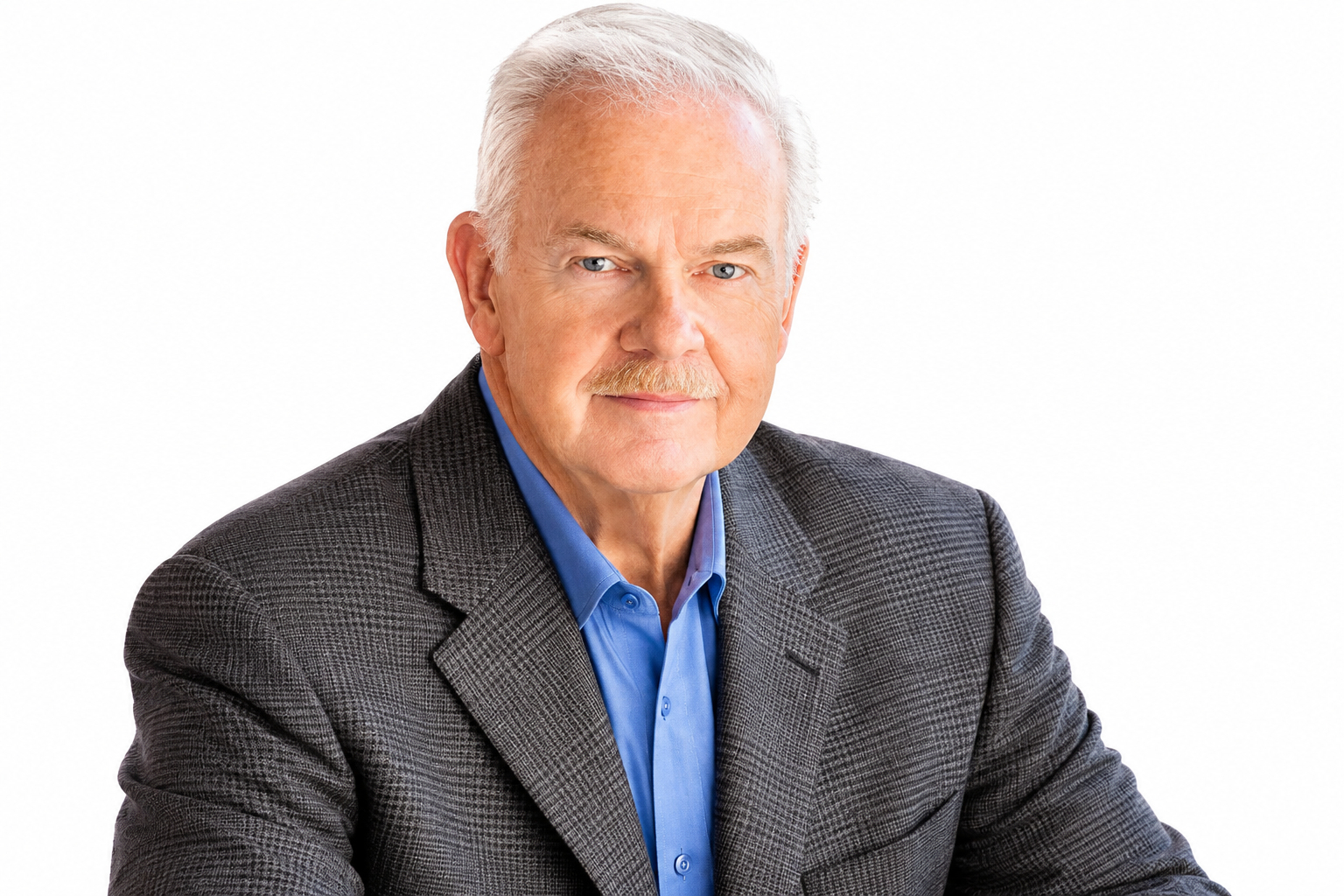
More than half a century ago, two young people from Fresno arrived in Pasadena with very little but each other and a shared fascination with science.
Bill Coughran had come to study mathematics at the California Institute of Technology.
Bridget, his new wife, took a job down the hall from some of the century’s most remarkable scientists.
Most recently, the couple returned the favor in historic fashion.
Bill and Bridget Coughran have committed $67.5 million to Caltech to endow and permanently name the Bridget and William Coughran Department of Computing + Mathematical Sciences.
The gift provides significant annual funding for faculty, researchers, and students working on the hardest, most fundamental problems in computation and information.
It also creates an endowment to sustain the department in perpetuity. With it, the Coughrans’ documented philanthropy passes $73 million, most of it directed to the institution where their life together began.
Their story starts at California State University, Fresno, where Bill’s father was a professor and administrator at the computing center.
While still in high school, Bill worked there part-time as a programmer, and that is where he met a fellow employee named Bridget McGuire.
They married when he was 19 and moved south so he could continue his studies at Caltech.
He took so many mathematics courses that he finished both a bachelor’s and a master’s degree in four years, mentored by the numerical analyst John “Jack” Todd, whose work helped make high-speed computing possible.
Bridget, who had earned a geology degree at Fresno State, joined Caltech’s Division of Geological and Planetary Sciences.
She worked for geochemists Samuel Epstein and Hugh Taylor, who studied lunar samples brought back by the Apollo astronauts, and for Clair Patterson, whose discovery of widespread lead pollution changed public health around the world.
“It was fun to be around people who were so enthusiastic about their work,” she recalls. “Caltech’s ability to produce, decade after decade, high-caliber, Nobel-winning scientists is one of the reasons I continue to support the Institute.”
From Pasadena, Bill went on to earn a master’s degree and a doctorate in computer science at Stanford.
He then spent two decades at Bell Labs, the legendary home of UNIX and the C programming language, where he rose from researcher to senior vice president.
At Google, he became senior vice president of engineering and later of research and systems infrastructure.
He oversaw Search, Chrome, YouTube, Maps, and the vast systems behind them, at one point leading more than 7,000 people.
For more than a decade since, he has been a partner at Sequoia Capital, where founders know him simply as “Coach Bill.”
Caltech honored him with its Distinguished Alumni Award, and he now serves as a trustee.
Through all of it, the Coughrans stayed close to Caltech.
Their newest gift builds on an earlier $5 million commitment that created the William M. Coughran Jr. Leadership Chair in Computing + Mathematical Sciences.
That endowment gives the department’s leader flexible funds, and it has already supported graduate students, provided start-up support for new faculty, and launched the Computing, Data, and Society Fellows, a postdoctoral program for scholars whose work in computing and data science serves the public good.
Chris Umans, the computer scientist who first held the chair, puts it simply.
A little extra support for a graduate student finishing a dissertation, he says, “makes a big impact on the individual, their faculty advisor, and our research enterprise.”
The new gift matches the Coughrans’ conviction that artificial intelligence will soon shape every corner of scientific discovery.
“For Caltech to continue to do science with a capital ‘S,’ AI needs to be a substrate of discovery across all research groups,” Bill says.
“Bridget and I want to provide the resources to make this happen and to recognize the computer and mathematical scientists who are helping to drive the Institute forward.”
Just as notable is the trust behind it.
The Coughrans chose not to dictate how the money is used, leaving it to faculty to decide where it can do the most good.
Bill believes universities are uniquely suited to explore both the promise and the risks of AI, including the emerging science of AI safety.
He describes himself as neither a doomsayer nor an unqualified optimist.
As a veteran of Bell Labs, one of the great research institutions built for long-term discovery rather than quick returns, he sees universities as the places where that kind of patient work now lives.
The department’s faculty are already showing what is possible.
Katie Bouman uses computational imaging to see what cannot be directly observed, and she helped produce the first images of black holes.
Anima Anandkumar developed neural operators that power the first AI-based high-resolution weather model, which runs tens of thousands of times faster than conventional forecasting.
Adam Wierman studies how data centers can be powered more cleanly and fit more gracefully into the communities around them.
Joel Tropp, who now leads the department, says the gift changes the horizon entirely.
“This visionary gift allows us to look beyond the short-term funding pressures we encounter to really develop a broader vision about what we can accomplish,” he says.
“We have the resources now to do things we couldn’t contemplate before.”
He expects to hire new faculty and expand support for graduate students, postdoctoral researchers, laboratories, and computing resources.
“Here, we envision projects on a 50-year timescale,” he adds. “We are in it for the long haul.”
Caltech President Ray Jayawardhana calls the commitment one of extraordinary generosity.
“Bill and Bridget recognize the tremendous possibilities before us,” he says, “and their extraordinary generosity will empower our researchers to accelerate scientific discovery and explore new vistas for the benefit of humanity.”
The Coughrans’ generosity reaches well beyond science.
In their decades in the Bay Area, they have become among the most steadfast patrons of San Francisco Opera, a love that began during their New York years at the Metropolitan Opera.
Bill serves on the company’s board and was its treasurer through the difficult pandemic years.
The couple has sponsored productions including Wagner’s Parsifal and Mozart’s The Marriage of Figaro, and this season they are listed among the company’s highest-level sponsors, with gifts of $1 million and above.
They share a particular devotion to Mozart and Wagner and believe the deep emotion of opera keeps us connected to our own humanity.
Bill also spent eight years on the board of TheatreWorks Silicon Valley. Closer to home, the Coughrans belong to Second Harvest of Silicon Valley’s For the Kids Council, which recognizes supporters giving $100,000 or more to make sure children have nutritious food.
They also support the Fine Arts Museums of San Francisco’s Legion of Honor.
Married for more than 50 years and living in Los Altos Hills, the Coughrans have built a philanthropy that reflects their life together: rigorous, generous, quietly devoted, and focused on the long run.
“Yes, AI is changing month by month, and academia will be forced to respond,” Bill says.
“But Caltech will remain a special place of discovery—and that is why Bridget and I are proud to support its future.”
For two young people who first met in a university computing center, there may be no more fitting legacy than a department that will carry their names into the future of science.