
$11 million gift from Mike and Sofia Segal creates a fellowship for scholars who argue in good faith
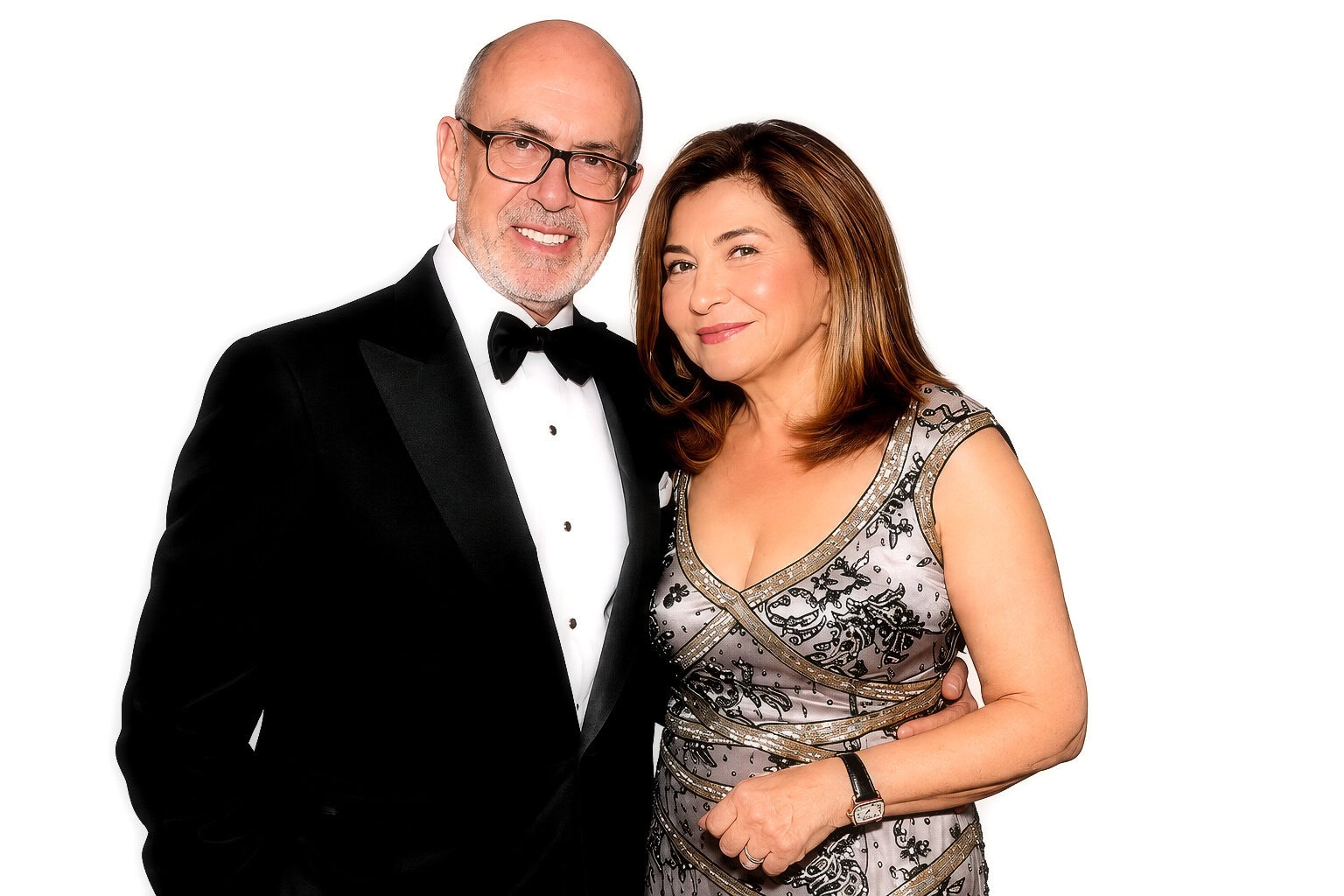
When Mike and Sofia Segal left the Soviet Union in 1978, they had $120, two suitcases and a young son.
They had both earned master’s degrees in engineering at Kharkiv Polytechnic Institute.
They were leaving a system that persecuted dissent and discriminated against Jews, a place where following an argument to its honest end could be dangerous.
Nearly five decades later, the couple has made an $11 million gift to protect exactly that freedom and to make it part of how a new generation of American scholars works.
The gift, made through the Mike & Sofia Segal Foundation, establishes the Mike & Sofia Segal Fellowship at the Moynihan Center of the Colin Powell School for Civic and Global Leadership at The City College of New York.
The postdoctoral program will form early-career scholars of politics and public affairs who pair rigorous, independent scholarship with a real appetite for engaging people who think differently. Its ambition is large. It aims to change the culture of the American academy by advancing young scholars committed to serious work in a nonpartisan, pluralistic setting.
It is fitting that the fellowship lives in a center named for Daniel Patrick Moynihan.
He was a professor, presidential advisor, diplomat, and long-serving United States Senator, and he moved easily between scholarship and public life throughout his career.
He was known for trusting data over dogma and for welcoming good arguments from any direction.
The fellowship is modeled on that example. Fellows will be chosen for the quality and independence of their scholarship.
They will also be chosen for their willingness and ability to engage openly with people who disagree with them.
The goal is a community of scholars whose informed perspectives span a real spectrum and broaden political and social discourse.
“Senator Moynihan followed the evidence where it led and argued with anyone willing to argue back,” said Carlo Invernizzi Accetti, professor and chair of political science and executive director of the Moynihan Center.
“The Mike & Sofia Segal Fellowship will form young scholars in that tradition and then work hard to place them in the classrooms and departments where they can carry it forward.”
The program is more than a stipend and an office.
A Fellowship Selection Committee will appoint fellows to two-year terms, starting with three fellows in the 2027–28 academic year and eight the following year. After that, up to 10 will be in residence each year.
Every week, fellows will meet in the Segal Seminar to debate their research and shared texts.
They will also read and critique one another’s job-market materials, run practice interviews, and learn to organize the small conferences and lecture series that shape a scholarly life.
They will join the Center’s wider Society of Fellows, which includes Moynihan Public Scholars, Distinguished Practitioners, and undergraduate Public Service Fellows.
That puts young academics in daily contact with seasoned practitioners and with students just finding their own voices.
The teaching component may be the program’s most distinctive feature.
In their first year, fellows will assist City College faculty.
In their second year, they will teach a course of their own on a campus where most students are the first in their families to attend college.
Fellows whose work reaches beyond the academy may add an optional third year as externs in journalism, policy, philanthropy, or civic life, including government.
The Segals see the fellowship as a direct expression of what they value most.
“The most valuable thing a scholar can bring to public life is the willingness to follow evidence and argument wherever they lead, even when the conclusions are uncomfortable or unpopular,” said Mike Segal.
“We created the Mike & Sofia Segal Fellowship so that promising young scholars can build their careers on exactly that kind of independent thinking.”
Sofia Segal tied the gift to the college’s character.
“City College has a long history of producing people who think for themselves and argue across their differences, and the Moynihan Center has carried that tradition forward,” she said.
“We are proud to help give a new generation of scholars the time, freedom, and community to do the same at a moment when open debate on campus matters more than ever.”
Their giving here follows a life built on the same kind of daring.
After a dozen years in the electric power industry, Mike Segal founded LS Power in 1990 as a two-person startup, with Sofia, who had developed software for the industry, serving as an advisor.
The company has since grown into one of the largest private owners of power generation and transmission infrastructure in the United States.
The couple now lives in New York City and has two sons and six grandchildren.
They established their foundation in 2009 to support causes that are overlooked and underfunded.
Their philanthropy has grown quickly since then.
The foundation’s published commitments reached nearly $45 million in its first years of major grantmaking. In 2025 alone, its giving, funded and pledged, hit a record of more than $36 million.
More than half of its commitments have gone to medical research, especially rare diseases.
That includes $17 million to advance treatment of chronic myelomonocytic leukemia, the largest outright gift from an individual donor in the history of the organization now known as Blood Cancer United, and $6.7 million for research on Ehlers-Danlos syndromes.
The Segals have also supported Jewish heritage, elder care and climate research. Intellectual freedom and civil discourse are among their highest priorities.
They have supported Heterodox Academy’s Mike and Sofia Segal Center for Academic Pluralism and given $3 million to the Constructive Dialogue Institute.
The City College fellowship carries that commitment from advocacy into the training of the professoriate itself.
City College President Vincent G. Boudreau described the gift as a chance to break new ground.
“There are many efforts in the academy to establish and bolster the norms and skills of civil and constructive engagement in our classrooms and society,” he said.
“The Mike & Sofia Segal Foundation’s investment in this fellowship gives City College the chance to do something truly different and proactive. By providing support for an immersive, years-long post-doctoral experience layered atop a PhD degree, the program will develop cohorts of academics, researchers, and public intellectuals specifically prepared to engage in, encourage, facilitate, and teach the skills and dispositions of rhetorical engagement, intellectual generosity, and genuine curiosity across differences. The program will both reinvigorate an historic CCNY tradition of discourse and inject much-needed skills into the culture of American intellectual life.”
The funding is designed for a careful launch and steady growth.
The program will receive $1 million for a planning year beginning in January 2027, then $2 million in each of the following five years. Each fellow will receive a stipend and fringe benefits.
During the planning year, the Center will finish its search for an academic director to lead the program and will hire a full-time program officer.
The first call for applications opens in spring 2027. The Foundation for City College will serve as the gift’s fiduciary steward.
The gift also lands at a remarkable moment for City College. Founded in 1847, the college has long been one of the country’s strongest engines of upward mobility.
Opportunity Insights ranks it first among 369 selective public colleges on its overall mobility index, and Degree Choices ranks it first nationally among universities for economic return on investment.
More than 16,500 students pursue degrees in its eight schools and divisions.
Its “Doing Remarkable Things Together” campaign has already raised more than $500 million toward its goal of building the college’s foundation to more than $1 billion in total assets.
The new fellowship combines City College’s tradition of open, spirited argument with the Segals’ own story.
Two engineers who once had to keep their convictions quiet will now help young scholars learn to speak up, listen to those who disagree, and teach the next generation to do the same.