
$228 billion estimated fortune, one promise: Mark Zuckerberg and Priscilla Chan begin the next chapter of their philanthropy
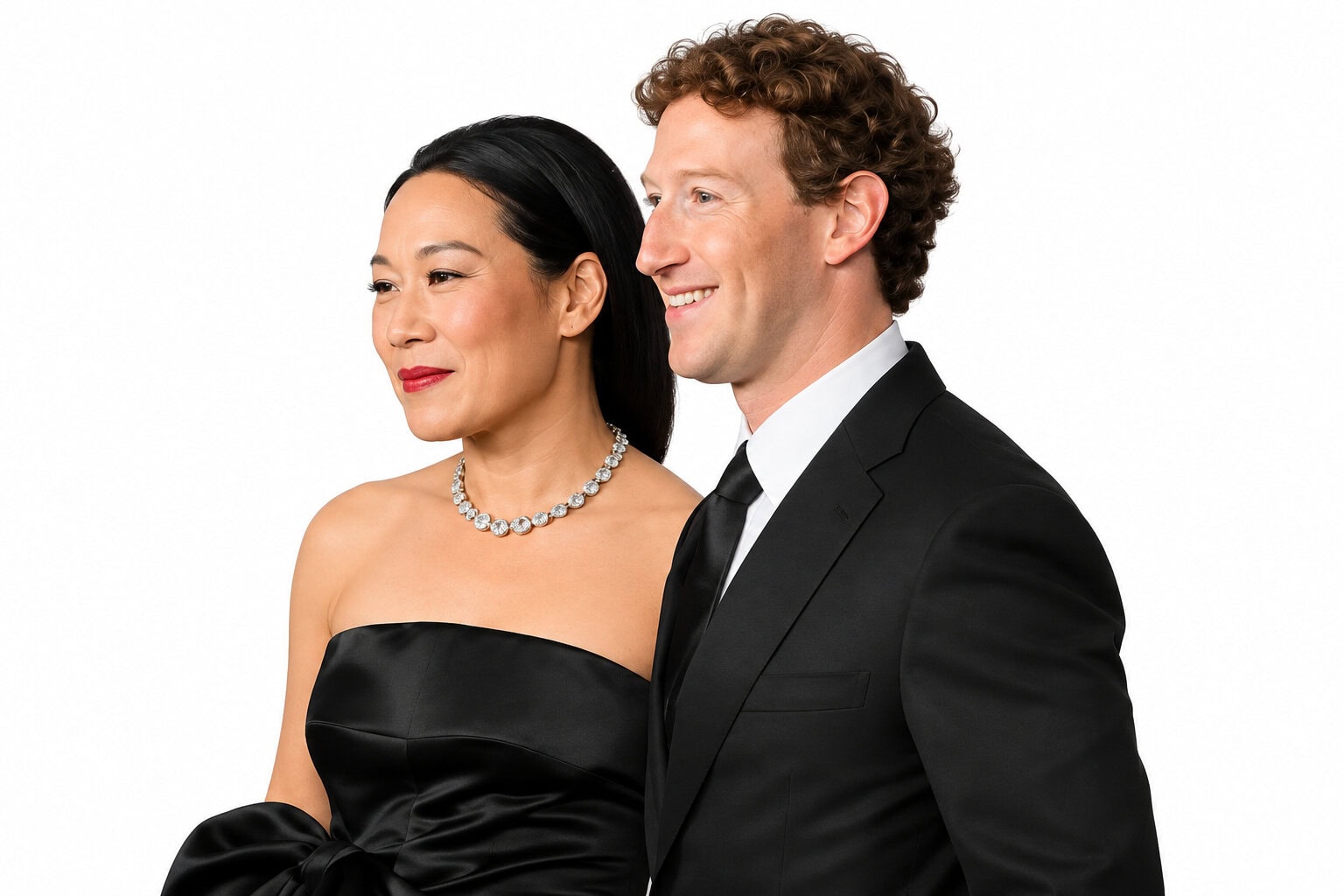
Priscilla Chan is a pediatrician, and she still measures her family’s philanthropy like a doctor.
“As a physician, I find myself asking the same question whenever I reflect on our work,” she wrote this year.
“What could this mean for patients?”
That question now sits behind one of the largest giving commitments of its time.
When their first daughter, Max, was born in 2015, Chan and Mark Zuckerberg wrote her a letter promising to give away 99 percent of their Facebook shares during their lifetimes.
Those shares were then worth about $45 billion.
Today Bloomberg values Zuckerberg’s fortune at about $228 billion, almost all of it his roughly 13 percent stake in Meta.
This fall, Meta built a new structure around that wealth.
On January 19, every Meta shareholder will receive one new non-voting Class C share for each share they hold.
Zuckerberg will be able to sell a portion of his new shares while keeping his voting control.
In Meta’s filing describing the negotiations, Zuckerberg’s lawyer noted “Mr. Zuckerberg’s publicly stated intentions to fund his philanthropic efforts, including as related to CZI.” The agreement also allows him to transfer shares to charitable trusts.
Where the money goes is clear.
The couple has said Biohub, their network of research institutes, “will be our primary philanthropic effort and where we’ll dedicate the vast majority of our resources.”
Their goal is ambitious.
“When we started, our goal was to help scientists cure or prevent all diseases this century,” they wrote.
“With advances in AI, we now believe this may be possible much sooner.”
The work is drawing serious partners. In April, Biohub committed $500 million to the Virtual Biology Initiative, a five-year effort to build open datasets that could teach AI to predict how human cells behave.
In October, the U.S. Department of Energy, the National Institutes of Health, Google DeepMind, Isomorphic Labs, and Meta joined, bringing total commitments to $1.8 billion in funding, data, computing power and measurement technology.
“We have always held this as a community asset, not just for one group,” Chan said.
A first dataset is expected in about a year.
In Biohub’s labs, the tools are getting sharper. Its scientists and a UC Berkeley team led by Holger Müller have built a laser phase plate for electron microscopes.
Its laser is more than 100 million times more intense than the surface of the sun, and it lets researchers see molecules inside cells that were once almost impossible to image.
The couple’s giving is also personal and local.
On Kauaʻi, where the family has a home, they have committed more than $100 million to over 100 organizations across Hawaiʻi since 2016.
The island alone has received more than $57 million, and $60 million has gone to the University of Hawaiʻi.
“We’ve learned that meaningful giving begins with listening,” Chan wrote in marking the decade.
Nearly 11 years after a letter to a newborn, Chan and Zuckerberg’s promise is larger than ever.
It now has a clear scientific mission and, starting in January, a new way to fund it.