
$11 million from Victoria Mann Simms and Ronald Simms brings precision medicine closer to every patient at City of Hope
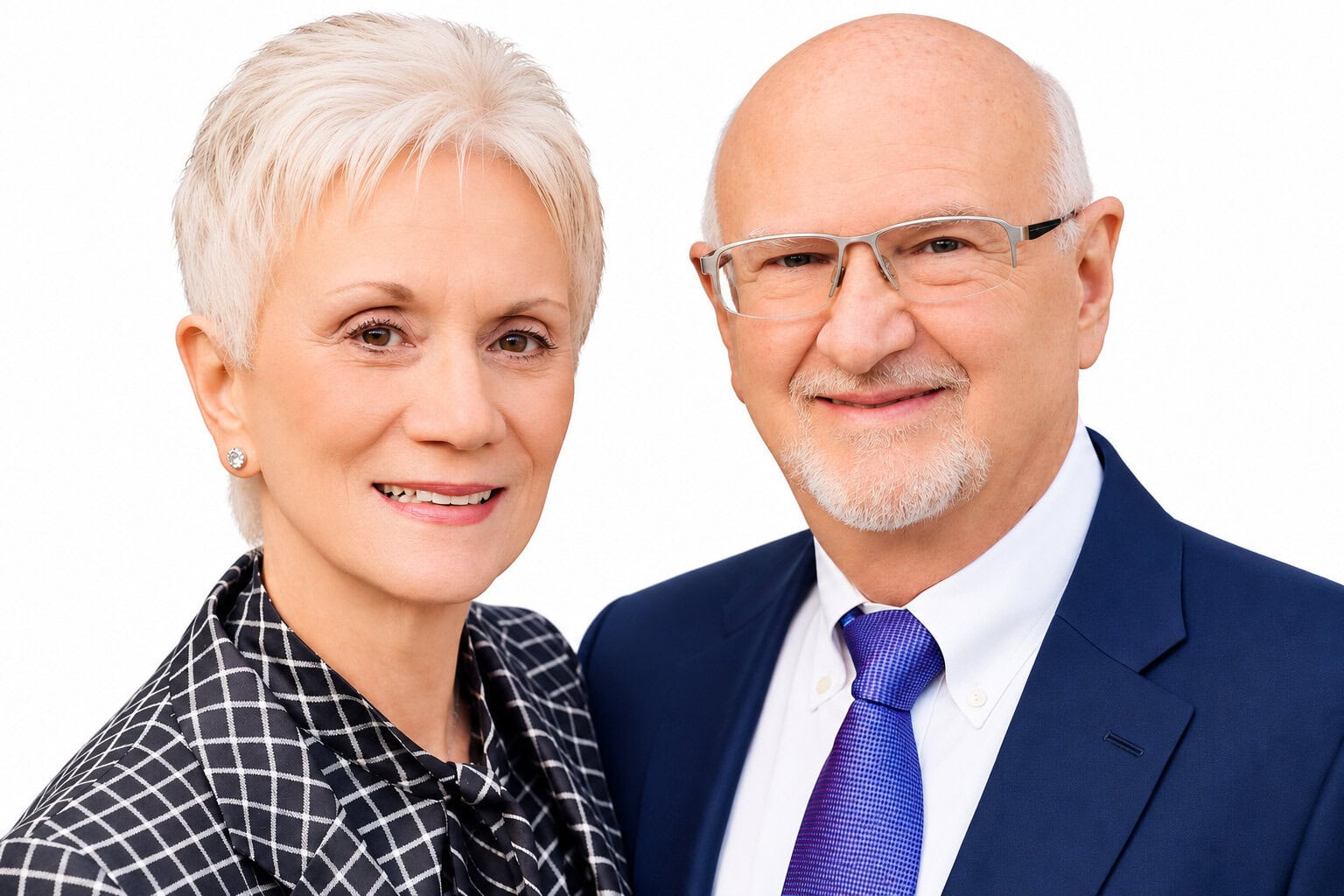
For more than three decades, Victoria Mann Simms and Ronald A. Simms have shared one belief: a person can’t be reduced to a diagnosis.
Their newest gift, $11 million from the Simms/Mann Family Foundation to City of Hope, takes that belief into the cell.
The gift endows the Simms/Mann Family Foundation Precision Oncology Program in Southern California.
It also creates two endowed chairs, one in cancer microbiome research and one in clinical cancer genomics.
Together they back a kind of medicine that tries to understand each patient’s cancer as fully as the Simms family has long tried to understand the patient.
The couple did not tie the gift to one disease, one laboratory, or one technology.
They chose to invest in the broader shift toward precision oncology, where genomics, data science, artificial intelligence, and microbiome research are beginning to show why the same cancer behaves differently in different people.
The endowed program will fund high-priority projects and new research opportunities as they arise, so City of Hope can act quickly as the science advances.
Dr. Robert R. Jenq, who directs City of Hope’s Microbiome Program, will hold the Simms/Mann Family Foundation Chair in Cancer Microbiome Research.
The Simms/Mann Family Foundation Chair in Clinical Cancer Genomics is still to be filled.
The City of Hope plans to recruit a leader who can bring artificial intelligence, clinical genomics, and bedside care together in one program.
“The possibility of understanding each person’s cancer more fully and using that knowledge to shape individualized care is deeply meaningful to us,” said Victoria Mann Simms, co-founder and president of the foundation.
Ronald Simms put it more simply: “True progress happens when science and compassion move forward together.”
He pointed to City of Hope’s work on a blood test to detect pancreatic cancer at its earliest stages.
That research, he said, could give patients answers sooner, while more options may still be open and lives may be saved or prolonged.
City of Hope’s chief executive, Robert Stone, said the foundation has “a remarkable history of recognizing important opportunities early and responding with vision and conviction.”
Their record bears that out.
Years before most people knew the name “integrative care,” the Simms family was already building it.
That work started close to home.
Victoria Mann Simms is a psychotherapist and child-development specialist.
When her father, the movie theater pioneer Ted Mann, fell ill, she saw how much a cancer diagnosis asks of a whole family, emotionally, practically, and spiritually, beyond what treatment alone can meet.
Her father helped fund the first version of what became the Simms/Mann–UCLA Center for Integrative Oncology.
It began as a program for women with gynecologic cancers.
She and Ron then built it into one of the country’s first integrative cancer centers, where counseling, psychiatry, nutrition guidance, chaplaincy, meditation, and qigong sit alongside chemotherapy and surgery.
Most of these services are free.
The foundation’s $18 million commitment later became the lead gift in a campaign to endow the center permanently. Its whole-person care now reaches all 20 of UCLA Health’s community oncology clinics, from Orange County to San Luis Obispo, and it has served tens of thousands of patients and their families.
Their giving often begins with an idea that won’t let them rest.
One night, Vicki woke at 3 a.m. and woke Ron to tell him they should bring integrative medicine to people who could never afford it.
The result was the Simms/Mann Health and Wellness Center at Venice Family Clinic, the first integrative medicine center at a free community clinic in the nation.
More than 50,000 patients have been cared for there.
Venice Family Clinic says the couple’s first investment has since drawn many other funders to its holistic model.
The couple describe philanthropy as “a creative process,” and their roles fit together.
Vicki, drawing on her clinical career, develops the vision. Ron, a Los Angeles real estate developer with a background in law and accounting, makes sure each project can last.
They organize their giving around three areas: education, health and wellness, and arts and culture, which they see as mind, body, and spirit.
Children have been at the center of much of that vision.
Through the Simms/Mann Institute, Vicki has spent years making early brain science useful to the people who raise and teach children from birth to age three.
The Institute’s Think Tank brought leading neuroscientists together with hundreds of educators, pediatricians, nurses, and policymakers.
It awarded fellowships to more than 25 community college and state university faculty members who train California’s childcare workforce.
It also produced the CuddleBright Experience, a tool that helps parents and toddlers build secure attachment, and the Building the House Within Guide on resilience in early childhood.
With the Jewish Federation of Greater Los Angeles and Builders of Jewish Education, the Institute launched the First 36 Project, which trains parent-and-me facilitators in child development.
The family’s support also includes the Mann Family Early Childhood Center at Wilshire Boulevard Temple, an inclusive playground at Children’s Hospital Los Angeles built for children of every ability, and endowed chairs in developmental neurogenetics at CHLA and in developmental social neuroscience at Reichman University.
Some of their giving has come from the couple’s own medical experiences.
After months of struggling with atrial fibrillation, Vicki and Ron endowed the Simms/Mann Family Foundation Chair in Cardiac Electrophysiology at Cedars-Sinai with $3 million to speed new treatments for arrhythmia and train the next generation of heart specialists.
The City of Hope gift fits that history.
In its earlier work, the foundation made sure cancer patients were treated as whole people. This gift helps science treat each patient’s disease as one of a kind.
“No two people and no two cancers are exactly alike,” said Dr. John D. Carpten, City of Hope’s chief scientific officer. For the Simms family, that has always been the point.
In a letter on the foundation’s website, the couple describe a “spiritual reciprocity between donors and beneficiaries” that “binds us together and keeps us all human.”
With this gift, they hope to leave a future in which every person facing cancer gets care as individual as they are.