
$150 million gift from Felicia and Ben Horowitz creates much needed pediatric hospital
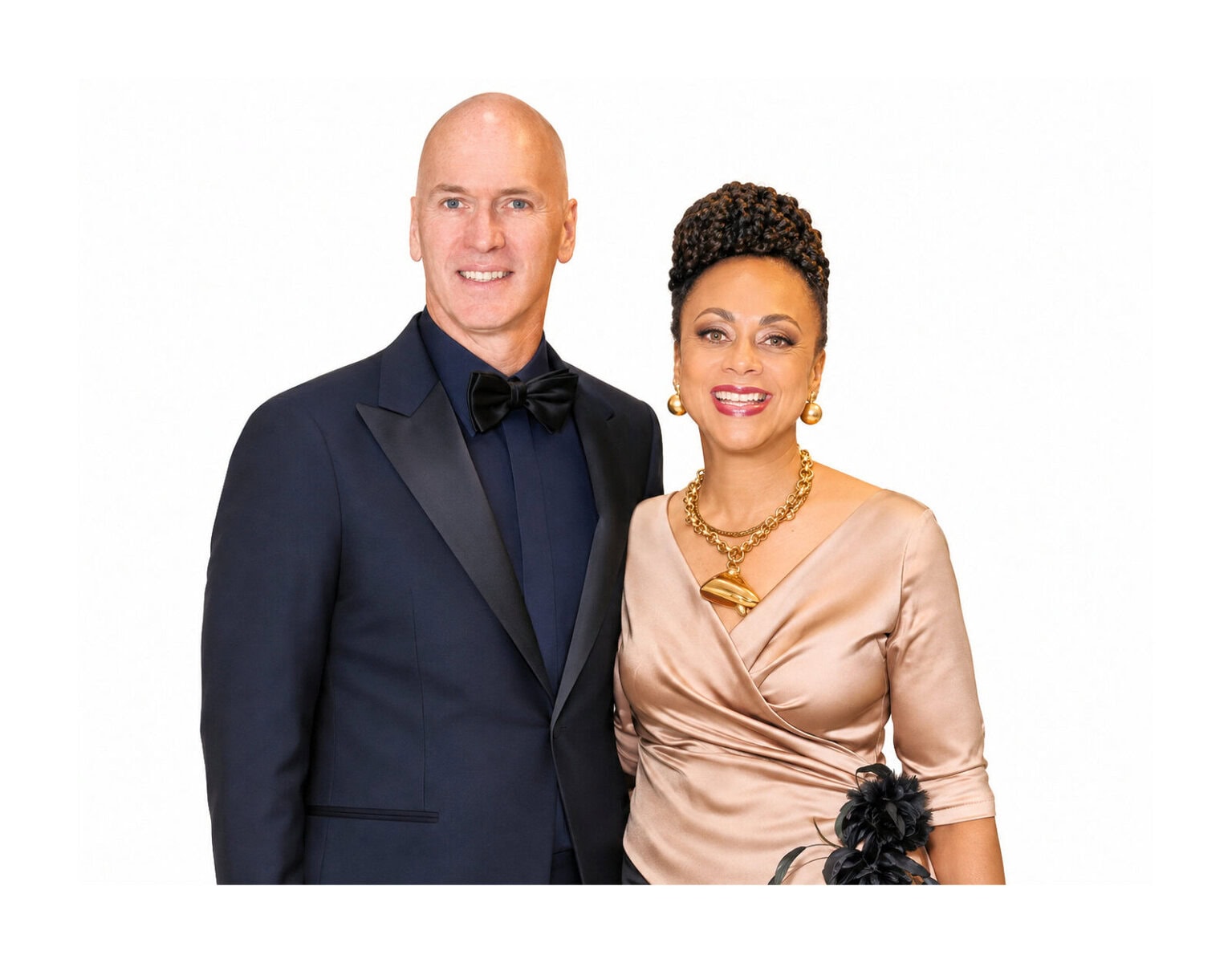
A promise made at a child’s hospital bedside decades ago, kept in the Las Vegas desert
More than thirty years ago, long before anyone in Silicon Valley knew his name, Ben Horowitz and his wife, Felicia, were a young couple with very little money and a sick child.
They couldn’t find the care their child needed where they lived. Then a doctor suggested a short trip to Lucile Packard Children’s Hospital at Stanford, and that drive changed everything.
Their child got lifesaving care there.
And somewhere in those long days, Felicia looked up at the Packard name on the hospital walls and made herself a quiet promise: one day, if they ever could, they would do for another family what the Packards had done for theirs.
That day arrived on a construction site in southwest Las Vegas. Standing at the future home of Nevada’s first stand-alone children’s hospital, the Horowitzes committed $150 million to Intermountain Health, and the building will carry their names: the Intermountain Health Felicia and Ben Horowitz Children’s Hospital.
Intermountain calls it one of the largest gifts ever made to a children’s hospital in the United States. In Las Vegas it is being hailed as a record, the largest healthcare gift the state has ever seen.
When Ben explained the gift to the crowd, he went straight back to that early chapter.
“I don’t want anyone to go through what our child did, but I know they will, because that is how the world works,” he said.
“I don’t want anyone in Las Vegas to lose a child because we don’t have the right health care.”
The numbers behind his words are stark.
Las Vegas is the largest metro area in the country without a stand-alone children’s hospital. Nevada ranks 48th in the nation in pediatricians per capita, and nearly 30,000 Nevada families leave the state every year to get care for their children.
That means parents taking leave from work, siblings left with relatives, and sick kids traveling hundreds of miles for treatment that families in most big American cities can get close to home.
When the Horowitzes moved to Southern Nevada about five years ago, Ben said, Felicia was shocked to learn the state had no specialized pediatric hospital.
The old promise suddenly had an address.
The couple’s own story starts in Berkeley, where Ben grew up. In the summer of 1986, a high school teammate set him up on a double date with a young woman named Felicia Wiley.
Ben would later tell the story in the opening pages of his bestselling book, “The Hard Thing About Hard Things.”
He and his friend cooked an elaborate dinner.
Two hours went by.
Felicia had decided she was too tired to come.
Ben was not easily put off, and he won her over in the end.
They married two years later, the same year he graduated from Columbia with a degree in computer science, and they went on to raise three children.
The years that followed were the stuff of Silicon Valley legend: a master’s degree at UCLA, a job at Netscape in the summer of its famous IPO, and then Loudcloud, the company he co-founded with Marc Andreessen just before the dot-com crash.
It nearly went under.
Ben kept it alive by turning it into a software company, Opsware, which Hewlett-Packard later bought for $1.6 billion.
In 2009 he and Andreessen started Andreessen Horowitz, the firm known as a16z, which grew into one of the most influential venture capital firms in the world.
Through all of it, Ben has said that the hardest lessons in business were about people, about building something worthy of the talent you’re asking to join you.
That conviction runs all through this gift.
The $150 million is meant to do more than pay for a building. It is meant to bring people to Nevada: pediatric specialists, nurses, and researchers who might otherwise never think of practicing in the desert.
The money will help recruit top pediatric providers, build specialized programs including behavioral health, advance pediatric research, and widen access for families across the state.
“Great institutions are built by great communities that see beyond themselves,” Ben said.
“What excites me about this effort is the opportunity to attract exceptional physicians, nurses, and caregivers who want to dedicate themselves to improving children’s lives. When talented people come together around an important mission, impact happens.”
If Ben spoke as a builder, Felicia spoke as a mother.
“At the heart of this gift are children and families,” she said.
“Every parent wants to know that when their child needs care, the very best people and resources are there for them.”
For decades Felicia has been the steady hand behind the family’s giving.
She is president of the Horowitz Family Foundation and has been deeply involved with medical causes, from Stanford’s hospital, which once cared for her own child, to the Parker Institute for Cancer Immunotherapy.
In Las Vegas she has quickly become a familiar presence, working with the Cleveland Clinic Lou Ruvo Center for Brain Health, the University Medical Center Foundation in Southern Nevada, and the Las Vegas Raiders Foundation.
Her giving reaches into public safety, support for military members and veterans, health and wellness, and youth development.
She also co-founded and leads The Paid in Full Foundation, maybe the clearest window into how the couple thinks about gratitude.
Ben has long said that hip-hop gave him enormous personal value over the years, and that there was no way to repay the pioneers who made it.
With the rapper Nas and the executive Steve Stoute, the Horowitzes built one.
Based in Las Vegas, the foundation honors hip-hop’s founding generation with its Hip Hop Grandmaster Awards, and each honoree receives a $500,000 grant to keep creating.
The couple personally match donations two and a half to one, and the foundation runs on volunteers so that the money goes to the artists.
It’s the same instinct that shaped the hospital gift: when you’ve been given something, you look for a way to give it back.
That instinct may explain why Felicia spent much of her moment at the podium trying to hand the credit to someone else.
“The whole point of the gift, it’s about a thank-you,” she told the crowd.
Then she thanked the region’s hospital workers, its retail workers, and its police officers, and she asked everyone to stand and applaud the people who care for Nevada’s sick and injured every day.
“They are truly the heartbeat of the state,” she said.
The donor whose name will be on the building was leading a standing ovation for the people who will work inside it.
Brian Greenspun, the longtime publisher of the Las Vegas Sun, wrote afterward that of all the stories told that afternoon, the Horowitzes’ was the one he loved most, because at its heart was a promise two young people made to each other when a promise was all they had.
The hospital will rise on about 34 acres of the UNLV Harry Reid Research and Technology Park, near Sunset Road and Durango Drive. Groundbreaking is set for the coming days, and the inpatient tower is scheduled to open in 2030 with 180 beds and room to grow to 228.
The whole project is expected to cost more than $1 billion. Intermountain has committed to covering about two-thirds of that, and the rest is coming from Las Vegas itself through the Nevada Campaign for Kids.
MGM Resorts CEO Bill Hornbuckle and his wife, Wendy, chair the campaign.
“Here in Las Vegas, we’ve built world-class entertainment, dining, sports, and resorts,” they said.
“Now, together, we’re building world-class care for the kids who need us most.”
The Horowitz gift crowns a remarkable run of local generosity. Homebuilders Larry and Heidi Canarelli, whose family has built homes in Southern Nevada for decades, recently pledged $50 million, and the inpatient tower will bear their name.
The Raiders and three of the team’s owners, Mark Davis, Egon Durban, and Michael Meldman, pledged $25 million, the largest philanthropic commitment in franchise history. Bruno Mars gave $1 million.
A city long defined by what it offers visitors is now building something for the families who live there.
For Intermountain, which has cared for children for more than a century and runs the nationally recognized Primary Children’s Hospital system in Utah, the gift is a turning point. David Flood, the health system’s chief development officer and president of Intermountain Foundation, said it “propels pediatric care in Nevada 10 to 15 years into the future.”
Standing on the bare desert ground that day, he put it more simply.
“We are not just building a hospital,” he said.
“We are standing on sacred ground. It will be sacred for the families receiving care.”
The building will carry the Horowitz name, but Felicia hopes families will come to see it as theirs.
“Creating a healthier future for children is never about one family or one gift,” she said.
“Our hope is that families see this hospital as something that belongs to all of us. Every child deserves every opportunity to thrive.”
Some years from now, a young mother will sit beside her child’s bed in Las Vegas, close to home instead of hundreds of miles away.
She may glance up and see a name on the wall.
She won’t know about the double date that almost didn’t happen, or the drive to Stanford, or the promise made in a hospital corridor more than thirty years ago.
But she’ll be living out the end of that story, and maybe she’ll make a quiet promise of her own.