$100 million to make birth safer: Olivia and Tom Walton launch a five-year push to halve maternal deaths
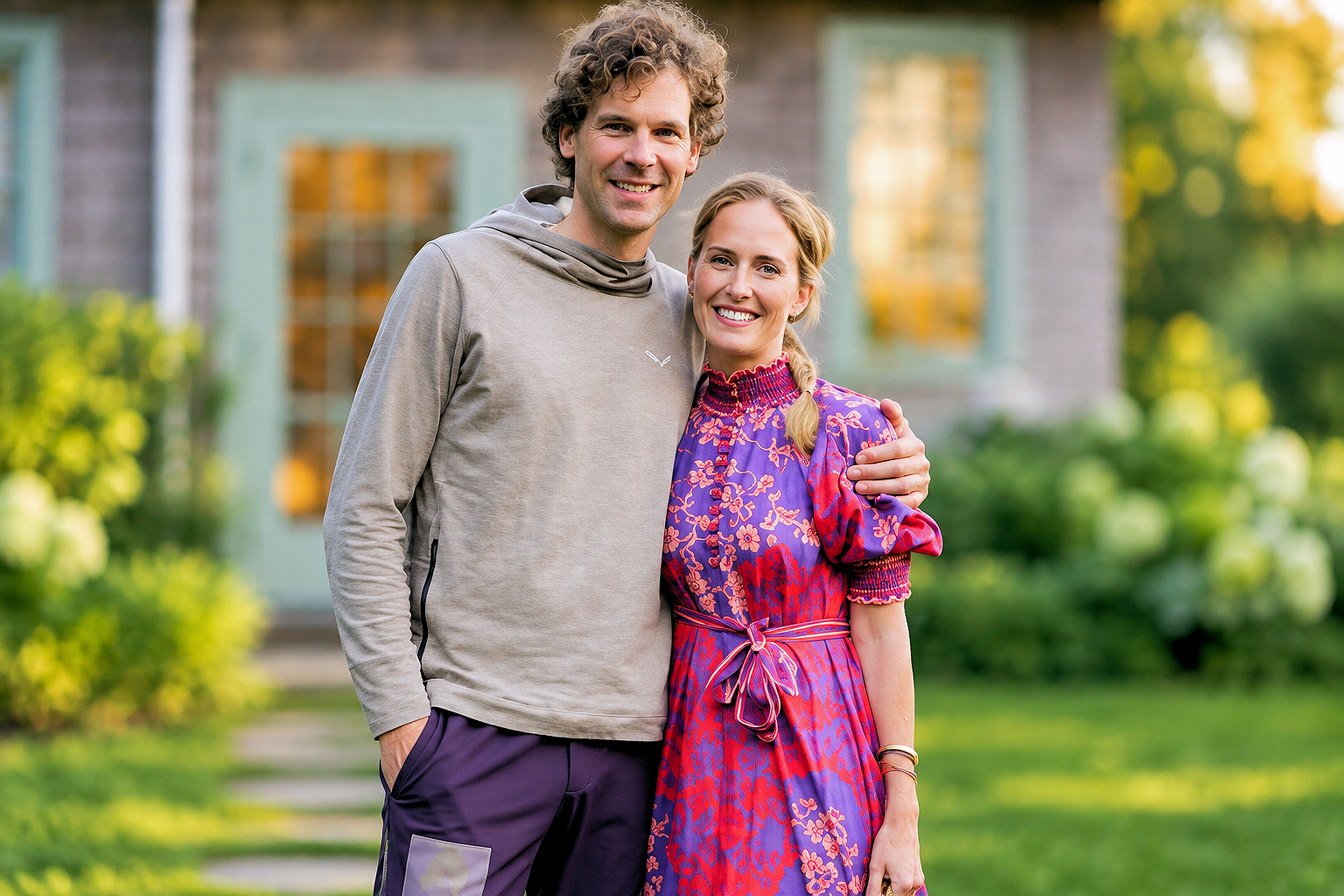
When Olivia Walton describes what now fills her days, she starts with her own family. “It was more dangerous for me to give birth to my children than it was for my mother to give birth to me in the 1980s,” she says.
“That is inexcusable—and it is fixable.”
On September 10, 2026, Walton and her husband, Tom Walton, backed that conviction with an initial $100 million, five-year commitment to Healthy Moms.
Healthy Babies America (HMHBA), a bipartisan campaign with a goal most people in public health would call bold. They want to cut the U.S. maternal mortality rate in half by 2031.
The pledge began as a personal mission. Walton has had three children in the last eight years, and she lives in Arkansas, a state she calls the worst in the country for maternal mortality.
“I saw firsthand that even with my resources, education, and family support, this was still so incredibly hard,” she has said. “I needed much more help than I was actually able to get. If that’s what it was like for me, I can’t even imagine how difficult it is for moms across the country and other moms in my state who have so much less.”
She had worked on maternal and infant health in Arkansas for years before the campaign, through Ingeborg Initiatives, a fund supporting Arkansas mothers, and through the Maternal and Child Health Center for Policy and Practice at Heartland Forward, the Bentonville nonprofit she and Tom founded to promote economic growth in America’s heartland.
A former business journalist, she also chairs the Crystal Bridges Museum of American Art, succeeding Tom’s aunt, Alice Walton, and leads Ingeborg Investments, which backs women founders.
Tom Walton, a grandson of Walmart founder Sam Walton, sits on the board of the Walton Family Foundation. Observers have called this gift a new chapter for the younger generation of Walton philanthropy.
HMHBA grew out of that work. Heartland Forward introduced the campaign as a call to action in March, and Olivia Walton and nurse-midwife Cara Osborne launched it nationally on Mother’s Day weekend in May on NBC’s Meet the Press, alongside Maryland Governor Wes Moore, a Democrat, and Arkansas Governor Sarah Huckabee Sanders, a Republican. That pairing has set the tone ever since.
The campaign now operates as an independent nonprofit, led by president and chief medical officer Dr. Neel Shah and executive director Robin Reck. It calls itself a campaign, not a foundation, on purpose.
“We are calling it a ‘campaign’ because it has a beginning, middle, and an end,” Reck says. “In five years, I’m hoping that we’ll be coming to you to tell the story of how we reached our goal.”
The design of the $100 million matters as much as its size. The money is meant as catalytic capital, paying for state matching grants, high-impact partnerships, and the infrastructure needed to bring proven treatments into everyday practice.
The aim is to draw in state governments, corporations, and other donors and to give states something they can eventually fund on their own. “Taking on risk and going first is a great use of philanthropic capital,” Walton says.
“The goal is to prove that this works and then have state funding take it over.” She says states are “in the driver’s seat,” partly because Medicaid pays for about 40 percent of American births. Reck calls the Waltons’ commitment “perhaps the single largest private investment ever made to cut the maternal mortality rate in the United States,” adding that “it fundamentally changes what’s possible.”
The case for urgency is stark, and so is the case for hope. The United States has the highest maternal mortality rate in the developed world, and it spends more than any other country to get there. Two-thirds of maternal deaths happen in the year after birth, and about 40 percent of mothers get no follow-up care.
Yet the Centers for Disease Control and Prevention finds that 87 percent of pregnancy-related deaths are preventable. Shah calls the problem “eminently solvable.” “The biggest cause of suffering isn’t a lack of knowledge,” he says. “It’s a lack of execution on the knowledge… This is a matter of will.”
He points to California, which halved its maternal mortality rate by pairing proven strategies with investment, and to New Jersey, which once ranked 47th among states and improved by focusing on its cities with the greatest need.
Walton points to New Jersey, Michigan, and California, which now offer statewide postpartum home visits, and to North Carolina, which reports a 50 percent drop in hospital readmissions where nurses visit new mothers in the first weeks after birth. “I’ve got blue-state solutions of what works, red-state solutions of what works, and purple-state solutions of what works,” she says. “It’s really possible.”
Better data is central to the plan.
“You can’t fix what you can’t measure,” Walton says.
In May, Heartland Forward partnered with the U.S. Department of Health and Human Services on the Perinatal Improvement Collaborative, which brings together about 220 hospitals nationwide to collect better information on outcomes for mothers and infants. The campaign also backs two bipartisan bills in Congress.
The Rural Obstetrics Readiness Act would help rural facilities without obstetricians handle delivery emergencies. The NIH IMPROVE Act would extend federal funding for maternal health research.
Public support is just as broad. In an HMHBA poll conducted by Kellyanne Conway’s firm, 86 percent of voters said maternal health needs to improve, and all 15 policy ideas tested won majority support from Republicans, Democrats, and independents.
“Healthy moms and healthy babies are not partisan issues,” Conway said. “They are under-informed ones.”
Three weeks after the pledge, the money reached its first states. On October 1, at Heartland Forward’s annual Heartland Summit in Bentonville, Walton announced HMHBA’s first state investments: $10 million each over five years to the state governments of Arkansas and Kentucky, $20 million in all, aimed at rural maternal health. Governor Sanders, a Republican, and Kentucky Governor Andy Beshear, a Democrat, joined her onstage. The grants will help both states bring in more midwives, doulas, community health workers, and other maternity care professionals.
They will also strengthen maternal health data and quality improvement, expand home visits during pregnancy and after birth, and broaden postpartum care, including mental health support. HMHBA will work with each state to design, test, and evaluate models that other states can copy.
“We’re proud to start from the Heartland in Arkansas and Kentucky,” Walton said, “and show what this kind of partnership can make possible.”
Both states have a lot to gain. In Arkansas, nearly half of the 75 counties are maternity care deserts.
About 78,000 women of childbearing age have no birthing hospital or obstetrician in their county, and poor pregnancy outcomes cost the state an estimated $1.8 billion a year. Sanders says more than 1,100 Arkansas women had never seen a doctor until they went into labor. Her statewide Claim Your Care campaign has since brought what she calls “a significant uptick” in women seeking care.
“The best maternal health policy is one that reaches moms before there’s a crisis,” she said. In Kentucky, nearly half of the 120 counties are maternity care deserts, and about 58 percent of rural women live more than 30 minutes from a hospital that delivers babies. “This $10 million commitment will help us build on the progress we’ve made by advancing postpartum and prenatal care,” Beshear said.
“Now we can make sure moms and babies receive the quality care they deserve, right in their own community.” Reck framed the stakes in terms any rural town would understand. Since 2020, 146 rural hospitals have stopped delivering babies.
“We’d never let a town lose its fire station without asking those questions,” she said. “Maternal care is infrastructure, and infrastructure gets measured, managed, and fixed.”
For Walton, the payoff goes well beyond any one hospital or state. “Maternal health is one of those rare areas where you have an opportunity to make an intergenerational impact,” she says.
“Healthy moms lead to healthy families. Healthy families lead to healthy communities. Healthy communities lead to a healthy economy.”
She is clear that $100 million is a start, not the whole answer. “We cannot do this alone,” she says.
“We need to work with the federal government, state governments, Republicans, and Democrats. We want to work with employers. We want to work with other philanthropists.” Her goal is easy to state, even if it is hard to reach. “America should be the safest place in the world to have a baby,” she says.
“We have the evidence, and we have the solutions. Now we need the urgency and investment to make them available to every mom across the country.”
