
$50 million new gift launches university’s most generous PhD scholarships, opening Melanie Woodin’s $100 million path for the next cohort of great minds
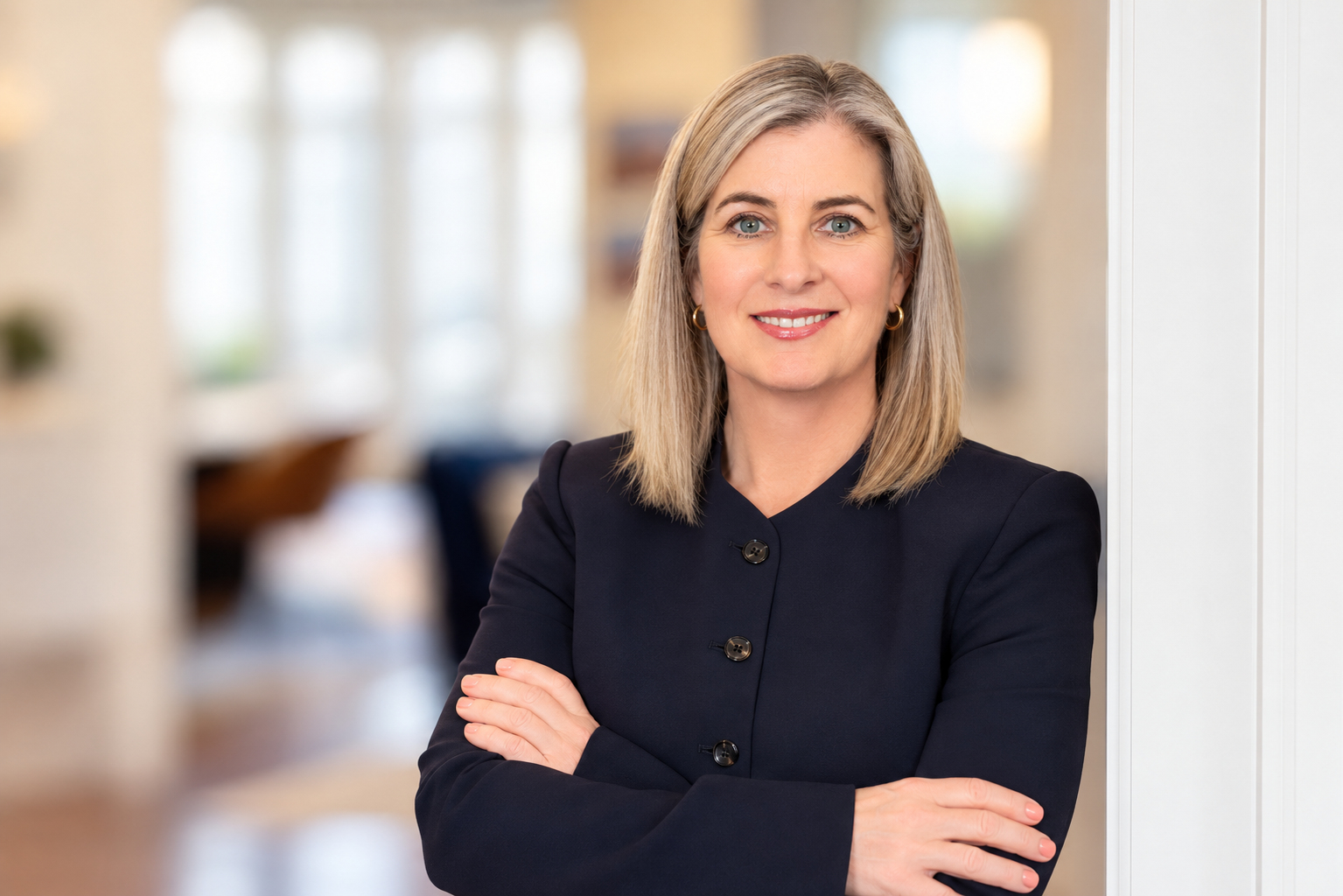
The $50 million latest gift to the 200-year-old university gives Melanie Woodin a $100 million bet on the next cohort of great minds
As a first-year student in 1991, Melanie Woodin sat in Convocation Hall at the University of Toronto for her first university lecture and listened to a professor lay out the long road to becoming a scientist: an undergraduate degree, then a master’s, then a PhD, then a postdoctoral fellowship.
She and a friend started quietly giggling.
“At the time it sounded kind of preposterous that you would spend that long in university,” she later recalled.
She went on to walk every step of that road.
Thirty-five years later, as the first woman to lead the University of Toronto in its 200-year history, she is clearing that road for others.
On Monday, Woodin announced the Presidents’ Impact Scholarship Program, a $100 million endowment for PhD students made possible by a $50 million gift from an anonymous Canadian family foundation, one of the largest gifts to doctoral education in the country’s history.
The university is matching the gift’s annual payout to double the program’s scale. Beginning in September 2027, U of T will recruit 12 or 13 new doctoral scholars a year and pay each $80,000 a year for four years, for a total of $320,000 per student.
By the program’s fourth year, 50 Presidents’ Impact Scholars will be studying at U of T at any one time, and that number is meant to hold in perpetuity.
The figure that turns heads is the stipend. It is double the university’s current minimum base funding for PhD students, which U of T recently raised to $40,000. To the university’s knowledge, it is the most generous PhD package in Canada. “Globally, it puts us pretty close to the top, so above Princeton, Harvard, Cambridge, and Oxford,” Woodin said.
For Woodin, the money removes a quiet barrier that keeps talented people from research. Low graduate pay can be decisive for students carrying undergraduate debt or for professionals weighing whether to leave a good salary in the private sector to pursue a doctorate. A national advisory panel warned in 2023 that financial support for graduate students in Canada was “at a breaking point,” with federal awards for research trainees stagnant for two decades.
The new scholarships answer that warning directly, at least for the students lucky enough to win them.
“We’ve got an unprecedented opportunity right now to bring back Canada’s best and keep Canada’s best here,” Woodin said.
“The Prime Minister has spoken about the prioritization of talent as it relates to Canada’s economic resiliency and sovereignty, and as Canada’s flagship university, we’re fully aligned because we’re in the talent business.”
The timing is deliberate. Ottawa has committed $1.7 billion to its Canada Global Impact+ Research Talent Initiative to recruit leading researchers from abroad, and Canadian universities and hospitals are moving quickly to attract scientists and students looking for stability as research funding tightens in the United States.
U of T’s program adds a philanthropic engine to that national push, aimed squarely at the youngest and most mobile part of the talent pipeline.
What makes the program distinctive, though, is not only what it pays but how it works, and here Woodin’s own career is visible in its design. Each year the university will choose a single major societal challenge, a theme such as AI and health or sovereignty and the Arctic, and recruit a cohort around it.
Every scholar will be supervised by two faculty members from different disciplines. An AI and health cohort, for example, could bring together computer science, quantum computing, law, philosophy, the social sciences, and AI safety research to tackle the practical question of how Canada designs, adopts, and regulates artificial intelligence in its hospitals and clinics.
Each scholar will also complete an external placement, whether with a government, an international partner, or an industry, so that research is tested against the world outside the lab.
Woodin is a neuroscientist known for a multidisciplinary approach to synaptic communication in the brain, work that has helped illuminate the mechanisms behind autism spectrum disorder, Huntington’s disease, and ALS.
She earned her bachelor’s in biology and master’s in zoology at U of T, her PhD in neuroscience at the University of Calgary, and completed a postdoctoral fellowship at the University of California, Berkeley, before returning to Toronto as an assistant professor in 2004.
As dean of the Faculty of Arts & Science, Canada’s largest faculty, she made interdisciplinarity something close to a personal mission.
“From the beginning, I endeavored to bring the faculty together, to have people from different disciplines collaborate on complex problems,” she said as her deanship ended.
“I believe we’ve achieved that together, and I hope it’s the legacy of my leadership.”
The Presidents’ Impact Scholarship Program carries that legacy from one faculty to the entire university.
“As Canada and the world face challenges of increasing complexity, future solutions will require new ideas and fresh thinking that cuts across disciplines,” Woodin said.
“The Presidents’ Impact Scholarship Program is a major innovation in PhD education that will galvanize a new generation of thought leaders who will serve as key contributors to the prosperity of our country.”
Selection will reward more than grades. Candidates will be judged on academic excellence and also on their record of innovation and real-world problem-solving, so a Presidents’ Impact Scholar may just as easily be an applied inventor determined to turn an idea into a public or commercial good as a theorist reshaping a field.
“This is a visionary approach to PhD education,” said Joshua Barker, dean of the School of Graduate Studies. “They will be part of a cohort of exceptional peers, working together on meaningful research and complex challenges, creating a collaborative community that enriches the doctoral experience.”
Trevor Young, U of T’s vice-president and provost, called the program “a generational investment in brilliant students from every conceivable discipline and background, empowering them to take on the biggest problems, including future challenges not yet known or understood.”
He added a line that captures why doctoral funding matters beyond campus: “PhD students are the backbone of the country’s research and innovation ecosystem.”
U of T has the history to back that up. Doctoral students associated with the university helped build the first electron microscope in North America and contributed to the development of machine learning and deep neural networks, work that now underpins modern artificial intelligence.
The family behind the gift has chosen to stay out of the spotlight.
The university describes it only as a Canadian family foundation with a deep, long-standing history of support for U of T and for other universities and research centers that encourage innovative, multidisciplinary approaches to complex problems.
In other words, this is a family that has spent years backing exactly the kind of boundary-crossing thinking the new program is built to produce.
“The $50 million gift that empowered the launch of the Presidents’ Impact Scholarship Program is an inspiring example of thoughtful philanthropy that raises institutional sights and transforms our collective potential to generate beneficial change for future generations,” said David Palmer, U of T’s vice-president of advancement.
Derrick Rossi, the Canadian stem cell scientist who co-founded Moderna and once studied at U of T, said the gift’s meaning reaches well beyond the dollars.
“The signal that [U of T] is sending to the globe is that Canada is not anti-science and we’re serious about science,” he said.
The university will issue its first call for applications soon. When the inaugural cohort arrives in September 2027, some of those students will likely sit in Convocation Hall, as Woodin once did, and hear about the long road ahead.
Thanks to a family that asked for no credit, that road will be a little less daunting. At her installation last fall, Woodin urged her community: “Let us allow our ambitions to match our talents.”
Now $100 million is available to help them do it.