$10 million latest donation from Eric Sprott backs a new approach to Alzheimer’s prevention at university- raises his philanthropic giving to over $337 million
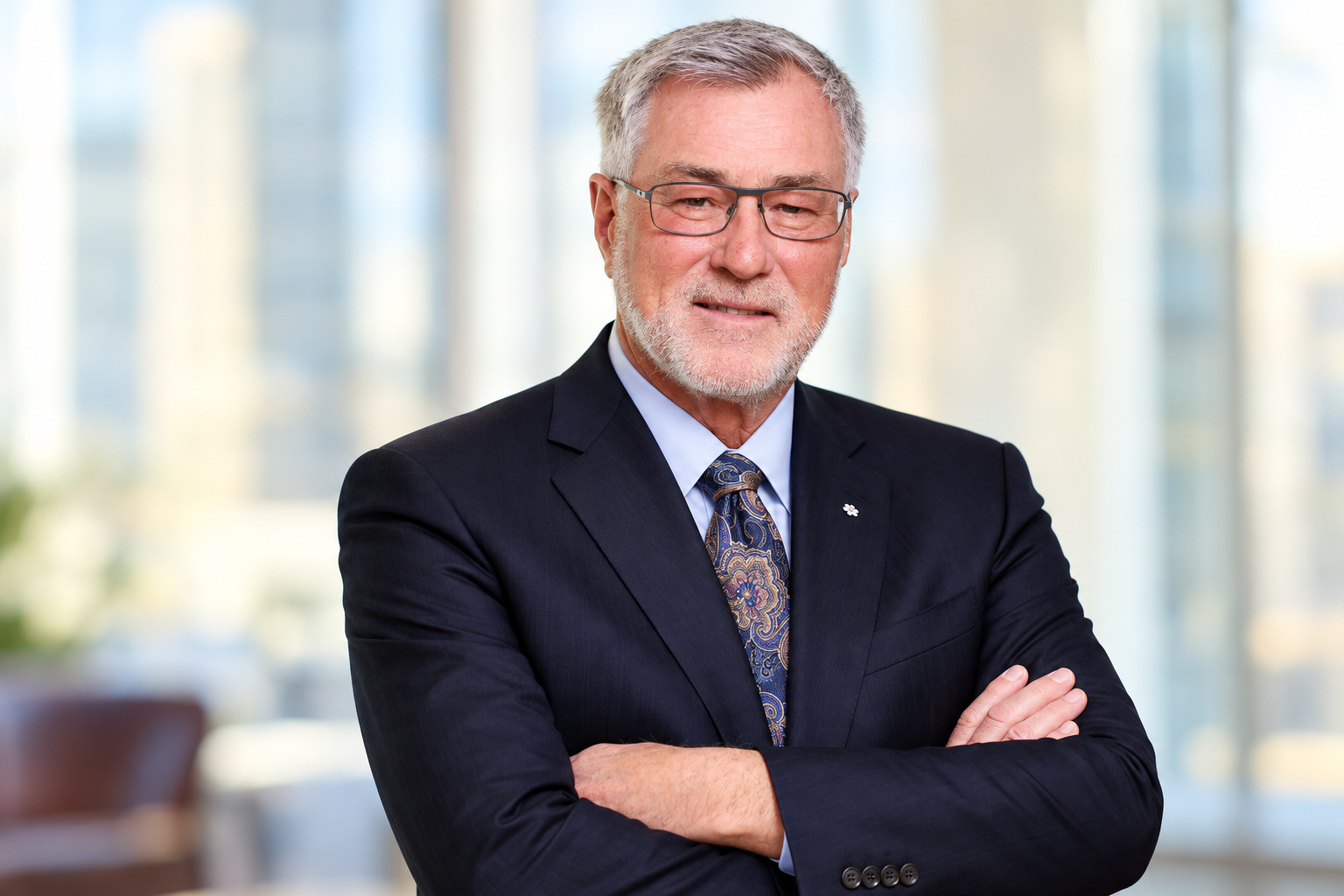
Eric Sprott made his name and fortune by backing ideas other investors overlooked, from small gold explorers to mines no one else would fund.
On Oct. 1, the Canadian investor and philanthropist made a similar bet in medicine.
He gave $10 million to the Université de Sherbrooke to speed up research on Alzheimer’s prevention and brain aging. The research is led by Stephen Cunnane, who has spent years arguing that the aging brain may be running short of fuel.
The announcement in Sherbrooke drew university leaders, researchers, and guests to celebrate a gift Cunnane called “a research dream come true.” He thanked Sprott warmly: “We are deeply grateful for this exceptional support.”
Cunnane is a research professor in the Faculty of Medicine and Health Sciences. His work rests on a simple idea that is easy to picture. He compares the brain to a hybrid car. Its main fuel is glucose, but as people age, the brain may not take in all the glucose it needs, and that shortfall can feed cognitive decline.
Ketones can serve as a second fuel. The liver makes them from body fat and dietary fat, and they can be raised by fasting, by cutting back on carbohydrates such as pasta and rice, or with a medium-chain triglyceride supplement sold in natural-products stores.
Cunnane says his team’s work over the past decade suggests ketones can correct some of the brain’s problems early in the disease.
He stresses that brain energy is not the only factor in Alzheimer’s, but it is one current drugs do not address. In one memorable case, a patient who could not draw the circle in a standard clock-drawing test did noticeably better after starting ketone supplements.
With Sprott’s support, the team plans to study four approaches in people with early Alzheimer’s: eating fewer carbohydrates, exercise, medium-chain triglycerides and omega-3 supplements.
“We know that healthier lifestyles can help protect cognitive health,” Cunnane said. “The challenge now is to better understand how they can be applied in practice and incorporated as an effective part of our prevention strategies.”
He has also suggested that one day, a brain-fuel strategy combined with medication could work better than either one alone.
For Sprott, the gift reflects a belief he holds strongly. “Metabolic health continues to be an underestimated prevention avenue,” he said.
“I am pleased to help advance research in this field, particularly when it comes to Alzheimer’s disease.”
He added that people deserve better information and prevention guidelines grounded in evidence. That view fits a donor who has long been drawn to practical ideas that could change outcomes, not just to familiar causes.
Louis Valiquette, dean of the Faculty of Medicine and Health Sciences, opened the event. He said the donation would move cognitive-health research forward and described Cunnane’s work on how the brain uses energy with age.
Rector Jean-Pierre Perreault set the gift against the larger challenge of an aging population. He said solving it will take researchers, healthcare workers, and partners working together. The funding will also strengthen ties between the medical faculty and the university’s Research Center on Aging, which studies how to understand, prevent, and treat the health problems that come with age.
“This major donation shows how we can advance knowledge and make a lasting impact on society when we bring committed people together to work on forward-looking projects,” Perreault said. He also thanked Sprott for supporting the training of the next generation of researchers.
The Sherbrooke gift is the latest chapter in one of Canada’s largest giving records. Sprott was born in Ottawa and earned a commerce degree from Carleton University in 1965.
He later qualified as a chartered accountant and began his career as a research analyst at Merrill Lynch.
He went on to found Sprott Securities, now Cormark Securities, and in 2001 launched Sprott Asset Management. Over five decades he became a major force in Canadian mining finance, so much so that a “Sprott cheque” came to mean a junior miner had arrived.
Later, as a family-office investor, he chaired Kirkland Lake Gold through its rise and kept funding early-stage explorers.
His giving has grown alongside his business success.
In 1988, he and his wife, Vizma, founded the Sprott Foundation to fight hunger and homelessness in Canada.
That focus comes from Vizma’s own life.
She was born in a Red Cross camp in Germany to a Latvian family displaced by the Second World War. Her family came to Canada as refugees with nothing but each other and struggled for years to get settled.
The Sprotts came to believe that people cannot reach their potential without good food and a safe home, and that hope is what carries people from surviving to thriving.
That belief has led to some very large gifts. The foundation has given more than $50 million through Second Harvest and Community Food Centers Canada.
When the pandemic hit, it committed $20 million to the two groups within a week: $12 million in grocery gift cards distributed nationwide and $8 million for hamper delivery and frontline programs.
It was an early funder of FoodShare’s mobile fresh-food truck for underserved neighborhoods. It gave $4 million to help launch the Indigenous Peoples Resilience Fund, and it now directs about one-fifth of its annual giving to Indigenous-led and Indigenous-serving groups.
This March, its $4-million gift to North York Harvest Food Bank, the largest in the food bank’s history, helped fund a new community food hub. The gift was structured so that every dollar donated by the public would be matched four to one.
Health care has drawn many of the Sprotts’ other major gifts. In 2012, the foundation gave $25 million to the Department of Surgery at Toronto’s University Health Network.
In 2018 it added another $25 million commitment, partly paid in Kirkland Lake Gold shares, bringing the total to $50 million, one of the largest gifts in the hospital network’s history.
Earlier, Eric and Vizma gave $7 million to create a permanent endowment for the Sprott Center for Stem Cell Research at The Ottawa Hospital, then the largest individual gift the hospital had ever received.
Closer to their summer home, they have given two $1 million gifts to the Huntsville Hospital Foundation for urgent care and diagnostic imaging.
Education remains the cause Sprott holds closest. Since 1986, he and the foundation have given Carleton more than $15 million for bursaries, scholarships, and awards, helping nearly 20,000 students overcome financial barriers.
His $10-million gift in 2001 put his name on the Sprott School of Business. He has said he dreams of building an endowment large enough that no student graduates in debt. He still visits student investors, gives guest lectures, and helps bring his 1965 classmates together each year.
“I’m a great believer that people who have the ability to give should give,” he has said.
His giving can be playful, too.
Before the 2010 Vancouver Olympics, he promised $100,000 for every Canadian gold medal. Canada won 14, and he paid $1.4 million to support the country’s athletes.
Over the years he has been named to the Order of Canada for his philanthropy in health care and education.
Personally, and through his foundation, he has given more than $337 million.
Today the family’s giving is also passing to the next generation. Daughter Juliana Sprott is the foundation’s chief giving officer.
She has moved it away from anonymous check writing and toward close, trust-based partnerships with the groups it funds.
Her sister Larisa and several cousins are also involved, and a fund for the Sprott grandchildren is meant to bring even young children into choosing causes.
In Sherbrooke, the newest gift puts that same thinking to work in a lab. It reflects a willingness to fund ideas before they are proven, a focus on dignity and practical results, and the conviction that prevention is better than cure.
For Cunnane and his colleagues, it means the chance to test whether better fuel for the brain can help keep minds healthy longer.