
$25 million to rewrite rare disease medicine: Michael Hund’s unique blueprint behind Rare Ventures
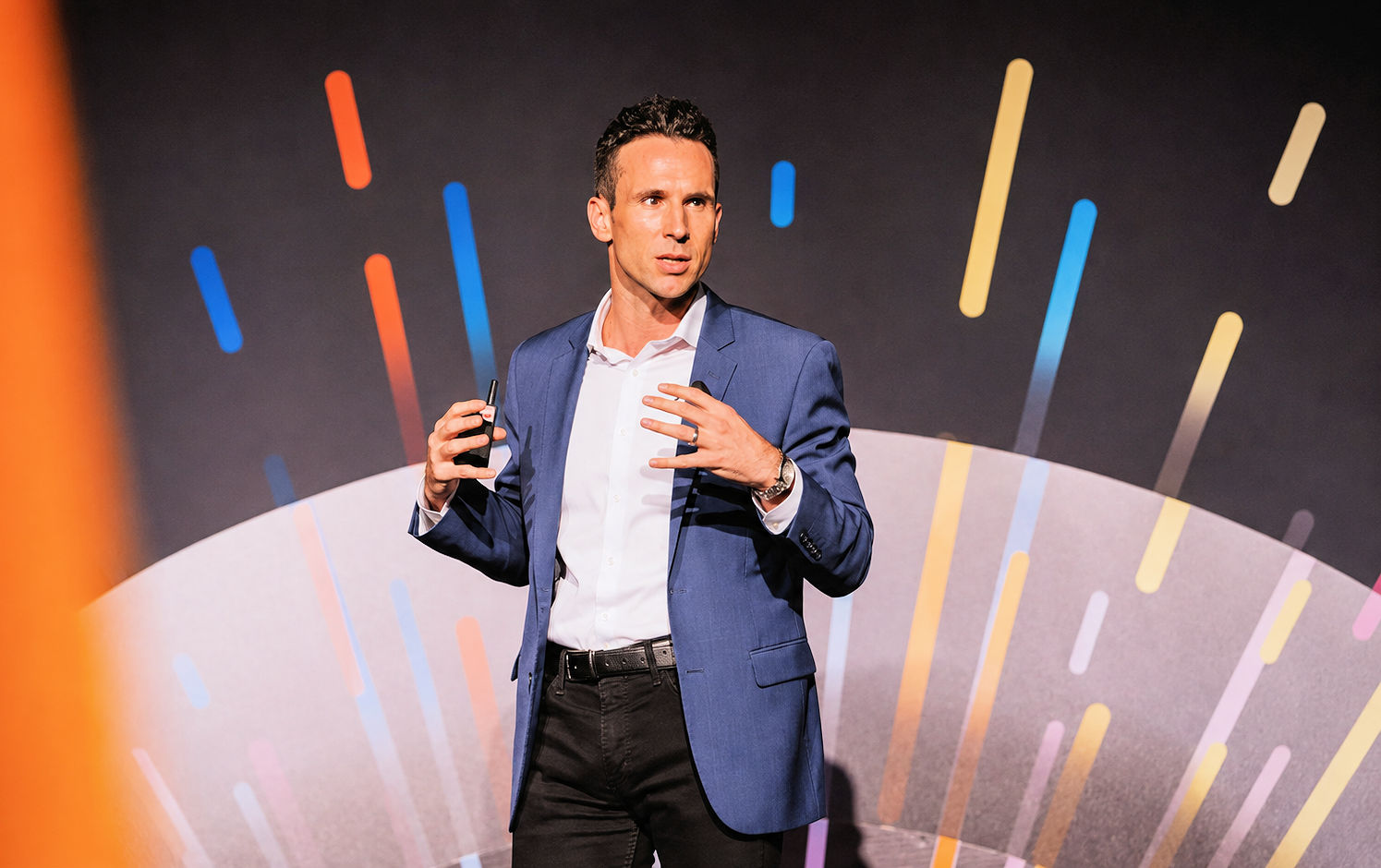
The Richard King Mellon Foundation has committed up to $25 million to launch Rare Ventures™, a platform designed to do for rare-disease medicine what venture capital did for Silicon Valley.
It’s the kind of announcement that lands with a wall of institutional names—the University of Pittsburgh, UPMC Children’s Hospital, Carnegie Mellon, Stanford Medicine, and ElevateBio—and a chorus of quotes from deans, chairs, and directors.
But strip away the letterhead and the ribbon-cutting language, and the story is really about one person who spent nearly a decade turning a single-disease charity with one paid employee into the prototype for this entire model: Michael Hund.
Hund is the chief executive officer of EB Research Partnership and, as of this launch, cofounder of Rare Ventures.
His sentence is the one that carries the emotional weight of the whole announcement: “Rare disease patients have waited long enough.”
It’s a line he has, in effect, been living out since he was eighteen years old, when he drove a beat-up truck from the Flint Hills of Kansas to the woods of Connecticut to volunteer at a summer camp for children with cancer, sickle cell disease, and HIV.
That camp was Paul Newman’s Hole in the Wall Gang Camp, and Hund’s connection to it wasn’t random—it ran through his grandfather, a New York entrepreneur who had crossed paths with Newman earlier in his career and never stopped talking about him.
As a boy peppering his grandfather with questions about life and business, Hund absorbed the story of a man who had built success in acting, racing, and business, then turned around and used it to build a free camp where kids undergoing active chemotherapy could still ride horses and climb rock walls. Hund has called his arrival at that camp his “origin story.”
He spent the next ten years there, working alongside social workers, doctors, nurses, and parents, moving through hospitals across the Northeast, helping families simply get their kids to camp.
It reset how he saw the world at eighteen: these were children who hadn’t chosen the diseases they were born into, and if he had the time and talent to help, he felt he had an obligation to use it.
But the camp only pointed him toward the mission.
The rest of his upbringing gave him the operating instructions. Hund grew up on a cattle ranch in the Flint Hills, in a rural community small enough that everyone depended on their neighbors to get anything done.
Days started at sunrise and ended at sundown, and there was no way to fake having done the work—you either had something to show for it or you didn’t.
He describes the culture as one of Midwestern humility, the kind that keeps a person from getting, in his words, “too big for your britches.”
He calls the values he took from it the “cowboy code”: finish what you start, your word is your bond, don’t be all hat and no cattle, and—the principle he now leans on most as an executive—the best cowboy on a cattle drive rides at the back, not the front, so that no one gets left behind.
He carried that ethic through a philosophy degree at the University of Kansas and into a career that, on paper, looks like a slow accumulation of disease-philanthropy expertise: years at the Hole in the Wall Gang Fund, then a role as director of development at the Multiple Myeloma Research Foundation in Connecticut, where he ran a $100 million campaign called Curing Cancer Now that eventually helped produce more than ten FDA-approved treatments and triple patient life expectancy for the disease. While he was doing that job, he was also attending Yale’s School of Management on weekends, working toward an MBA he’d finish in 2018.
It was at the Multiple Myeloma Research Foundation that Hund got quietly frustrated with something most people in the disease-charity world simply accepted: patients gave their health data to research registries and then never saw it, benefited from it, or even had access to it again.
Researchers and industry used it; the patients who provided it received nothing tangible in return. Hund started imagining something different—a registry that functioned for rare-disease patients the way GPS functions for a driver looking for the nearest gas station, pointing them toward doctors, trials, treatment clinics, and support communities in real time.
That idea is what caught the attention of Alexander Silver, a Manhattan hedge fund partner who had co-founded EB Research Partnership in 2010 with a group of parents of children with epidermolysis bullosa — a brutal genetic skin disease that can cause blistering wounds so severe that some parents spend three to four hours a night bathing their children in bleach and bandaging their skin, and which, in its harshest form, can fuse a patient’s hands into fingerless blocks.
Silver had been running EBRP essentially as a side project since 2012, layering in a venture philanthropy model that let the charity invest in treatments and share in any eventual commercial upside.
By 2018, that side project had raised $22.5 million over seven years but still had exactly one paid staff member.
Silver recruited Hund away from Connecticut specifically because Hund understood venture philanthropy from the inside. Hund took the job as CEO.
What Hund built from there is the actual foundation—no pun intended—underneath the Pittsburgh announcement. Under his leadership, EBRP’s fundraising climbed past $50 million and then past $60 million, funding well over 140 research projects across 22 countries.
He drove the number of active EB clinical trials from just two, when the charity started, to more than fifty today—a twentyfold expansion in a disease space that had been almost entirely abandoned by industry.
Along the way, EBRP became an early investor in gene therapies that would go on to seed three FDA-approved EB treatments in the last three years, including the first-ever topical gene therapy and, in 2025, a cell-based gene therapy for the disease’s most severe form that traces its roots to research EBRP helped fund at Stanford.
“We run the foundation like a business,” is how Hund puts it, and it isn’t a slogan so much as a literal description of the return-generating loop he engineered: EBRP invests in a promising therapy, the therapy succeeds commercially, and the return gets funneled back into funding the next round of research, rather than disappearing into a one-time grant.
He built all of this alongside—and in the public eye, often overshadowed by—Jill and Eddie Vedder, the Pearl Jam frontman and his wife, who co-founded EBRP after learning that the son of Jill’s childhood best friend had been born with EB.
The Vedders have carried the public face of the cause, most recently through a Netflix documentary and years of benefit concerts, and their star power has undeniably opened doors that a nonprofit CEO alone could not have opened.
But it’s Hund who has run the machine day-to-day for nearly eight years now, and it’s Hund’s venture-philanthropy architecture—not a celebrity endorsement—that the Richard King Mellon Foundation is actually betting $25 million on when it commits to Rare Ventures.
That distinction matters for understanding what happened in Pittsburgh this month. The Richard King Mellon Foundation, one of the country’s oldest and largest family foundations, has essentially concluded that the EB playbook—AI-driven patient data, venture-style capital, and coordinated translational science—is exportable beyond a single disease.
The foundation’s leadership pointed to Pittsburgh’s concentration of AI research, life sciences, and advanced manufacturing as the reason the city—not New York, not Boston, not the Bay Area—was chosen as the platform’s home.
The money will build out Rare Ventures’ three pillars: an AI-powered patient data infrastructure built on EBRP’s existing patient platform, a venture philanthropy investment arm modeled directly on what Hund built inside EBRP, and a therapeutic development engine spanning basic research through manufacturing and commercialization, in partnership with institutions from Pitt Health Sciences and Children’s Hospital to Stanford, Carnegie Mellon, and ElevateBio.
More than 400 million people worldwide live with a rare disease, and roughly 95 percent of the more than 10,000 known rare diseases still have no approved treatment at all—a statistic Hund has repeated for years as the reason EB could never be treated as an isolated cause.
He has always framed EB as a kind of runway study: prove the venture philanthropy model works on one devastating, underfunded disease, then use it to break open the door for thousands of others. Rare Ventures is that door swinging open, backed now by one of the largest philanthropic commitments ever made to build new infrastructure for rare-disease innovation.
For a man who still measures success by the standards of a Kansas cattle drive—ride at the back, keep your word, don’t be all hat and no cattle—it’s a strange kind of vindication.
Hund has spent his career insisting that a nonprofit could behave like a disciplined business without losing its soul, that patients deserved more than to be data points in someone else’s registry, and that a disease killing children before their fifth birthday didn’t have to wait for the pharmaceutical industry to find it profitable enough to notice.
“Our success will not be measured by the model we build, the capital we deploy, or the partnerships we unite,” Hund said of the new platform.
“It will be measured by the therapies we help bring to patients and the lives we improve.”
It’s, in the end, the same promise the eighteen-year-old made to himself the summer he drove east from the Flint Hills—he just now has $25 million more and a city full of institutional partners to help him keep it.