
$400 million he didn’t need: Eddie Smith Jr.’s fortune now belongs to everyone
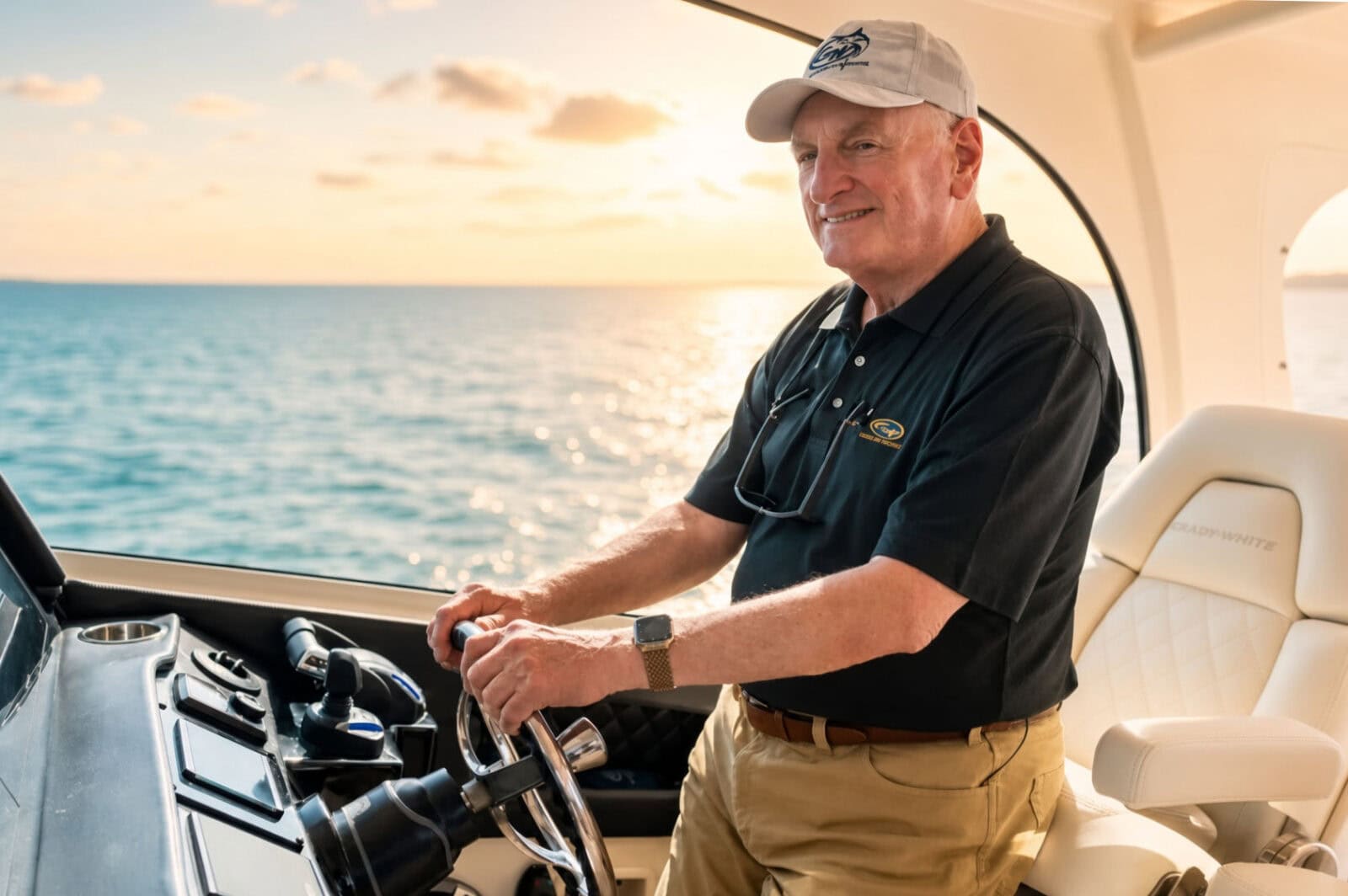
In the quiet stretches of eastern North Carolina, where the Tar River meets the coastal sounds and the air carries the salt of the Pamlico, an 83-year-old man who once ate Spam three times a day has decided that a fortune was never the point.
Eddie Smith Jr. spent nearly six decades turning a near-bankrupt boat shop in Greenville into one of America’s most respected builders of high-end fishing boats.
Buyers recently came calling with offers north of $400 million.
He turned them all down.
Instead, the future profits of Grady-White Boats—tens of millions of dollars a year—will flow to the causes that have shaped his life: the health of the waters he has loved since boyhood, the education of young people who need a hand up, and the care of neighbors facing illness and hardship in the communities he calls home.
Smith’s story begins far from the water.
He grew up in central North Carolina in a family that knew scarcity. His father, orphaned young during the Depression, worked any job he could find—driving a taxi, selling whatever he could—before building a small mail-order hosiery business.
Money was tight enough that Spam became a daily staple. As a boy, Smith lied about his age to get a paper route. He became the first in his family to attend college, graduating from the University of North Carolina in 1965.
For a few years he worked in the family business, expecting that path to be his future. Then, at 26, he took a chance on a failing boat company in Greenville. The early years demanded everything. He worked 80- and 100-hour weeks, poured in his own savings, and set aside personal pleasures for decades.
What emerged was more than a successful enterprise. It became a place defined by relationships—with the people who built the boats, the dealers who sold them, the customers who fished from them, and the towns that surrounded them.
Those relationships always included giving. Long before the recent decision, Smith and his late wife, Jo Allison, built a family foundation that has quietly supported eastern North Carolina for years.
They helped create mentoring and scholarship programs for at-risk students so young people could finish high school and reach community college.
They funded cancer care facilities and research into the diseases that touched their own family. They backed land preservation, oyster reef restoration, and water-quality work that protects the very fisheries and waterways that make the region’s outdoor life possible.
Smith has said there is “plenty of need in our backyard,” choosing local impact over distant projects even when he has supported efforts farther afield. Conservation has always held a special place. He remembers the seagrass beds of his early years in Greenville, thick with life, and the gradual decline he witnessed. Protecting those waters became both personal and practical: healthy rivers and sounds sustain the fishing culture that Grady-White serves.
The path that led to giving the company’s future away was marked by loss.
Smith and Jo raised one son, Chris. They imagined him carrying the business forward. Jo died in 2021 after years of declining health.
A year later, Chris died of amyotrophic lateral sclerosis, the disease commonly known as Lou Gehrig’s. The succession plan that once seemed clear dissolved.
Smith found himself facing the question of what would happen to the company that had consumed most of his working life. Friends in the industry who had sold their companies told him the same story: the culture changed, the soul faded, the things that mattered most to the people who had built the place slipped away.
He had no confidence that any new owner would keep the profit-sharing, the care for employees, or the commitment to the community that he considered essential.
“This company has a soul,” he has said, “and I didn’t want to lose that.”
At an age when many would take the money and step into a quieter life, Smith chose differently. He has spoken of the decision with a kind of grounded gratitude rather than grandiosity.
“God has really blessed me to put me in a position to give away the vast majority of my net worth,” he said.
“I don’t need a 200-foot yacht or to spend the winters in the Mediterranean. I’m really happy here in eastern North Carolina.”
The money that would have been his will instead support the work he and Jo already began—education that opens doors for local students, healthcare that treats cancer and neurological disease in the region, conservation that keeps the rivers and sounds alive for the next generation of fishermen and families, and the everyday needs of the communities around Greenville and the coast.
When the announcement came, Smith made certain the people who had built the company with him were not forgotten.
Every current employee received a special gift scaled to years of service and role, totaling millions of dollars.
At the meeting where the news was shared, more than 350 people gathered.
There were tears.
Workers thanked the man who had spent a lifetime insisting that success should be shared with those who helped create it.
Smith will remain connected to Grady-White as an advisor and ambassador, living on the land he has long managed for wildlife—bald eagles, deer, bears, turkeys—near the place he has called home for nearly six decades.
The boats will continue to be built in Greenville. The relationships that defined the company will remain its measure of success.
And year after year, the profits that once would have belonged to one man will move outward into classrooms, clinics, oyster beds, and conserved land across the region he loves.
In an era when large fortunes are often locked away or spent on private islands and private jets, Smith’s choice feels almost old-fashioned in its clarity.
He has lived the full arc—from a boy eating Spam to a builder of boats that carry people onto the water—and decided that the greatest return on a life’s work is the chance to keep giving where the need is closest. The rivers of eastern North Carolina will keep flowing.
The students will keep finding mentors.
The patients will keep finding care.
And the man who once worked 100-hour weeks to save a failing company has, at 83, made sure that the company will keep giving long after he is gone.