
$225 million gift: how Dr. Terrence Moisan turned a hospital into the suburbs’ biggest Cancer bet
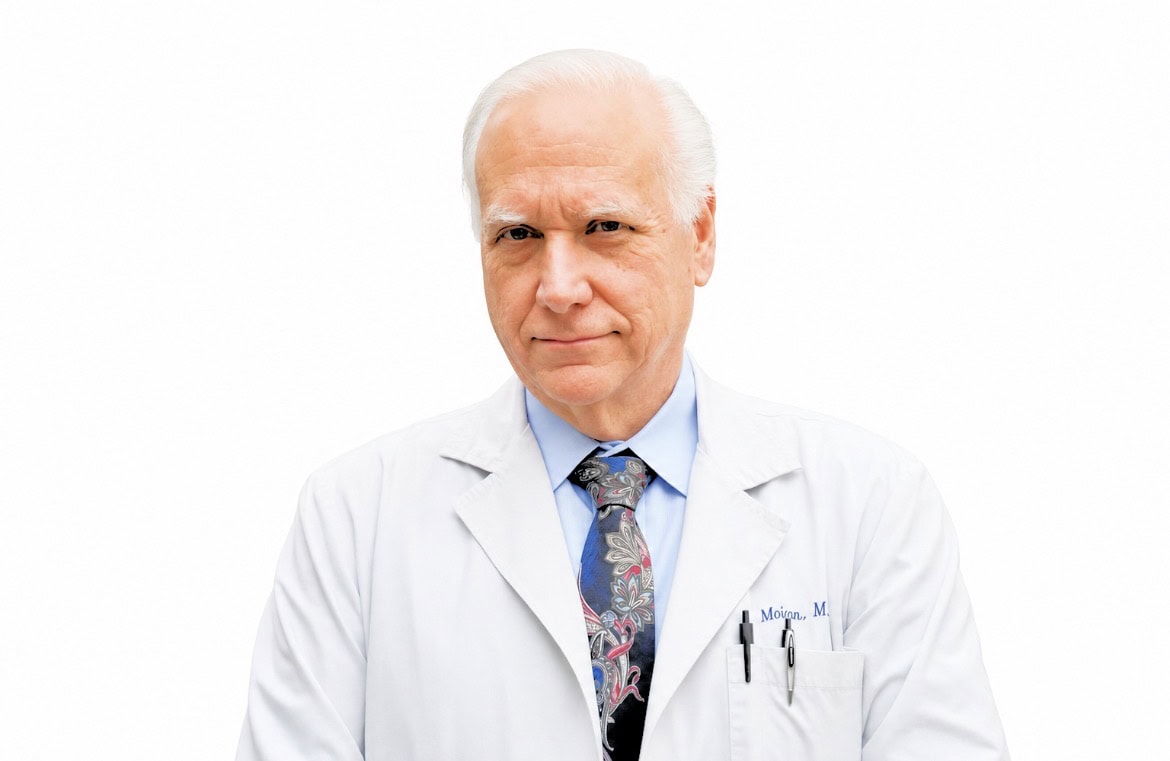
. Terrence Moisan has spent more than fifty years walking the same stretch of southwest Chicago suburbs, first with a stethoscope, then with a checkbook.
This month, at age 75, he added the largest line yet to that legacy: a $225 million gift, channeled through the foundation he now leads, that will reshape how cancer patients in Orland Park and the surrounding south suburbs receive care for a generation to come.
The gift comes from the St. George Foundation, also known as the St. George Corporation, and it will help Northwestern Medicine build a new four-story medical office building dedicated entirely to cancer care, alongside a 484-car parking garage, on the health system’s Orland Park campus.
The full project is priced at $275 million, meaning St. George’s contribution covers the overwhelming majority of the build. Inside, patients will find infusion stations, diagnostic imaging suites, and radiation treatment technology, replacing the current St. George Cancer Institute building, which will be repurposed for other clinical services once the new facility opens.
If the Illinois Health Facilities and Services Review Board approves the application, construction could begin in October, with the doors expected to open by the end of March 2030.
The cause behind the number is not abstract.
Northwestern’s own filing with state regulators points to a south suburban population that is aging quickly, with residents 65 and older projected to grow more than 10 percent over the next five years, even as more people are surviving cancer longer than ever before and therefore need years, not months, of follow-up treatment.
The Centers for Disease Control and Prevention projects cancer diagnoses nationally will climb 49 percent between 2015 and 2050, and a recent American Cancer Society report found 70 percent of patients now survive at least five years after diagnosis, up from roughly half in the mid-1970s.
Northwestern described the goal plainly in its application: expanding care in Orland Park would improve timeliness, equity, and convenience while supporting better outcomes for patients who might otherwise have to travel into the city for treatment.
To understand why Moisan is the one signing off on this gift, you have to go back to 1974, the year he graduated from Loyola University Chicago’s Stritch School of Medicine and began building a career as a pulmonologist specializing in critical care and pleural disease.
He spent the next several decades practicing medicine out of Palos Heights, becoming a familiar face at Palos Community Hospital long before anyone there imagined he would one day run it.
When the hospital’s leadership abruptly destabilized in 2014, after a new CEO departed just three months into the job amid a wave of board resignations, it was Moisan, the veteran physician who had already worked there for more than 35 years, who was asked to step in as interim chief executive and then made permanent.
“I am honored and humbled by the confidence Palos Community Hospital has placed in me to lead our organization into the future,” he said at the time.
“For more than three decades, I have been fortunate to work alongside some of the most dedicated clinicians and staff in health care.”
That sense of stewardship followed him through the biggest transition of his career. In December 2020, Moisan, by then president and CEO of Palos Health, announced that the 425-bed hospital system he had spent his life inside would merge into Northwestern Medicine, effective January 1, 2021.
“This affiliation will only serve to enhance the already excellent quality of care provided to the community of Palos Health,” he said.
“As a part of Northwestern Medicine, we will be able to further develop and grow specialized services for our patients and community. We look forward to a bright future together.”
The merger folded Palos Community Hospital’s clinical operations into Northwestern’s sprawling system, but it did not erase St. George, the nonprofit parent corporation that had spent decades soliciting and holding donations on the hospital’s behalf.
Instead, St. George shed its hospital-operating role and became something closer to a legacy trust, one whose sole purpose is now to promote the health and welfare of the communities Palos Health used to serve directly.
Moisan stayed on as its president, drawing a salary of roughly $383,000 to $417,000 in recent years for work the foundation’s own filings describe as 35 hours a week.
This is not St. George’s first act of generosity toward the community it once served as a hospital operator.
In December 2023, the foundation gave Northwestern $51 million to establish the original St. George Cancer Institute in Orland Park, the very facility this new $225 million gift will now replace and expand upon.
At that dedication, Moisan framed the gift as a continuation of a decades-long mission rather than a one-time act of largesse, and he has returned to that same language repeatedly since. Just last fall, when the foundation helped bring Northwestern’s Living Well Cancer Resources support program to the Orland Park campus, Moisan said, “The directors of the St. George Foundation have long realized the critical importance of supporting southwestern Chicago and the surrounding regional communities with advanced, academic-level cancer care.”
What makes Moisan an unusual figure in a philanthropic landscape often dominated by tech fortunes and family-name foundations is that the $225 million he is now directing was never his personal wealth to begin with.
It is the accumulated legacy of a community hospital he devoted his career to, now being reinvested, under his signature, into the same zip codes that built it.
The new Orland Park cancer center will join a broader wave of oncology expansion sweeping the Chicago area, including Advocate Lutheran General’s $99 million outpatient addition in Park Ridge, UChicago Medicine’s 575,000-square-foot freestanding cancer hospital on the South Side, and new cancer space being carved out at Endeavor Health’s Elmhurst and Swedish Hospital campuses.
But few of those projects carry the same through line of a single physician’s career, from bedside pulmonologist to hospital chief executive to the steward of a quarter-billion-dollar gift aimed squarely at the patients he spent a lifetime treating.