
$25 million infusion of fresh funding of university revitalization project spearheaded by Christian Keesee and the Kirkpatrick family
Oklahoma City University’s plan to restore its nearly century-old Kirkpatrick Fine Arts Center is, on its surface, a $25 million capital campaign to modernize a beloved performance hall.
In practice, it is something more personal: a continuation of one Oklahoma family’s long-standing belief that cultural institutions are civic infrastructure—and that investing in them shapes not only a city’s identity but also the trajectories of the people who pass through its stages.
At the center of the campaign is a coordinated $13 million lead commitment drawn from four closely linked philanthropic entities: the Kirkpatrick Family Fund, the Kirkpatrick Foundation, the Christian Keesee Charitable Trust, and the Kirkpatrick Partners Fund at the Oklahoma City Community Foundation.
While the announcement positions these as institutional gifts, the throughline is unmistakably individual.
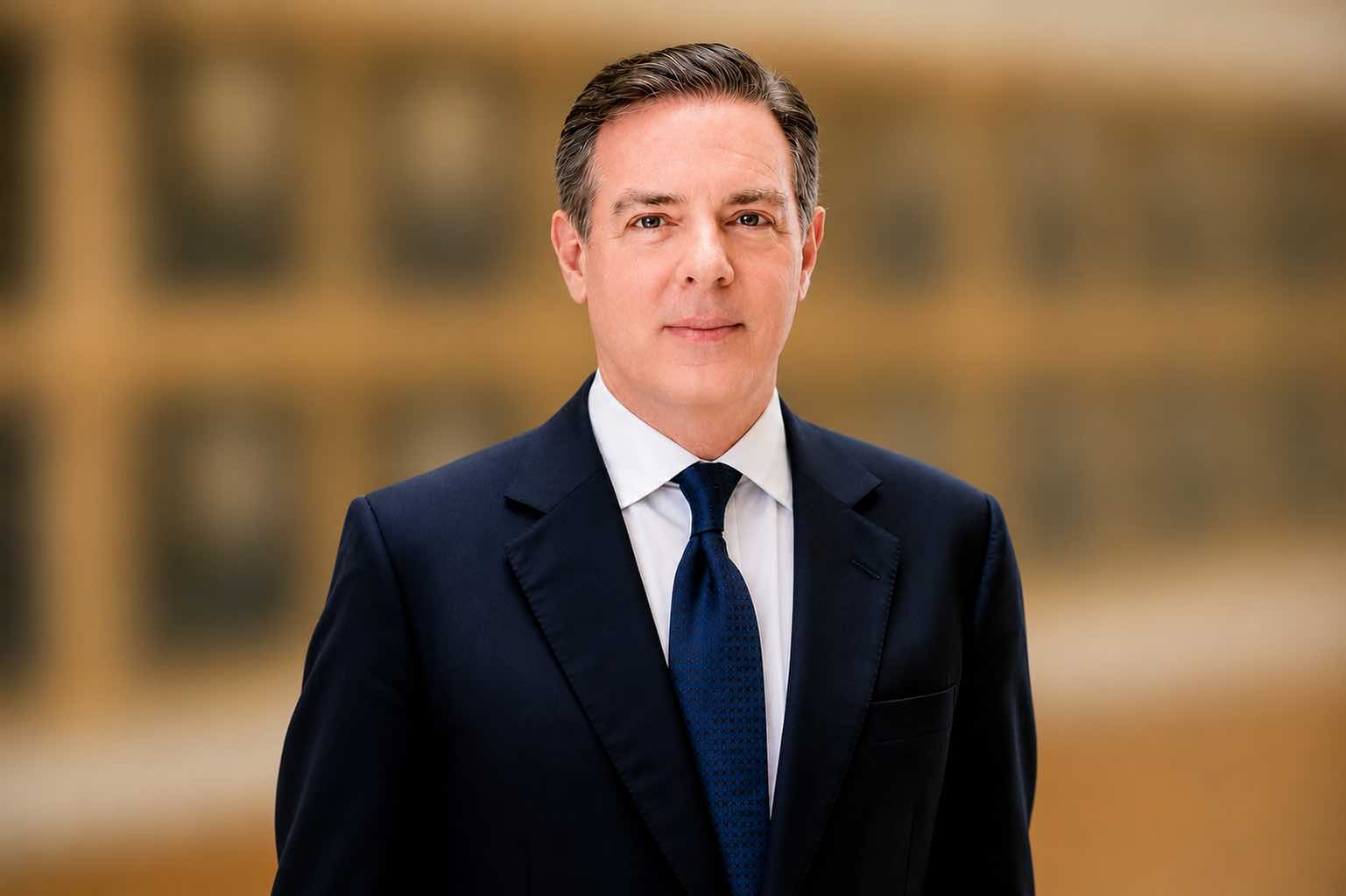
The funding reflects the priorities of Christian Keesee—arts patron, foundation leader, and a central steward of the Kirkpatrick philanthropic legacy—alongside a broader family network that has spent decades underwriting Oklahoma’s cultural ecosystem.
Keesee, who serves as president of the Kirkpatrick Family Fund, has increasingly shaped the family’s modern giving strategy, focusing on projects that blend preservation with forward-looking relevance.
His framing of the renovation—restoring the building’s architectural integrity while equipping it for contemporary performance—mirrors a broader philosophy visible across the family’s arts investments: honor the past, but ensure it remains usable.
That approach has guided prior support for institutions across Oklahoma City, from museums to public spaces, where aesthetic stewardship is paired with practical functionality.
The Kirkpatrick name itself carries unusual continuity in regional philanthropy. The family’s giving traces back to newspaper publisher and civic leader E.K. Gaylord and continues through multiple generations, with an emphasis on cultural access, environmental stewardship, and community development.
What distinguishes this latest commitment is not its scale alone, but its structure—layering family funds, a private foundation, a charitable trust, and a community foundation vehicle into a single coordinated lead gift. It is a model increasingly favored by established philanthropic families seeking both flexibility and durability in capital deployment.
For Oklahoma City University, the relationship is both historic and strategic. The auditorium, opened in 1928, has long served as a training ground for performers who have gone on to national prominence, including Broadway figures such as Kristin Chenoweth and Kelli O’Hara.
Yet university leadership has been candid about the facility’s technical limitations lagging behind the caliber of its students. President Kenneth Evans has framed the renovation as essential to maintaining OCU’s competitive position among performing arts programs—an argument that appears to have resonated with donors who view talent development as a form of long-term cultural investment.
The planned upgrades—modern rigging systems, improved acoustics, expanded backstage and rehearsal spaces, and enhanced accessibility—are less about aesthetic transformation than operational relevance. Just as notable is the inclusion of a $2 million endowed maintenance fund, an increasingly common feature in sophisticated capital campaigns.
By embedding long-term upkeep into the initial fundraising effort, donors are attempting to avoid the cycle of deferred maintenance that often burdens historic venues decades after renovation.
The design team, combining Oklahoma-based firms with international architecture practice Steinberg Hart, has been tasked with navigating a familiar but delicate balance: introducing 21st-century performance capabilities without erasing the architectural character that gives the hall its identity.
For donors like Keesee, that balance is not incidental—it is central to the project’s philanthropic intent.
What remains unfinished is the broader campaign itself.
With just over half of the $25 million goal secured, university advancement leaders are now working to attract additional donors who can align with both the project’s artistic ambitions and its preservation ethos.
The early involvement of the Kirkpatrick philanthropic network provides not only financial momentum but also social signaling—an implicit endorsement that often proves decisive in regional fundraising efforts.
If successful, the revitalized venue—set to be renamed the Kirkpatrick Performing Arts Center—will reopen for the 2028–29 academic year.
But the more enduring story may be the one behind the naming: a family continuing to translate generational wealth into shared cultural assets, and in doing so, reinforcing Oklahoma City’s identity as a place where artistic careers can begin on a local stage and extend far beyond it.