
$10 million gift to university from alumna and longtime benefactor Jane Parke Batten
Hollins University is celebrating a transformative moment in its long history of expanding access to higher education, announcing a $10 million gift that will significantly bolster its flagship Hollins Opportunity for Promise through Education (HOPE) Scholarship program.
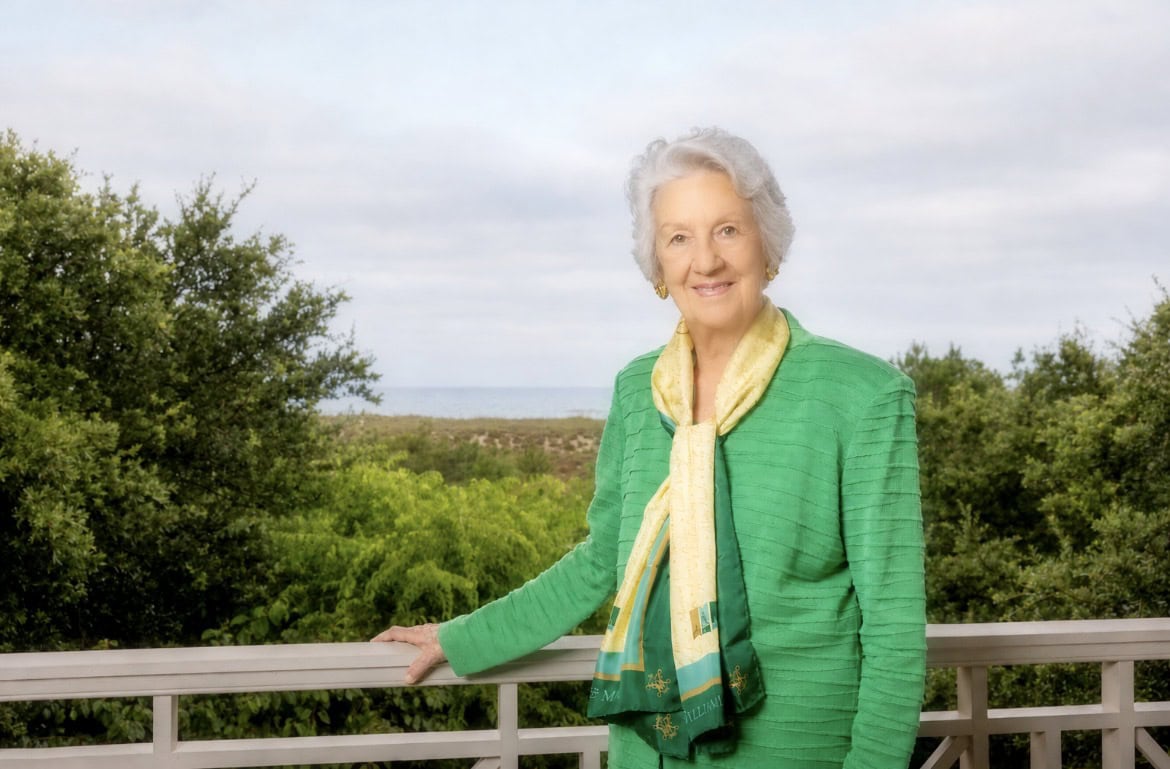
The donation, made by alumna and longtime benefactor Jane Parke Batten, a member of the Hollins Class of 1958, ranks among the largest gifts the institution has ever received and will support HOPE Scholars through the Class of 2032, extending the university’s capacity to open its doors to high-achieving students with financial need for the rest of this decade.
For Hollins President Mary Dana Hinton, the magnitude of the gift is both financial and symbolic, underscoring a vision of a campus where talent, not family income, determines who can fully participate in a residential liberal arts education.
“This is a defining moment for Hollins and for the future of the HOPE Scholarship program,” Hinton said in announcing the commitment. “Jane’s extraordinary generosity ensures that talented students can access a Hollins education and fully engage in the opportunities that prepare them to lead.
This investment affirms both our mission and our momentum.” The gift arrives as many families nationwide continue to grapple with rising college costs and as institutions face growing pressure to demonstrate real, concrete commitments to affordability and inclusion.
Launched in 2021, HOPE was created to remove some of the most daunting barriers standing between promising young women and a four-year degree, beginning with those closest to the Roanoke, Virginia, campus. Initially, the scholarship focused on academically qualified students from the Roanoke Valley region whose household income was at or below a modest threshold, leveraging a combination of federal, state and institutional aid to guarantee that tuition would be fully covered.
That early regional cohort, which arrived on campus starting in 2022, quickly demonstrated not only strong academic performance but high levels of engagement, retention and leadership across student life, providing Hollins with real-time evidence that deeper investment in access could strengthen the entire institution.
Building on that proof of concept, Hollins expanded the HOPE Scholarship in 2024 from a regional promise into a national commitment. Under the current model, Pell-eligible, first-time, first-year domestic undergraduates with family household incomes of approximately $65,000 or less now receive automatic consideration for HOPE, a guarantee that the direct costs of tuition, on-campus housing, meals, and required fees will be fully covered with no required student loans for recipients.
That means for many students, particularly those who are the first in their families to attend college or who come from communities historically underrepresented in higher education, the financial calculus shifts from “Is this possible?” to “What will I do with this opportunity?”
The university notes that HOPE Scholars now make up about half of its incoming first-year class, a level of reach and commitment to need-based support that remains rare among private liberal arts colleges.
Batten’s new gift will help sustain and grow the program as it moves from early implementation to measurable, demonstrable impact.
The commitment will underwrite HOPE Scholars through the Class of 2032, giving the university a multiyear runway to enroll new cohorts, refine student support structures and continue broadening the geographic, socioeconomic and racial diversity of its student body.
University leaders describe the investment as “transformational,” not only because of its size but because it serves as a vote of confidence in HOPE at a critical transition point, as the first regional Scholars prepare to graduate and the second national cohort prepares to arrive.
The timing of the gift is particularly resonant on campus. In spring 2026, Hollins will graduate its first cohort of regional HOPE Scholars, students who entered under the original Roanoke Valley–focused model and who, over four years, have helped define what HOPE looks like in practice: strong academic records, leadership roles in student organizations, and deep involvement in service and co-curricular life.
In fall 2026, the university will welcome its second national HOPE cohort, a group that arrives with an average high school GPA of 3.9 and strong expectations for continued contributions to campus leadership, community engagement, and scholarly excellence. That juxtaposition—first graduates crossing the stage as new HOPE Scholars step onto campus—captures the program’s evolution from bold idea to established engine for opportunity.
While the financial support is central, Hollins emphasizes that HOPE is conceived as far more than a funding mechanism; it is a comprehensive framework for student success. In addition to covering tuition, room and board, and fees, HOPE Scholars receive personalized success coaching and mentorship designed to help them navigate academic expectations, manage time and stress, and make full use of campus resources, from tutoring to wellness services.
The program also prioritizes leadership development, providing structured access to global study, internships, and undergraduate research so that students can build the experiences and networks that often define postgraduate opportunities. By investing in the “whole student,” Hollins aims to ensure that financial assistance translates into genuine access to the full scope of a Hollins education, both in and beyond the classroom.
Batten’s philanthropy at Hollins extends beyond the HOPE program, reflecting a long-standing commitment to global learning, public health and educational opportunity.
Earlier this spring, the university announced that gifts from Batten would establish the Global Leaders Exchange with Lakeland University-Japan and Virginia Wesleyan University and would help develop an environmental public health pathway in Hollins’ rapidly growing health-related programs. Taken together, her investments signal a broad belief in the power of women’s education to shape communities, whether through improved public health, global engagement, or more equitable access to college.
For Hinton, who has been a vocal national advocate for the liberal arts and for putting affordability at the center of higher education’s value proposition, the HOPE program and Batten’s latest gift embody the kind of mission-aligned innovation she believes is necessary for institutions like Hollins to thrive.
Positioned in a competitive higher education market and in a region where many families are price-sensitive, Hollins has chosen to differentiate itself by making a bold guarantee: for eligible students, a Hollins education will not require taking on burdensome debt to cover the core cost of attending. That guarantee, supported by philanthropic partners, is designed both to widen the applicant pipeline and to deepen their sense of belonging and security once they arrive.
The impact is already visible on campus. University data show that HOPE Scholars are not only academically accomplished but are “highly engaged” in campus life, serving in student government, leading clubs and organizations and participating in community outreach initiatives in the Roanoke Valley and beyond.
Hollins leaders point to those outcomes as evidence that increased financial support does not lower standards; instead, it can elevate the overall academic climate and vitality of the institution by attracting students who might otherwise have felt shut out of a residential liberal arts environment.
As HOPE Scholars begin to graduate, their trajectories into graduate school, public service, education, health care, and other fields will offer further data on the long-term return of targeted, mission-driven aid.
In many ways, the HOPE Scholarship sits at the intersection of national debates over access and the specific ethos of a historic women’s university that has long positioned itself as a place where intellect, leadership, and service are cultivated. By removing key financial barriers and layering in intensive support, Hollins is betting that more students from low- and moderate-income households will not only enroll but will flourish, persist, and ultimately become ambassadors for both the institution and the communities they come from.
For families for whom the phrase “college education” often comes intertwined with worries about debt and affordability, the HOPE model—now strengthened by Batten’s $10 million gift—offers a different narrative: that a high-touch, residential, liberal arts education can be both excellent and accessible.
As Hollins looks toward 2032 and beyond, university leaders frame the Batten gift as both a culmination of years of work and a starting point for a new chapter.
With the HOPE Scholarship now supported by philanthropists, Hollins can continue to recruit talented, Pell-eligible students nationwide, strengthen its network of alumnae and donors committed to access, and share a model that other institutions can emulate.
“This investment sends a powerful signal of confidence in HOPE and in the strategic direction of Hollins,” Hinton said. “It allows us to support students now while building a strong foundation for the program and Hollins’ future.”