$51.6 million conservation gift for new leopard exhibit, directed by Crown Prince Mohammed bin Salman, becomes the National Zoo’s largest-ever donation
Saudi royals are behind a record-breaking conservation gift that will transform Washington’s Smithsonian National Zoo and Conservation Biology Institute, deepen a strategic cultural relationship with the United States, and spotlight Saudi Arabia’s evolving use of soft power.
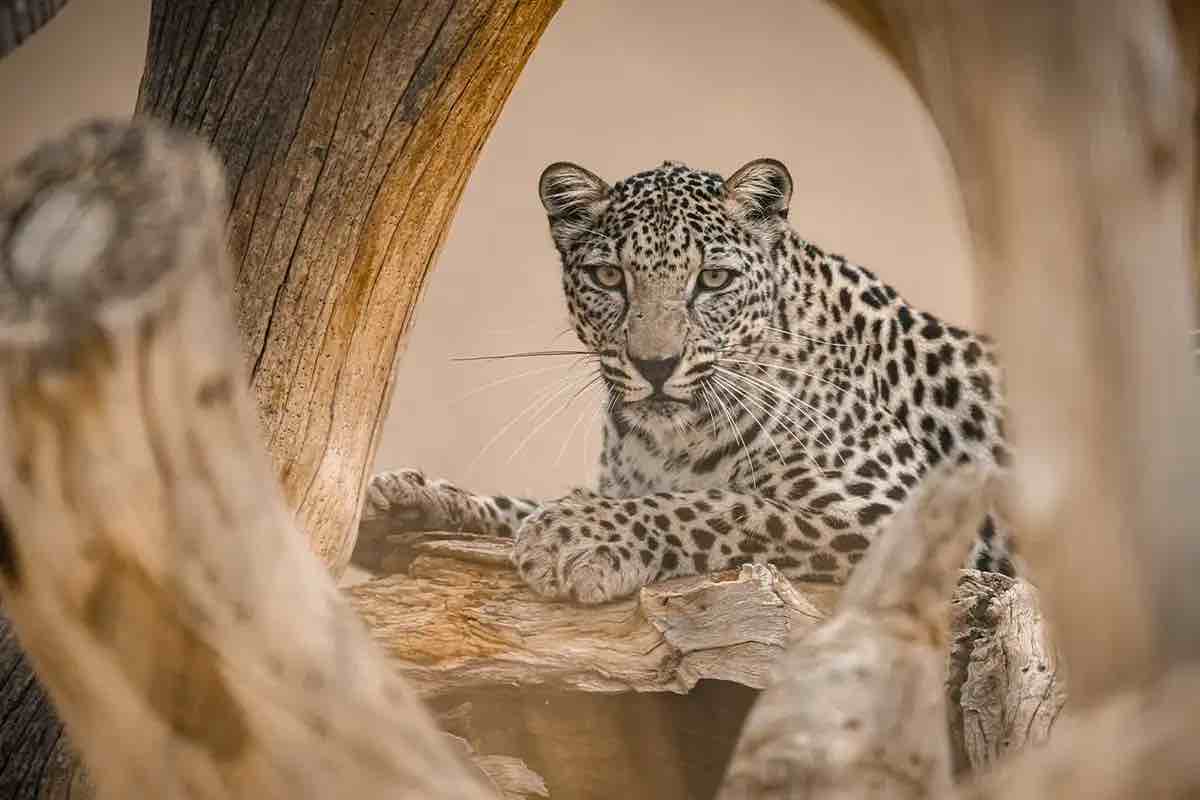
The $51.6 million commitment from senior members of the Saudi royal family, made through the kingdom’s Royal Commission for AlUla, will fund a new habitat for a pair of critically endangered Arabian leopards—the largest donation in the National Zoo’s history.
In practical terms, the gift underwrites an ambitious showcase for one of the world’s rarest big cats; in symbolic terms, it marks the latest high-profile initiative in which leading Saudi royals align conservation, heritage, and international diplomacy.
While public announcements so far have emphasized the Royal Commission as the institutional donor, the body itself is a creation and instrument of the ruling family, and its leadership traces directly back to Crown Prince Mohammed bin Salman and his close royal allies, making this, in effect, a royal-family–backed intervention in global species preservation.
The centerpiece of the gift is a new Arabian leopard exhibit, scheduled to break ground in late summer 2026, with a target opening in 2029. The design will evoke the dramatic landscapes of northwest Saudi Arabia — rocky outcrops, desert terrain, and wadi-carved landforms — bringing a stylized slice of the Arabian Peninsula into the heart of the U.S. capital.
Visitors will be able to view the leopards from both indoor and outdoor vantage points, and a live webcam is planned so that global audiences can follow the animals remotely.
The Smithsonian has agreed to host a pair of leopards from a Saudi breeding center under a 15-year arrangement that mirrors, in structure if not in species, the long-running “panda diplomacy” agreements with China.
Any cubs born in Washington will be sent back to Saudi Arabia as part of a broader, royally backed strategy to rebuild the Arabian leopard population in its native range.
Behind the institutional language, however, is a story of individual royal initiative that fits neatly into Riyadh’s broader rebranding project. The Royal Commission for AlUla is the flagship vehicle for transforming AlUla, an ancient oasis region with dramatic sandstone canyons and UNESCO-listed heritage sites, into a global cultural and tourism hub.
It was established and is overseen by senior royals who have made conservation and heritage cornerstones of the kingdom’s international image. By channeling tens of millions of dollars into Washington’s National Zoo, these royals are not only exporting a native Saudi species and its story to an influential American audience; they are also attaching their names, and the AlUla brand, to an institution woven into the fabric of U.S. civic life. In that sense, the leopard habitat is as much an exercise in narrative-building as it is in habitat-building.
The arrangement between the National Zoo and the Saudi side goes far beyond a one-time capital project. Under the agreement, the Smithsonian and the Royal Commission for AlUla will jointly pursue research on genetics, reproduction, animal welfare, and population management for Arabian leopards, integrating U.S. scientific expertise with Saudi field knowledge and captive-breeding experience.
The leopards that arrive in Washington will come from AlUla’s own breeding center, itself a product of royal patronage and a key node in Saudi Arabia’s attempt to pull the species back from the brink of extinction.
With only an estimated low triple-digit number of Arabian leopards remaining in the wild across the Arabian Peninsula, the stakes are existential; by putting royal weight and money behind the program, the donors signal that saving the species is not a peripheral project but a priority attached to the kingdom’s highest echelons.
For Washington, the gift lands at a delicate but opportune moment. The National Zoo has spent the past several years navigating the end of its previous agreement with China for giant pandas, a program that for decades served as a beloved symbol of bilateral ties.
The incoming Arabian leopards will not replace the emotional or historical resonance of pandas overnight, but the structure of the Saudi agreement invites inevitable comparisons. Once again, a foreign government, personified by its royal leadership, is entrusting an emblematic animal to the Smithsonian on long-term loan, with carefully negotiated breeding rights and repatriation of offspring.
This time, though, the species and the donors come from the Middle East, and the program is explicitly framed as part of a larger ecological and regional restoration effort rather than a narrow bilateral gesture.
Within Saudi Arabia, the leopard project dovetails with a broader royal strategy that positions environmental stewardship and heritage conservation as pillars of the country’s next chapter.
Senior royals have championed initiatives such as the Saudi Green Initiative and the Middle East Green Initiative, announced giga-projects that integrate nature reserves and rewilding components, and invested heavily in turning archeological and natural sites into curated tourism destinations.
The Arabian leopard, once feared and hunted across the region, is being recast as a national icon whose survival story mirrors the kingdom’s desired narrative of renewal and resilience. Each high-profile international partnership — especially one anchored in a city like Washington — helps to internationalize that story and to align the image of Saudi royals less with oil and more with biodiversity, culture, and global cooperation.
For U.S. audiences, the new habitat will offer an unusually tangible window into that shift. School groups and tourists strolling through the National Zoo will encounter not just a charismatic, rarely seen predator, but also interpretive materials that link the animals to AlUla’s landscapes and to Saudi-led efforts to rehabilitate ecosystems once written off as lost.
Over time, the cameras trained on the leopards may beam images into homes and classrooms around the country, normalizing the idea that Saudi royals are not just patrons of marble palaces and mega-projects, but also underwriters of species survival and scientific collaboration.
The financial structure of the donation also sends a clear signal about scale and seriousness. At $51.6 million, the gift eclipses previous major contributions to the National Zoo, setting a new benchmark for what a single benefactor — in this case, a royal-led entity — can do for a public institution’s campus.
Unlike many philanthropic packages that blend private and public money, this is presented as a fully foreign-funded capital project tied to a specific species and narrative. For a zoo that relies on a mix of federal support, private philanthropy, and earned revenue, the infusion of foreign royal capital effectively fast-tracks an exhibit that would otherwise have taken many years of domestic fundraising to realize.
In the process, it demonstrates to other potential donors — royal or otherwise — that ambitious, mission-aligned projects can be conceived and executed at a scale that matches global environmental challenges.
At the same time, the visibility of the royal role invites scrutiny alongside praise. Human rights concerns, regional politics, and debates over the environmental impact of Saudi mega-projects all form part of the backdrop against which this leopard habitat will be judged.
For the National Zoo, the challenge will be to honor the gift and the partnership while maintaining its independence and credibility as a scientific institution, and to ensure that the leopards and their conservation story remain at the center of the narrative.
As construction begins later this year, the project will move from concept to concrete, steel, and rock, and the outlines of the new habitat will rise on the zoo’s grounds.
By the time doors open in 2029, visitors will step into a space shaped by a complex web of interests: the scientific urgency of saving a critically endangered cat, the institutional ambitions of a world-renowned zoo, and the image-making strategy of a royal family eager to be seen not only as rulers of a hydrocarbon superpower but also as stewards of one of the planet’s most imperiled predators.
For now, what is clear is that individual Saudi royals, acting through the Royal Commission for AlUla, have made an unmistakable statement in Washington: that the future of the Arabian leopard is a cause worth tens of millions of dollars, years of collaboration, and a prominent place on the capital’s conservation stage.