
$280 million new gift pushes Jonathan Stanley family’s giving past $1.1 billion in bold bet on unlocking the mysteries of the mind
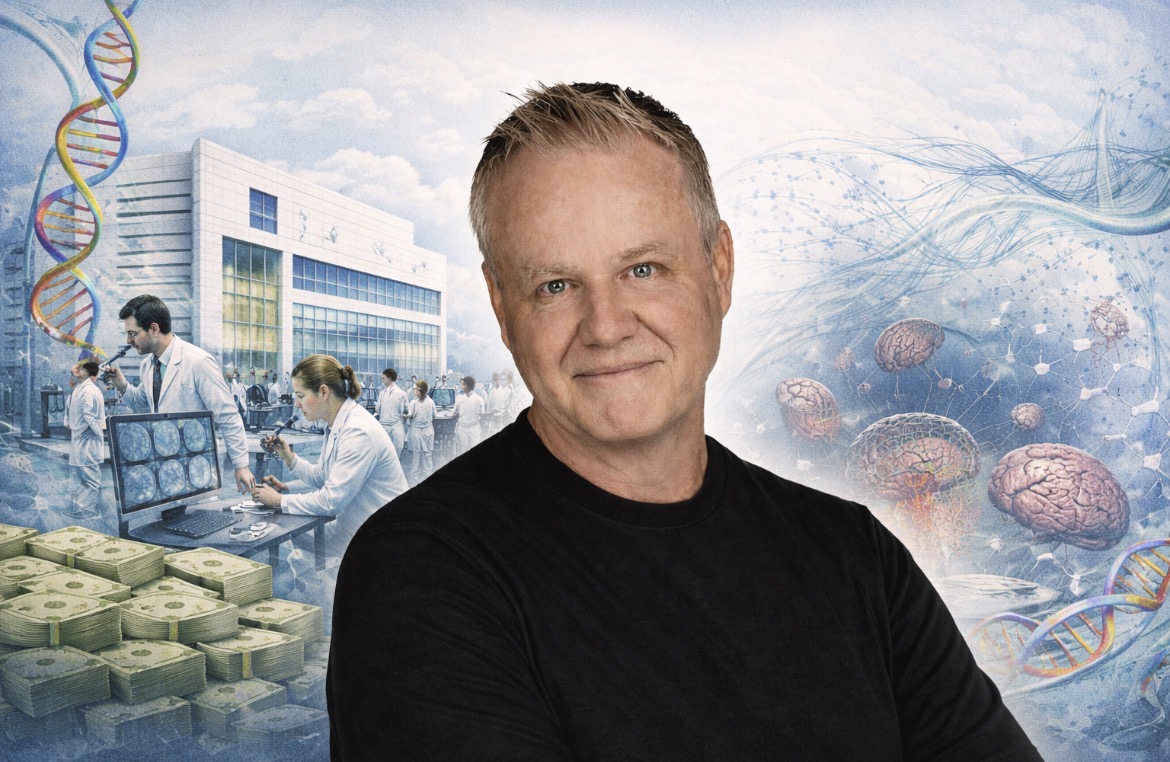
Few stories in modern philanthropy more powerfully merge personal struggle with public impact than that of the Stanley family, whose giving to psychiatric research at the Broad Institute of MIT and Harvard has now exceeded $1.1 billion.
The milestone follows a new $280 million commitment announced in March 2026—one of the largest single-family investments in mental health science in the world.
The Stanleys’ philanthropic journey began four decades ago, rooted in the family’s response to the onset of severe bipolar disorder in their son, Jonathan.
As a college student in the 1980s, his untreated mania and depression led to hospitalizations and years of uncertainty before effective treatment stabilized his life.
That experience galvanized his parents, Vada and Ted Stanley, to focus their wealth and energy on transforming the scientific understanding of serious psychiatric illness.
Ted Stanley, who built his fortune through the collectibles company MBI, had long intended to make a signature philanthropic commitment.
Jonathan’s ordeal gave that ambition focus. “He knew he wanted to focus in on one thing,” Jonathan later said. “I gave him that one thing.”
In 2007, the family partnered with the Broad Institute to launch the Stanley Center for Psychiatric Research, with a sweeping mandate: to map the genetic and molecular foundations of bipolar disorder, schizophrenia, and related conditions that had long remained mysterious and stigmatized.
The center—now home to more than 100 scientists—has become a global hub for psychiatric genomics, coordinating massive international data-sharing initiatives and sequencing the DNA of hundreds of thousands of individuals to uncover biological mechanisms behind severe mental illness.
These discoveries are redefining the field. A landmark 2016 study linked specific immune system gene variants to heightened schizophrenia risk, offering a clear biological pathway connecting genetics, brain function, and psychosis.
“For decades, psychiatric disorders were seen as intractable,” said Todd Golub, director of the Broad Institute. “The Stanley Family Foundation has transformed that narrative, proving that sustained, long-term philanthropy can catalyze breakthroughs on a global scale.”
The family’s newest gift will allow the Stanley Center to pursue high-risk, long-horizon projects often beyond the reach of federal funding. It also builds on their historic $650 million donation in 2014, then the largest ever in mental health research.
“My parents envisioned a world where schizophrenia and bipolar disorder are treated with the same molecular precision as cancer and heart disease,” said Jonathan Stanley, who now helps oversee the foundation.
“This renewed commitment honors that vision and pushes it closer to reality.”
The Broad’s teams are now using advanced genomic, stem cell, and neurobiological tools to create sophisticated disease models, identify biomarkers, and collaborate with industry partners to translate discoveries into therapies.
Researchers worldwide credit the Stanley Center’s leadership for elevating psychiatric genetics into a mature, data-driven science.
Ken Duckworth, chief medical officer of the National Alliance on Mental Illness, called the latest gift “one of the most hopeful developments in psychiatric research,” adding that it “cements understanding and compassion at the level of science itself.”
For Jonathan Stanley, the $1 billion milestone remains intensely personal—a testament to his parents’ legacy and to the belief that better knowledge will lead to better lives.
What began with one family’s anguish has become a global effort to unlock the biological underpinnings of mental illness—and, ultimately, to ensure that those once lost to untreated psychosis or bipolar disorder can be reached earlier, treated more precisely, and restored to fuller lives.