
$205 million “Gift to Madison”: Jerry Frautschi’s visionary record-setting arts investment spurs $10 million new pledge and community support to complete Overture’s $30 million “Forever Campaign”
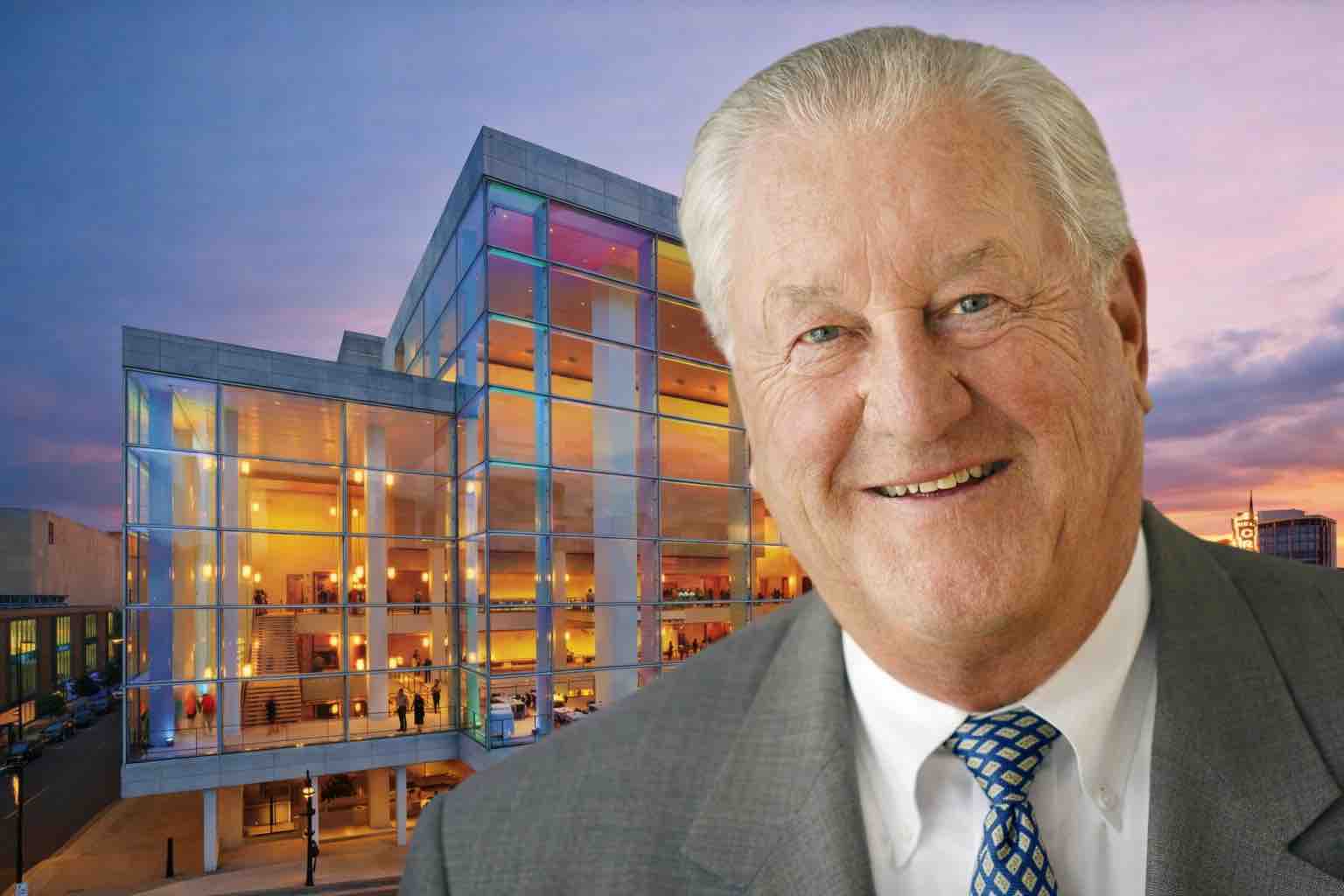
The Overture Center’s $30 million Overture Forever Campaign has done more than secure a building; it has reaffirmed a donor legacy that has quietly shaped an entire city’s cultural identity.
At the center of that story stands W. Jerome “Jerry” Frautschi, whose original $205 million gift to build Overture remains the largest singular gift to the arts in U.S. history and whose later $10 million commitment helped drive the final campaign across the finish line.
Two decades after Overture Center opened in 2004, the announcement that the Overture Forever Campaign had reached its $30 million goal landed as both a financial milestone and a moment of civic reflection.
Conceived as a permanent endowment and capital fund, the campaign was designed to underwrite the long-term maintenance and modernization of the 20-year-old facility—from boilers and cooling systems to lighting and sound—so the physical plant would not become the weak link in Madison’s arts ecosystem.
The effort began almost a decade ago with a lead commitment from longtime arts supporter Dianne Christensen and grew through early gifts from more than 80 individuals, businesses, foundations, and grant agencies, setting the stage for what would become a community-wide push.
That base gave campaign leaders critical momentum when they were ready to go public: by the time the campaign entered its public phase in July 2024, $21.8 million had already been committed, and the narrative shifted from “Can this be done?” to “Will the rest of the community join in?”
The inflection point came with a $10 million gift from the W. Jerome Frautschi Foundation in July 2024, a pledge large enough to both catalyze the public phase and symbolically link the new campaign to the original vision that created Overture. In the formal announcement, the center underscored that this was not a one-off act from a casual patron but a continuation of a long philanthropic arc:
The Overture itself had been made possible by a $205 million gift from Jerry Frautschi, still cited by the institution and outside observers as the largest single gift to the arts in the United States.
For Frautschi, the new commitment was explicitly framed as stewardship, an extension of his responsibility for the building he had brought into being; in his own remarks released at the time of the 20th-anniversary celebration, he described the Overture Forever pledge as a way to ensure the center “remains an exceptional building that brings exceptional arts experiences to the Madison area” for future generations.
That language echoed the inscription in Overture’s rotunda, where he characterizes the center as “my gift to Madison” and places it in a family tradition of civic pride dating back to 1867, underlining that this was a multi‑generational project rather than a single dramatic act of generosity.
To understand why this latest campaign is being read through the lens of Frautschi’s legacy, it helps to revisit the scale and intent of his original gift. In the late 1990s, as downtown Madison wrestled with disinvestment and aging cultural infrastructure, Frautschi, a fourth‑generation Madisonian and longtime executive at his family’s printing company Webcrafters, committed to funding the entire cost of a new arts center—eventually totaling $205 million—after earlier gifts of $50 million signaled the direction he wanted to go.
Designed by architect César Pelli, Overture Center occupies an entire city block and includes a 2,100‑seat concert hall, a restored 1927 theater, an intimate theater‑in‑the‑round space, and a new home for the Madison Museum of Contemporary Art, effectively repositioning the arts as a driver of downtown life.
At the time, arts advocates and philanthropy observers noted that few, if any, individuals had written a single check of that magnitude for a performing arts center, putting Frautschi’s gift in the top tier of individual arts contributions nationally and redefining what a local donor could do in a mid-sized American city.
Beneath the numbers, however, was a personal narrative of modesty and local rootedness: he consistently described himself as “fortunate” to be able to give back and insisted that Overture existed “in appreciation of the good life Madison has given us,” language that framed the gift as repayment rather than largesse.
That sensibility carried through the rest of his philanthropy. Obituaries and tributes published after his death on January 8, 2026, at age 94, portray a benefactor whose interests spanned far beyond a single building—supporting schools, hospitals, student centers, community colleges, environmental organizations, and local initiatives like Concerts on the Square—yet who preferred to work quietly, often behind the scenes.
His philanthropic capacity was intertwined with his and his wife, Pleasant Rowland, ’s business success; Rowland, the founder of American Girl, had seen in him early, and the 1998 sale of the company to Mattel helped make possible the scale of their later giving.
Community voices remembering him emphasize not only the visible civic landmarks—Overture Center, support for arts and downtown revitalization—but also the pattern of consistent, relational giving that touched many corners of Madison life, from Rotary to neighborhood cultural programming.
In that context, the Overture Forever gift appears less as a capstone and more as one more deliberate step in a multi‑decade project of cultural transformation, timed to coincide with the center’s 20th anniversary and consciously oriented toward legacy rather than recognition.
The structure and outcome of the Overture Forever Campaign itself reflect many of the philanthropic norms Frautschi helped model: anchor gifts from major donors combined with broad-based community participation and strategic matching.
While the W. Jerome Frautschi Foundation’s $10 million pledge was the largest single commitment, the campaign narrative highlighted the nearly 2,000 households that ultimately contributed, with a median gift of about $100, underscoring that the endowment belongs to the community as much as to any single benefactor.
Matching commitments—from Capitol Point Residents’ $700,000 pledge to challenge matches by Bea and Lau Christensen and by corporate supporters like National Guardian Life Insurance Company and SupraNet Communications—were structured to amplify the impact of individual gifts and keep the campaign’s public phase on track toward its target.
Along the way, funds raised were not left idle: they have already financed tangible upgrades, including new boilers, an improved cooling system, and enhanced lighting and sound equipment, allowing campaign leaders to point to visible improvements even before the final dollars were in.
For Emily Gruenewald, Overture’s co‑CEO and chief development officer, the message has been consistent: the building is “central to our mission,” and investing in its longevity is a precondition for everything else the organization aspires to do on stage, in classrooms, and in the community.
There is a poignant timing to the fact that the Overture Forever goal was reached barely a month after Frautschi’s passing, effectively turning the campaign’s success into an immediate, living memorial to his vision for Madison’s cultural future.
His own words, recorded during the 20th‑anniversary celebrations, read almost like a charge to the next generation of donors and civic leaders: he spoke of wanting Overture to be a “world‑class arts destination” and a “cultural hub” for the city, and of his hope that additional supporters would step forward so that the center would continue to offer “exceptional arts experiences” long after his direct involvement ended.
With the $30 million goal now met and a capital endowment in place, Overture’s leadership can credibly argue that the community has accepted that charge, matching transformative individual philanthropy with a broad base of local investment.
In the process, the story of the campaign has become a case study in how one donor’s outsized commitment can anchor not just a building but a civic identity—an identity that, in Madison’s case, is now inseparable from the arts, from the gleaming block‑long presence of Overture Center, and from the name of Jerry Frautschi etched into its stone and into the city’s collective memory.