
161.5 million dollars in new gifts are powering a bold, integrated model for women’s health, neonatal care, and biomedical breakthroughs led by Allison and Roberto Mignone, Kenneth C. Griffin, the Julia Koch Family Foundation, and the Blavatnik Family Foundation
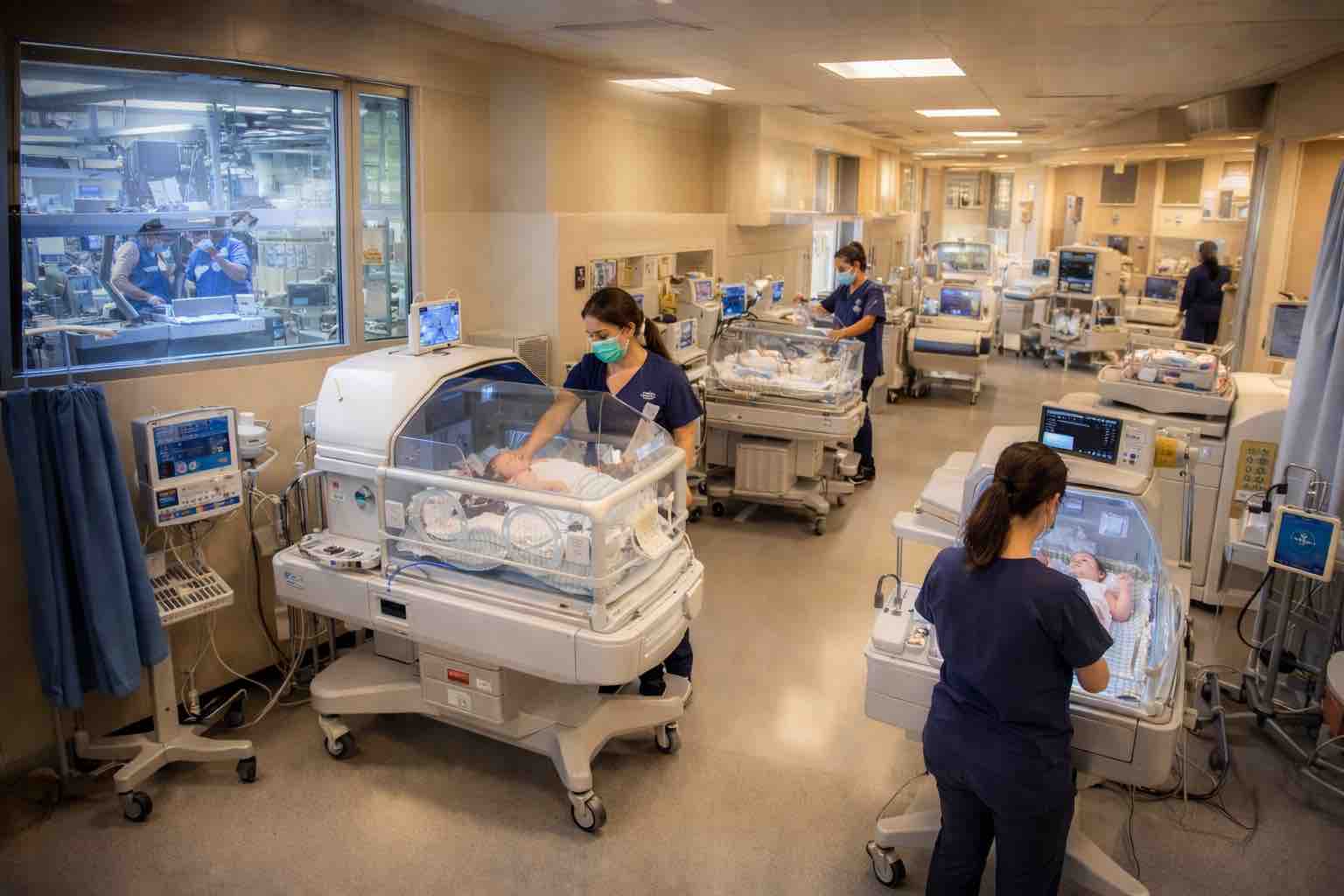
NYU Langone Health is moving ahead with an $11.5 million plan to expand an overburdened neonatal intensive care unit at Tisch Hospital in Kips Bay, a relatively modest capital project set against an era-defining wave of philanthropy that is reshaping the women’s and children’s footprint across the system.
The NICU project, described in a recent filing with the New York State Department of Health, would convert six general medical beds into specialized neonatal intensive care beds and reconfigure adjacent space to enable clinicians to manage more complex, higher‑acuity newborn cases on site.
As part of the same modernization push at the Kips Bay flagship, NYU Langone is investing nearly $10 million to convert storage space into a new, advanced operating room at Tisch Hospital, underscoring how capacity constraints in critical services—from surgery to neonatal care—are driving incremental, strategically targeted construction.
What distinguishes this NICU expansion is less the price tag than the context: it lands at a moment when a small group of major donors has effectively become the capital engine behind NYU Langone’s women’s, perinatal, and ambulatory strategy.
In May 2025, NYU Langone announced two gifts totaling $60 million to advance women’s health—$50 million from the Allison and Roberto Mignone Family Foundation and a $10 million leadership gift from Citadel founder Kenneth C. Griffin—to create the Mignone Women’s Health Collaborative.
In recognition of the Mignones’ lead philanthropy, NYU Langone’s East 53rd Street ambulatory hub was renamed the Mignone Women’s Health Collaborative, a system‑wide focal point that now brings together more than 125 providers across 20 areas in women’s health, including preventive care, pregnancy support, and midlife health.
Allison and Roberto Mignone, longtime New York investors and NYU Langone insiders, have framed their giving explicitly around closing historical gaps in women’s health, informed in part by Allison Mignone’s experience as a breast cancer survivor and as a mother of four daughters.
As an overseer at NYU Langone and vice chair of the board of trustees, she has used both governance and philanthropy to advance a more coherent, “lifespan” approach to women’s care—one that links pregnancy, fertility, and perinatal services to later‑life cardiac, oncologic, and metabolic risks.
Griffin’s accompanying $10 million gift, made through his broader Griffin Catalyst platform, anchors the collaborative’s research and education agenda, with an emphasis on developing new clinical protocols and curricula at NYU Grossman School of Medicine that can be disseminated across the system.
Although the NICU expansion at Tisch is funded as a capital project rather than a named gift, it sits downstream of this donor‑driven strategy in several ways.
First, the Mignone Women’s Health Collaborative is explicitly charged with improving pregnancy support and perinatal outcomes, which in practice means strengthening coordination among obstetrics, maternal‑fetal medicine, and neonatal intensive care—precisely the interfaces that are strained when a NICU operates over capacity.
Second, large restricted gifts for women’s health can free up internal capital for bricks-and-mortar projects such as intensive care unit expansions, giving NYU Langone greater flexibility to respond quickly to surges in demand without waiting for a single “name on the door” NICU donor.
Over the past two years, NYU Langone’s capital program has tilted heavily toward access points for women and children, from emergency expansions in Kips Bay and Long Island to new pediatric and behavioral health space on Long Island and in Nassau County.
The health system has filed plans for an $83 million emergency department expansion at its Kips Bay campus—adding 29 emergency bays and five new operating rooms—after a 26 percent surge in emergency visits between 2022 and 2024, and is simultaneously growing its Long Island emergency department footprint.
On Long Island, NYU Langone has proposed an $11.5 million pediatric clinic in Nassau County, significantly expanding exam room capacity and behavioral health services to meet rising pediatric volume; that project, too, is framed as part of a larger child and family care network.
This burst of construction rests on a balance sheet increasingly shaped by philanthropy. NYU Langone reported roughly $14.2 billion in operating revenue in fiscal 2024 and strong growth in net assets without donor restrictions, a trajectory buoyed by headline gifts like the Mignones’ $50 million and Griffin’s $10 million, as well as research‑oriented philanthropy such as a $15 million commitment from the Blavatnik Family Foundation to underwrite cutting‑edge biomedical investigations.
These are the kinds of donors—hedge fund founders, private equity investors, and global philanthropists—who can toggle between programmatic gifts (research chairs, collaborative platforms) and capital gifts (towers, ambulatory centers), effectively underwriting both the software and hardware of an academic medical center.
NYU Langone’s growing national reach has similarly been accelerated by marquee names willing to invest in its expansion. In 2020, Julia Koch and the Julia Koch Family Foundation pledged $75 million to create the Julia Koch Family Ambulatory Care Center in West Palm Beach, an eight‑story facility slated to open in 2026 that will host roughly 50 physicians and 150,000 patient visits annually, serving as a Florida hub closely integrated with New York operations.
NYU Langone board chair Kenneth G. Langone explicitly connected that gift to the migration of New Yorkers to Palm Beach County and the desire to replicate “one high standard of care” for this mobile, affluent patient base—an ethos that now shapes how the system thinks about women’s health, neonatal care, and ambulatory access in its Manhattan backyard.
In conversations about the new NICU capacity, NYU Langone leaders have emphasized that neonatal and maternity services do not exist in isolation but are part of an integrated women’s and family health continuum that donors increasingly expect to see.
The same philanthropic logic that supported a branded women’s health collaborative—multidisciplinary clinics, embedded behavioral health, and research tied to clinical practice—now informs how NICU design, staffing, and technology investments are justified to both regulators and donors.
For wealthy families with personal experience in high‑risk pregnancies or neonatal complications, the prospect of naming a NICU or underwriting specialized equipment fits squarely within a broader pattern of “gratitude philanthropy” that has already produced signature gifts across the NYU Langone system.
The hospital’s own filings make clear that the NICU expansion responds to sustained overutilization rather than a one-time spike: as more complex pregnancies are referred into NYU Langone’s network, the need to keep fragile infants close to tertiary-level surgical, cardiac, and neurological care has grown more urgent.
Converting general medical beds to NICU beds is a relatively efficient way to increase capacity within a dense urban campus, but it also signals a hierarchy of needs in which neonatal critical care is prioritized over lower-acuity adult medical stays. In practice, that means more families with extremely premature or medically complicated babies will be able to stay at Tisch, rather than see their children transferred across boroughs or out of network—an outcome that aligns with donors’ preference for visible, family‑facing impact.
As the construction timetable for the NICU project progresses, insiders at NYU Langone say privately that philanthropy will continue to shape not just what is built but also how it is branded and experienced.
The Mignone Women’s Health Collaborative has already created a template in which a major family’s name becomes shorthand for a whole model of care, and the Koch family’s Florida gift has set expectations for what a world-class ambulatory center should look like for a coastal, highly mobile clientele.
Against that backdrop, a relatively small $11.5 million NICU expansion at Tisch Hospital is best understood as the next tactical move in a longer-term strategy: leverage nine-figure philanthropy from a handful of families to fund system-wide women’s and children’s initiatives, then use internal capital to relieve specific pressure points—like an overused NICU—so that the promise those donors underwrite can actually be delivered at the bedside.