
Bekenstein and Lavine Families Make Dana-Farber’s Largest Single Gift, Shaping Future Cancer Hospital
The latest burst of major philanthropy reshaping Boston’s cancer landscape is, at its heart, a story about a small group of donors using extraordinary private wealth to put their names—and their values—on the future of care for patients facing the most frightening diagnoses.
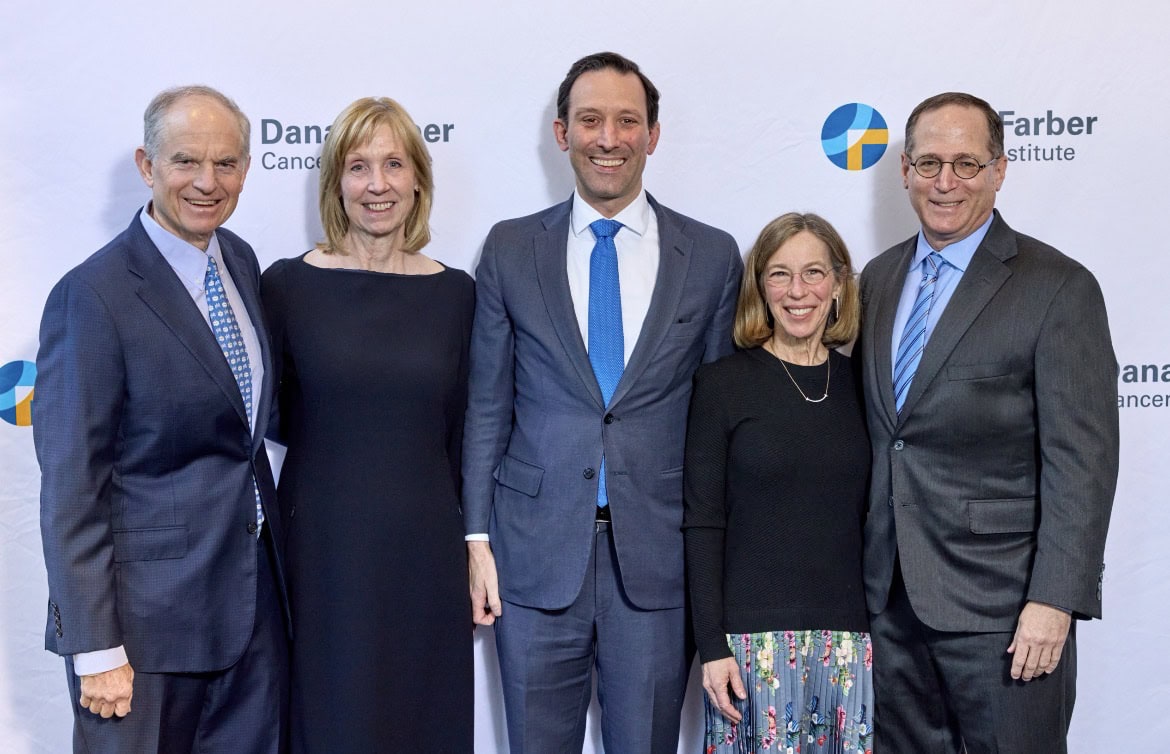
At Dana-Farber Cancer Institute, that future will be etched in the names of Josh and Anita Bekenstein and Jonathan and Jeannie Lavine, two Boston families whose long record of quiet but consequential giving has now culminated in the largest single gift in the institute’s 79-year history.
The amount is confidential, but it exceeds the $ 78 million contribution made last year by the Pan-Mass Challenge bike-a-thon, a benchmark Dana-Farber itself described as record-shattering.
In recognition, the new 300-bed, $1.68 billion freestanding cancer hospital planned for the Longwood Medical Area will bear their names when it opens in 2031, turning a once-abstract commitment to “support cancer care” into a permanent architectural presence in the city.
The Bekensteins and Lavines are hardly new to Dana-Farber’s orbit; they are, in many ways, the institutional backbone behind the scenes. Josh Bekenstein, a founding partner of Bain Capital, currently chairs Dana-Farber’s Board of Trustees, giving him direct oversight of strategy at one of the world’s leading cancer centers.
Jonathan Lavine, who founded Bain Capital Credit, has likewise been deeply involved with Dana-Farber as a trustee and philanthropist, channeling the analytic mindset of high finance into long-term support for biomedical research and patient care.
Their spouses, Anita Bekenstein and Jeannie Lavine, are known in Boston’s civic circles for sustained engagement across education, health care, and anti-poverty initiatives, making this latest joint gift feel like a natural—if dramatically scaled—extension of a philanthropic philosophy rooted in institutional loyalty and a multi-decade partnership.
For Dana-Farber, the symbolism of this particular donor constellation matters almost as much as the dollar figure. The institute is charting a bold course away from its 30‑year adult oncology collaboration with Brigham and Women’s Hospital, a partnership that will formally end in 2028, and toward a new alliance with Beth Israel Deaconess Medical Center built around a purpose-built cancer hospital on the site of the Joslin Diabetes Center.
To have its largest-ever gift come from its own board chair and a fellow Bain alumnus signals to the wider market—competing hospital systems, potential donors, and patients—that Boston’s financial elite are not just endorsing the move but underwriting it at a transformative scale.
As Dana-Farber president and chief executive, Dr. Benjamin L. Ebert put it, the institute is “deeply grateful for this exceptional, shared commitment from two families who have been profoundly devoted to Dana-Farber,” a formulation that underscores continuity even amid institutional disruption.
Across town, another donor narrative is taking shape, this time anchored not in private equity but in the legacy of a family-owned energy company with deep roots in Atlantic Canada.
Irving Oil, headquartered in New Brunswick, has pledged 35 million dollars to Mass General Brigham (MGB) to expand cancer services in memory of its late president and chairman, Arthur L. Irving.
The gift, which will establish two prominent spaces in the new Phillip and Susan Ragon Building on the Massachusetts General Hospital campus—an urgent cancer care unit and a “healing garden,” both bearing the Irving Oil name—extends the company’s cross-border philanthropic footprint into one of the most prestigious academic medical centers in the United States.
Unlike the Bekenstein–Lavine gift, which secures naming rights for an entire hospital, the Irving Oil commitment is more tightly focused on the patient’s immediate journey through treatment.
The urgent care space will serve patients at moments when complications, side effects, or disease progression demand rapid intervention, while the healing garden is designed as a contemplative counterpoint, a place for respite within the hyper-clinical environment of a major urban hospital. Dr. David P. Ryan, president of the Mass General Brigham Cancer Institute, framed the gift explicitly in terms of Arthur Irving’s values, noting that he “believed deeply in the power of groundbreaking patient-centered clinical care” and that this donation “will help us meet patients at moments of greatest need.” In that sense, the philanthropy reads as both a tribute and a strategic investment: a way to embed one executive’s philosophy of care into the physical and operational fabric of MGB’s emerging cancer institute.
These marquee gifts land in a Boston already dotted with the surnames of benefactors who have become part of the city’s medical vocabulary. At Massachusetts General Hospital, the sprawling, 1.9-billion-dollar, 2-million-square-foot Ragon Building—now under construction and slated to open in phases in 2027 and 2030—has itself been a magnet for transformative donations.
The east tower will be named for auto dealer and philanthropist Herb Chambers, whose 100 million dollar gift reflects both personal fortune and a long-standing civic identity rooted in the region’s business community.
The west tower, meanwhile, will carry the New Balance Foundation name, following another 100 million dollar commitment linked to the Boston-based athletic footwear company’s philanthropic arm, cementing the presence of consumer-brand capital in the city’s health-care skyline.
Together, the Bekensteins, Lavines, Irvings, Chambers, and the New Balance Foundation illustrate how a small circle of families and corporate philanthropies is effectively underwriting the next generation of cancer infrastructure in Boston.
Their motivations differ—board-level stewardship, corporate legacy-building, personal ties to specific hospitals or clinicians—but the result is a kind of philanthropic map layered over the city’s clinical one, where every tower and pavilion signals a story about private wealth and public purpose.
The timing of these announcements, arriving amid a very public rivalry between Mass General Brigham and Beth Israel Lahey Health and in the wake of Dana-Farber’s much-debated “divorce” from Brigham, only heightens the sense that donor capital is now one of the primary instruments through which institutional competition is waged.
Not everyone is entirely comfortable with that trajectory. Alan Sager, a professor of health policy and management at the Boston University School of Public Health, cautions that while directing large gifts to elite teaching hospitals is a long-standing practice, it may not be the most effective way to achieve equitable health outcomes across Massachusetts.
He would rather see similar sums directed to bolstering primary care, shoring up community hospitals from the Berkshires to Cape Cod, and ensuring that complex care is not confined to a handful of high-profile urban campuses.
His question—“How much cancer care should be given at major teaching hospitals, and how much can and should be delivered closer to where people live?”—hangs over the current wave of naming gifts, suggesting that the benefactors shaping Boston’s cancer future are also, whether they intend to or not, shaping the geography of access.
For now, though, the momentum lies firmly with the donors who are willing to write nine-figure checks or place corporate balance sheets behind ambitious building campaigns.
Their names will soon be inscribed on towers, gardens, urgent care suites, and entire hospitals, becoming part of the lexicon patients and families use when they tell the story of where they sought help and hope.
In a city that prides itself on both medical excellence and civic generosity, these gifts are more than acts of charity; they are declarations of intent about what cancer care should look like and where, for decades to come.