$60 million new initiative brings together Gates and top health foundations to tackle antibiotic resistance
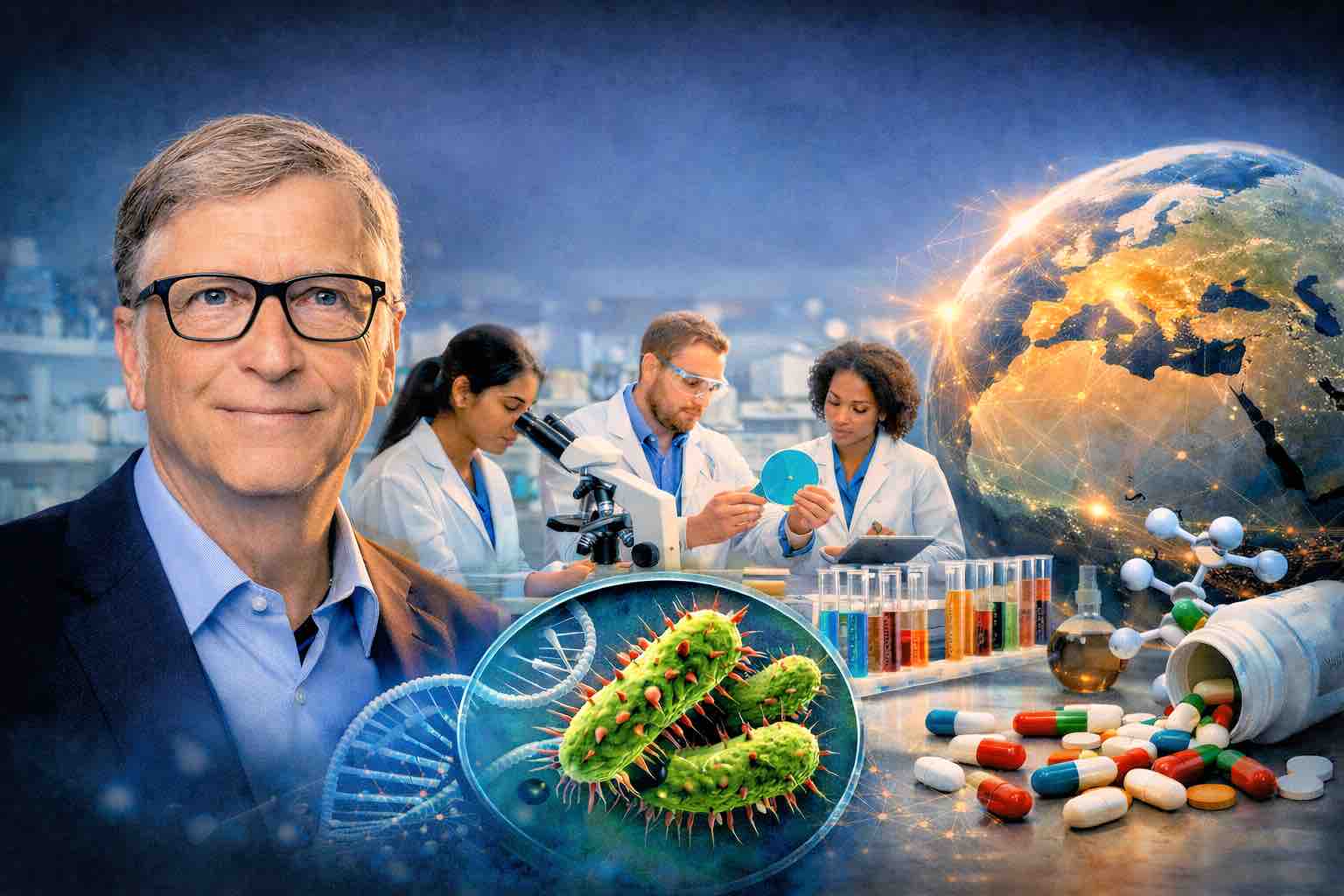
A new wave of philanthropic collaboration is reshaping the global fight against antimicrobial resistance (AMR), as three of the world’s most influential health foundations join forces behind a first-of-its-kind antibiotic discovery consortium.
The Bill & Melinda Gates Foundation, the Novo Nordisk Foundation, and Wellcome have collectively committed 60 million dollars over the next three years to launch the Gram-Negative Antibiotic Discovery Innovator (Gr‑ADI), a global network of research teams focused on discovering urgently needed antibiotics against deadly Gram-negative bacteria.
This consortium is the inaugural investment under a broader 300 million dollar global health research and development partnership the three philanthropies announced in 2024, designed to accelerate innovation for infectious diseases and other pressing health threats.
Gr‑ADI will support eighteen cutting-edge projects spanning seventeen countries, from Ghana and South Africa to Brazil and beyond, with a strong emphasis on the countries that carry the greatest burden of drug-resistant infections.
Research teams will harness AI-enabled models and advanced drug discovery platforms to speed up the identification of new antibiotic candidates, with a particular focus on Gram-negative pathogens that are among the leading drivers of AMR-related deaths worldwide.
In a deliberate break from the traditional siloed model of drug R&D, all funded teams will participate in an open, collaborative framework that requires sharing of data, methods, and insights across the consortium.
RTI International, an independent scientific research institute, will manage the initiative, coordinating projects and ensuring that discoveries are translated into practical tools and knowledge benefiting the entire antibiotic field.
Leaders at the three foundations have framed Gr‑ADI as both a scientific and a structural innovation. Wellcome’s infectious disease director Alexander Pym highlighted AMR as one of the greatest global health threats and described the partnership as a “catalyst” for a new model of collaboration that can bring next-generation antibiotics to patients as quickly as possible.
Trevor Mundel, president of global health at the Gates Foundation, emphasized that AMR is already undermining routine medical care—especially in low- and middle-income countries—and argued that faster translation of discovery into deployable antibiotics is essential to protect vulnerable populations. Novo Nordisk Foundation’s Marianne Holm emphasized the goal of breaking down barriers to progress by making new data, tools, and methods openly available so the entire field can move forward more rapidly.
The stakes are high: AMR is linked to millions of deaths each year and projected to drive more than one trillion dollars in economic losses globally, as once-routine infections and standard procedures become life-threatening when treatments fail.
By concentrating substantial philanthropic capital, global health expertise, and a commitment to openness, Gr‑ADI signals growing recognition that antibiotic innovation is a global public good—and that philanthropy can help fill critical gaps left by market failure in early-stage antibiotic research.
Behind this effort stand three of the world’s most significant health philanthropies, each backed by major endowments and long-standing commitments to science and global health.
The Bill & Melinda Gates Foundation, built on the wealth of Bill Gates and Melinda French Gates, has become a central driver of innovation in vaccines, diagnostics, and infectious disease tools for low- and middle-income countries.
The Novo Nordisk Foundation, underpinned by its ownership ties to the Novo Group, has emerged as a major life sciences funder in Europe with a growing focus on infectious diseases and AMR. Meanwhile, Wellcome, whose endowment traces back to pharmaceutical pioneer Sir Henry Wellcome, has repositioned itself as a global health leader with AMR identified as one of its top strategic priorities.
Although the Gr‑ADI announcement presents the funding at the institutional level rather than naming individual high-net-worth donors, the scale and speed of the initiative reflect the financial strength and philanthropic ambitions of the people and entities behind these foundations.
In combining their resources, they are sending a strong, hopeful signal: that with coordinated, risk-tolerant capital and an open-science ethos, the world can still bend the trajectory of antibiotic resistance—and protect millions of lives from infections that should never again be a death sentence.