
$50 million bet on the future of life: Ben Lamm expands his colossal foundation as Richard Garriott, Governing Committee member of Lifestyles Magazine / Meaningful Influence, helps shape the vision
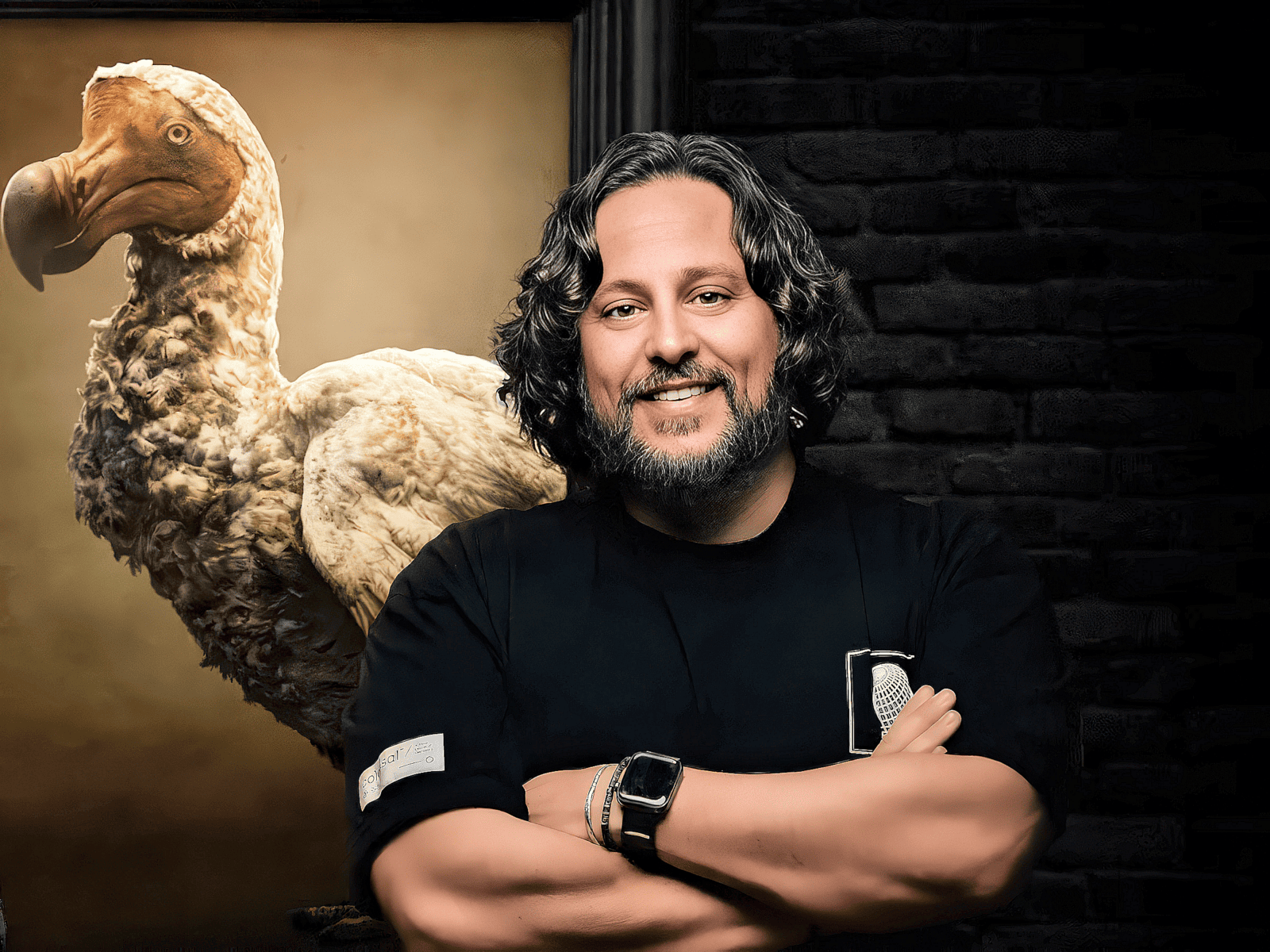
Billionaire technology entrepreneur Ben Lamm is deepening his commitment to biodiversity with an additional $50 million pledge to the Colossal Foundation, the nonprofit arm of Colossal Biosciences.
The gift brings the Foundation’s total funding to $100 million just over a year after its launch, placing it among the largest private philanthropic investments in de-extinction–enabled conservation.
The announcement coincides with the Foundation’s first 2025 Impact Report, which shows a rapid move from theory to field deployment. In its inaugural year, the Foundation supported work across more than 40 species, partnered with over 55 conservation, Indigenous, and academic organizations, and deployed more than 20 advanced technologies on six continents.
The scale reflects Lamm’s belief that traditional conservation alone can no longer keep pace with accelerating ecological collapse.
Wildlife populations have declined nearly 70 percent globally in the past 50 years, extinction rates now exceed natural levels by more than one hundredfold, and biodiversity protection faces an estimated $700 billion annual funding gap. Lamm’s expanded support aims to help close that gap by moving tools such as genomics, cloning, AI monitoring, and assisted reproduction directly into active conservation programs.
“In just twelve months, we’ve doubled the Colossal Foundation’s funding, allowing us to expand our partners and deliver immediate impact,” Lamm said.
Early results highlight that approach. Working with conservation groups and the Karankawa Tribe of Texas, the Foundation cloned four “ghost wolves” carrying ancestral red wolf DNA once thought lost.
The effort produced the first complete red wolf reference genome and opened a path to restoring genetic diversity in the world’s most endangered canid. One of the wolves, Neka Kayda, meaning “Ghost Daughter,” was named by the Karankawa Tribe and recognized as its totem animal.
The Foundation has also helped accelerate the world’s first mRNA vaccine against elephant endotheliotropic herpesvirus, a leading cause of juvenile elephant deaths. In spring 2025, vaccinated elephants exposed to the virus showed no signs of illness, an outcome previously considered rare. The vaccine is now being rolled out more broadly, alongside new immune monitoring tools.
In Yellowstone National Park, autonomous acoustic sensors and AI analysis are transforming wildlife monitoring, capturing thousands of wolf howls and allowing researchers to study behavior, population changes, and emerging threats in near real time.
Beyond individual species, the Foundation supports rewilding projects across six countries, from Bolson tortoises in the American Southwest to harlequin toads in Ecuador and native fish critical to river restoration in Mexico, working in partnership with local conservation leaders.
Some of the most ambitious work targets long-standing ecological failures. Researchers are developing genetic immunity in frogs to combat chytridiomycosis, a fungal disease that has already driven nearly 100 amphibian species to extinction. In Australia, a single genetic change is being used to make northern quolls resistant to invasive cane toad toxins, offering a solution where decades of conventional management have failed.
Much of this progress is enabled by Colossal’s acquisition of Viagen, the world’s leading animal cloning and biobanking company, which provides a scalable platform for preserving and restoring genetic diversity before it is lost.
For Lamm, whose career includes technology companies acquired by Accenture, Zynga, and others, the Colossal Foundation applies a technology mindset—speed, scale, and systems thinking—to an existential challenge. De-extinction, in this framing, is not spectacle but a practical tool for stabilizing a biosphere under mounting stress.
The additional $50 million is not an endpoint. The Foundation plans to continue expanding its work over the coming decade.
While it remains uncertain whether speed can ultimately outpace extinction, Lamm has made his position clear: extinction does not have to be permanent.
Richard Garriott de Cayeux, a governing committee member of Lifestyles Magazine / Meaningful Influence and an early supporter of Colossal, brings a rare blend of entrepreneurship and exploration to the effort.
Best known as the creator of the Ultima series and a pioneer of online gaming who coined the term “avatar,” Garriott is also one of the world’s first private astronauts, having flown to the International Space Station in 2008.
A former president of The Explorers Club, he now serves on Colossal Biosciences’ executive advisory board, contributing decades of experience at the frontiers of technology, exploration, and science.