
$16.5 million gift from Don Quattlebaum accelerates growth of new veterinary college
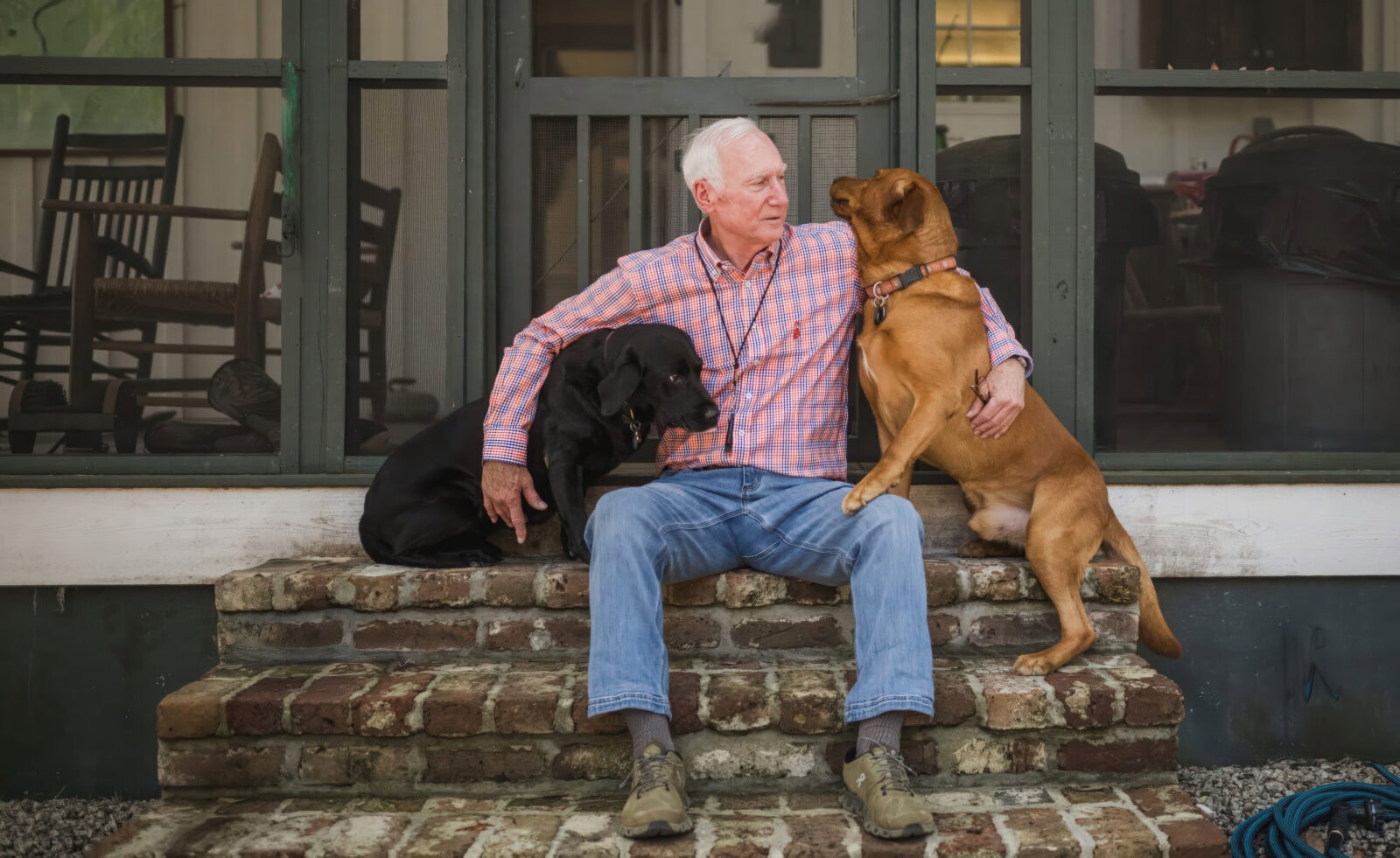
Clemson University has received the largest private donation in the history of its Harvey S. Peeler Jr. College of Veterinary Medicine, a transformative $16.5 million gift from alumnus Don Quattlebaum ’76 that will reshape the future of veterinary education in South Carolina.
The contribution places Quattlebaum among Clemson’s Cornerstone Champions and marks a defining moment for the state’s first and only veterinary college, which is preparing to welcome its inaugural class in 2026.
Quattlebaum’s gift will support several cornerstone components of the new college, beginning with its architectural and academic heart: the newly named Quattlebaum Hub.
The cutting-edge facility will serve as a central gathering place for students and faculty, housing classrooms, conference areas, a library, and a bookstore. It is envisioned as a bustling center of learning and collaboration—an anchor for a program designed to meet the needs of South Carolina’s agricultural communities, pet owners, and the veterinary sector for generations to come.
The gift also establishes the Andy Quattlebaum Pavilion, named in memory of Don and Hayden Quattlebaum’s late son.
Designed as a peaceful and restorative outdoor space, the pavilion will offer students an inviting place to study, connect, and decompress amid the intense demands of veterinary training. For many, it will stand as a reminder of the family’s long commitment to student well-being and the natural environment.
Beyond facilities, Quattlebaum’s donation creates the Don and Hayden Quattlebaum Endowed Professorship, aimed at drawing world-class veterinary faculty to Clemson at a moment of rapid growth and rising national attention.
An unrestricted endowment included in the gift will give the college critical flexibility to meet its most urgent needs as it builds out academic programs, research capacity, and clinical offerings.
Clemson President Jim Clements praised the magnitude and significance of the gift, calling Quattlebaum a friend whose generosity honors the legacies of Hayden and Andy and of the Quattlebaum and Blackwell families.
“Don’s gift represents an investment in the future of South Carolina,” Clements said, emphasizing the multigenerational impact the family will have on future Clemson students.
Vice President of Advancement Brian O’Rourke echoed the sentiment, noting that Quattlebaum’s philanthropy has consistently centered on improving student experiences and safeguarding the state’s natural resources.
“This gift will support his great love for animals and for South Carolina,” O’Rourke said.
The Quattlebaum family, along with the Andy Quattlebaum and Blackwell Family Foundation, has a long philanthropic history at Clemson, particularly in wellness, outdoor education, and conservation.
Signature projects funded through their generosity include the Andy Quattlebaum Outdoor Education Center on Clemson’s main campus and Andy’s Cottage at the Belle W. Baruch Institute in Georgetown.
The new investment in veterinary medicine amplifies that legacy, uniting the family’s passion for animal welfare with Clemson’s expanding mission in agricultural and companion-animal care.
Quattlebaum, reflecting on the gift, said he is proud to help establish a college that will serve farmers, families, and communities across the state.
“This gift is for Andy and Hayden, whose spirits I carry with me every day,” he said.
The college’s founding dean, Steven Marks, noted that the donation will accelerate Clemson’s ability to train the next generation of veterinary clinicians and scientists.
“Don Quattlebaum’s gift is an investment in the future of animal and human health in South Carolina,” Marks said. “It will allow us to enhance the human–animal bond for the benefit of our state and beyond.”
The Harvey S. Peeler Jr. College of Veterinary Medicine is now accepting applications for its first cohort, expected to begin in fall 2026.
Building on Clemson’s longstanding strengths in animal science, agriculture, veterinary technology, and research, the college aims to educate veterinarians who can serve both large-animal and companion-animal needs. It will also support research that protects public health and strengthens rural economies—an ambition now propelled forward by one of the most significant philanthropic commitments in Clemson’s recent history.